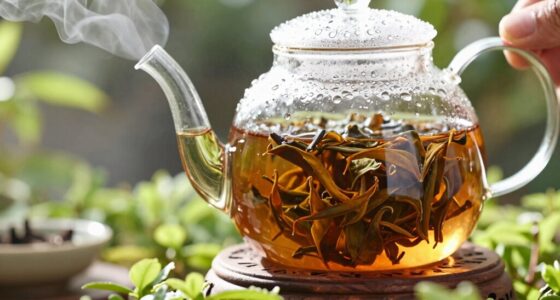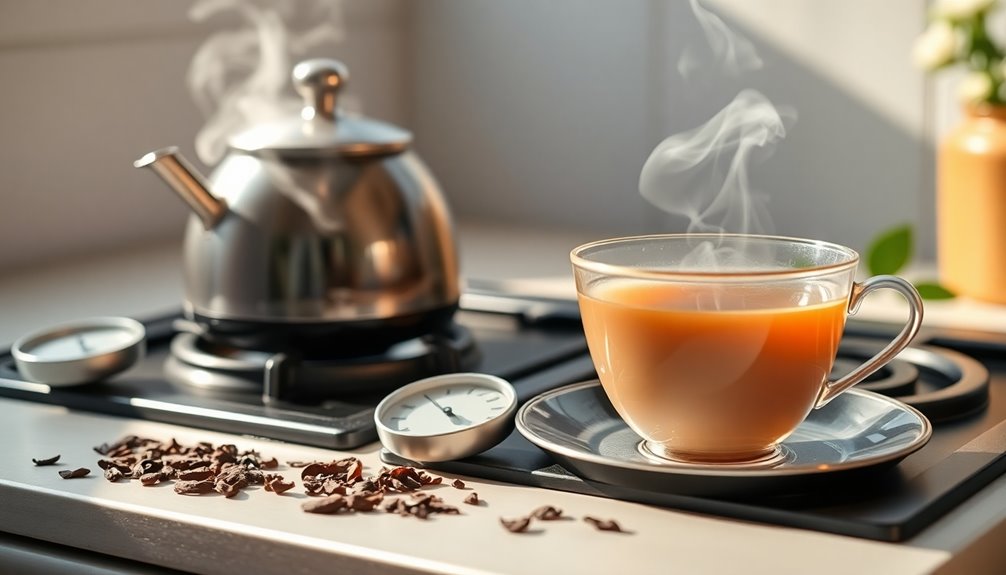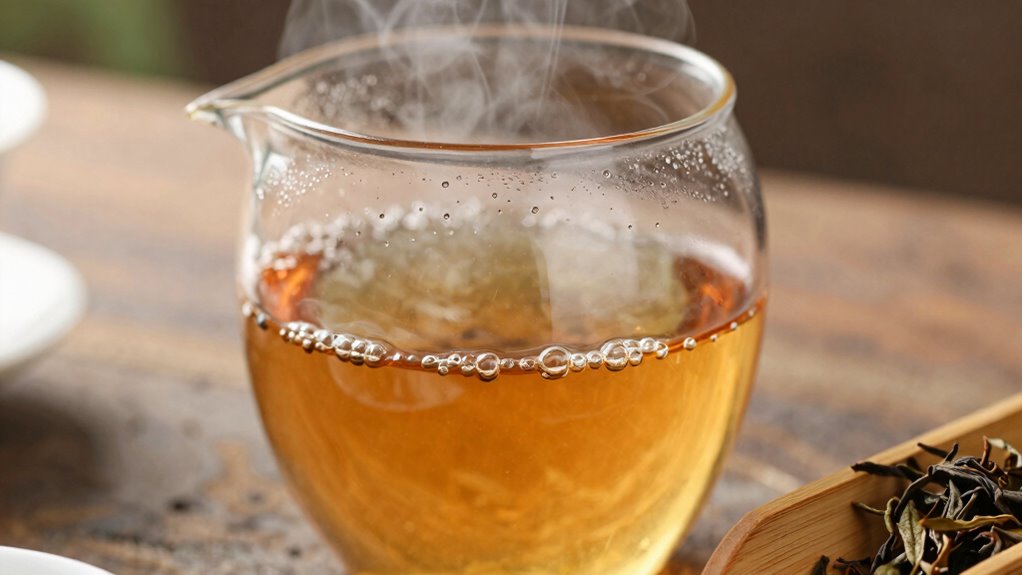

Most tea lovers miss how subtle details like oxidation levels, water temperature, and steeping time can transform your brew. You might ignore how delicate white or green teas require lower temperatures, or how over-steeping can cause bitterness. Proper water quality and understanding oxidation deepen your appreciation. Focusing on these small but essential techniques elevates your tea experience. If you want to reveal the full potential of your tea, there’s more to discover.

Get coffee and tea gear delivered free with Prime
- Fast, free delivery on millions of items
- Prime Video, Amazon Music and more included
- Member-only deals all year
Key Takeaways
- Many overlook the importance of matching water temperature to the specific type of tea.
- Inconsistent steeping times can lead to over- or under-extraction, affecting flavor balance.
- The impact of water mineral content on tea clarity and taste is often underestimated.
- Recognizing the oxidation level of tea influences optimal brewing methods and flavor outcomes.
- Attention to subtle details like water quality and precise timing elevates the overall tea experience.
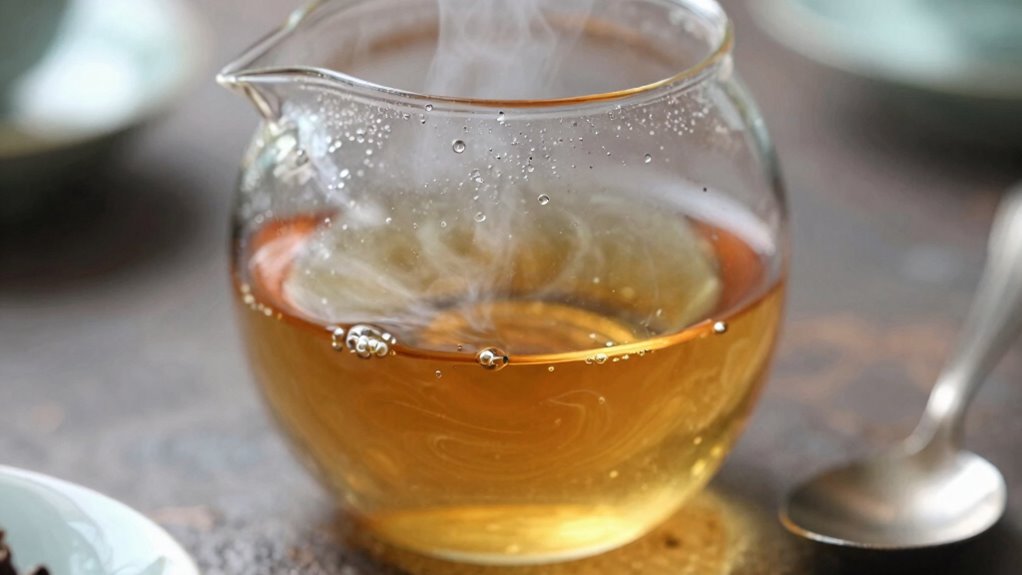
Tea brewing is more than just pouring hot water over leaves; it’s a delicate art that can considerably enhance your tea-drinking experience. Many tea lovers focus on the basics—water temperature, steeping time, and quality of leaves—but overlook how crucial these finer details truly are. One of the most overlooked aspects is understanding tea leaf oxidation. Different teas undergo varying degrees of oxidation, which directly impacts their flavor and color. For example, green tea has minimal oxidation, preserving its grassy, fresh qualities, while black tea is fully oxidized, giving it a richer, bolder taste. Recognizing this process helps you choose the right brewing method for each type, ensuring you don’t over- or under-extract the leaves and end up with a brew that’s either bitter or bland.
Understanding tea leaf oxidation enhances brewing techniques and elevates your tea-drinking experience.
Another element many miss is water temperature control. Not all teas respond well to the same temperature settings. If you brew delicate white or green teas with water that’s too hot, it can scorch the leaves, resulting in a bitter, astringent cup. Conversely, overly cool water might not extract enough flavor from black or oolong teas, leaving your brew weak and flat. Paying attention to water temperature allows you to unlock the full potential of each tea variety. Using a thermometer or an electric kettle with temperature settings makes this easier, but even a good habit is to remember the ideal ranges—around 160°F to 180°F for green teas and 200°F to 212°F for black teas. Additionally, understanding tea leaf oxidation can guide your brewing decisions, ensuring each cup is perfectly tailored to the type of tea you’re enjoying. Recognizing the importance of steeping time is equally vital in crafting a balanced brew, as it directly influences the extraction process and final flavor profile.
Many enthusiasts also overlook the importance of timing their steeping perfectly. Too long, and you risk over-extraction, which makes your tea bitter; too short, and you might miss out on full flavor extraction. Combining precise timing with proper water temperature and an understanding of tea leaf oxidation creates a harmonious balance that produces a superior cup. It’s also helpful to consider water quality, as minerals and impurities can subtly alter the taste and clarity of your brew. Ensuring water mineral content is appropriate can significantly enhance the purity and brightness of your tea’s flavor.
In essence, mastering these subtleties—like recognizing the degree of tea leaf oxidation and controlling water temperature—elevates your entire brewing process. It’s not just about making tea but about making it right. When you pay attention to these details, you’ll notice your teas come alive with more complex flavors and aromas. This knowledge transforms a simple ritual into a mindful practice, enriching your appreciation for tea and increasing your enjoyment with every cup.
As an affiliate, we earn on qualifying purchases.
Frequently Asked Questions
How Does Water Mineral Content Affect Tea Flavor?
Water mineral content substantially influences tea flavor by affecting mineral balance and water softness. Hard water, rich in minerals like calcium and magnesium, can make tea taste dull or astringent, while soft water enhances delicate flavors and aromas. You should pay attention to mineral balance, as too many minerals can overpower the tea’s nuances. Using water with the right softness helps you achieve a smoother, more vibrant cup that truly highlights your tea’s unique qualities.
What Is the Ideal Tea Steeping Time for Different Types?
You should steep green teas for 2-3 minutes, oolongs for 4-6 minutes, and black teas for 3-5 minutes. The ideal steeping time depends on tea leaf oxidation and the steeping vessel material. Using a glass or ceramic vessel helps you monitor infusion, while over-steeping can lead to bitterness. Adjust times based on taste, but remember that precise timing enhances flavor and highlights the nuances of each tea type.
How Do Different Water Temperatures Influence Tea Aroma?
Different water temperatures profoundly influence tea aroma by affecting water texture and aroma extraction. Hotter water enhances aroma extraction, releasing more volatile compounds, which intensifies the tea’s scent. Cooler water results in a gentler extraction, highlighting subtle aromas and preserving delicate flavors. You should adjust water temperature based on the tea type to optimize aroma and texture, ensuring each brew reveals its full aromatic potential.
Can Brewing Techniques Impact Tea Caffeine Levels?
Yes, brewing techniques can impact tea caffeine levels. When you adjust brewing time and temperature, you influence caffeine extraction—longer steeping and higher heat increase caffeine release, while shorter or cooler brews reduce it. By optimizing brewing efficiency, you control how much caffeine ends up in your cup. So, paying attention to your method allows you to tailor your tea’s caffeine content to suit your preferences.
What Are Common Mistakes in Traditional Tea Pouring Methods?
You might overlook how pouring your tea can change everything. Common mistakes include pouring too quickly or at the wrong angle, which can disturb the delicate balance of tea leaf oxidation. Using ceramic teapots can help maintain temperature, but improper pouring disrupts this harmony. When you pour with care, you preserve flavors and aroma, revealing the full potential of your tea. Don’t rush—your perfect brew depends on it.
Conclusion
Remember, mastering tea brewing isn’t just about following steps—it’s about paying attention to details like water temperature and steeping time. For instance, a tea enthusiast who experimented with slightly cooler water discovered a richer, more nuanced flavor in her green tea. Small adjustments can make a big difference, so don’t be afraid to experiment. Embrace the process, and you’ll uncover new depths in every cup, making your tea experience truly exceptional.
Halloween Picks
halloween
As an affiliate, we earn on qualifying purchases.