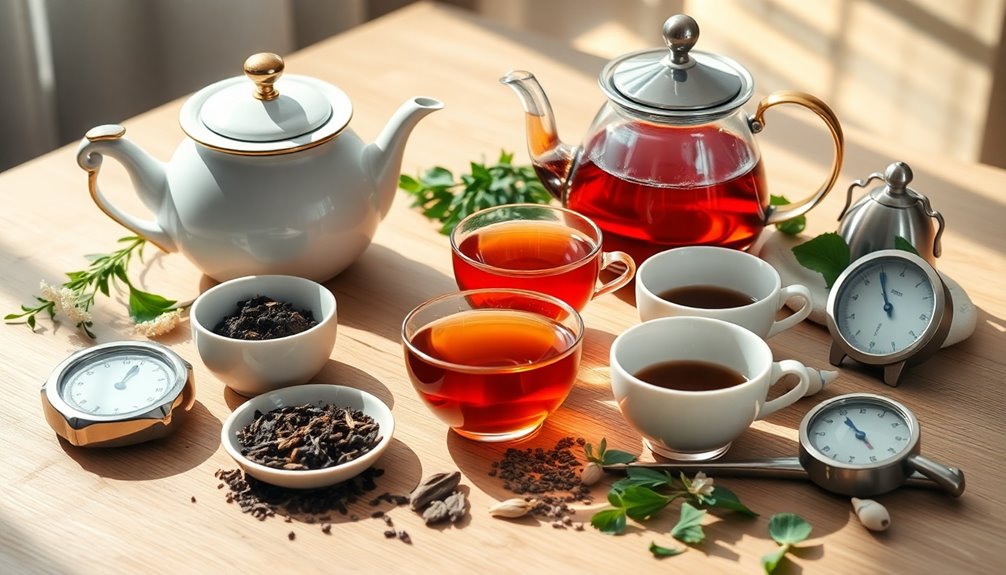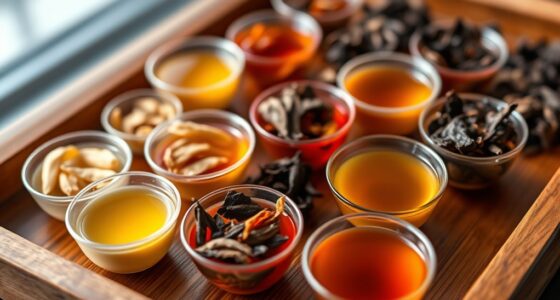
To get started with tea brewing, choose quality tea leaves, preferably whole rather than broken or dust. Use fresh, filtered water and heat it to the right temperature—around 160-185°F for green and white teas, and near boiling for black and herbal teas. Pay attention to steeping times, usually 2-3 minutes for green and 3-5 minutes for black. Mastering these basics sets a solid foundation, and if you keep exploring, you’ll discover even more ways to perfect your brew.
Key Takeaways
- Choose high-quality, whole tea leaves and store them properly in an airtight container.
- Use fresh, filtered water and heat it to the recommended temperature for your tea type.
- Pay attention to brewing temperature: lower for green/white teas, higher for black/herbal teas.
- Steep for the appropriate time: 2-3 minutes for green, 3-5 minutes for black, adjusting to taste.
- Experiment with brewing times and temperatures to find your preferred flavor profile.

Brewing tea is a simple yet rewarding process that anyone can master with a few basic steps. The first thing you’ll want to pay attention to is the quality of your tea leaves. High-quality tea leaves, whether loose or in bags, make a significant difference in flavor. Look for whole leaves rather than broken bits or dust, as they tend to preserve more flavor and aroma. Freshness matters too; if possible, buy from reputable sources and store your tea in an airtight container away from light and moisture. When you start brewing, keep in mind that the quality of your tea leaves directly impacts the brewing process, including how you should handle the water and temperature.
Next, focus on the brewing temperature, which is essential for *discovering* the best flavors from your tea. Different types of tea require different temperatures to extract their full potential. For example, delicate green teas and white teas benefit from lower temperatures, typically around 160-185°F (70-85°C), to prevent bitterness and preserve their subtle flavors. On the other hand, black teas and herbal infusions generally need higher temperatures, around 200-212°F (93-100°C), to fully release their boldness and aroma. Using a thermometer can help you hit the right marks, but many teapots and kettles now come with temperature controls, making it easier to get it just right. Additionally, understanding how water temperature influences flavor extraction can help you tailor your brewing process for different teas.
Once you know the appropriate temperature for your tea, you should also pay attention to steeping times, which vary depending on the type of tea and personal taste. Over-steeping can lead to bitterness, especially with green and white teas, while under-steeping might leave the brew weak and dull. A good rule of thumb is to start with recommended times—about 2-3 minutes for green tea, 3-5 minutes for black tea—and adjust based on your preference. Always use fresh, filtered water if possible, as impurities can interfere with the delicate flavors of the tea.
Top picks for "start brew techniqu"
Open Amazon search results for this keyword.
As an affiliate, we earn on qualifying purchases.
Frequently Asked Questions
What Are the Best Tools for Precise Tea Brewing?
You’ll want to invest in quality tea accessories like a precise digital scale for accurate measurements, a thermometer to control water temperature, and a timer to perfect steeping time. A gooseneck kettle helps with brewing precision by offering controlled pouring. Using these tools guarantees consistent results, enhances your tea experience, and allows you to explore different brewing styles confidently. With the right accessories, you’ll master even the most delicate teas.
How Does Water Quality Affect Tea Flavor?
Water quality critically impacts your tea flavor. When you use water with high mineral content, it can make your tea taste dull or overly bitter. The pH level effects are also vital; acidic water enhances brightness, while alkaline water dulls the flavor. For the best taste, use filtered water with balanced mineral content and a neutral pH. This guarantees your tea’s delicate nuances shine through with every brew.
Can I Reuse Tea Leaves Multiple Times Effectively?
Yes, you can reuse tea leaves multiple times effectively. Reusing tea leaves offers multiple brew benefits, such as extracting more nuanced flavors and reducing waste. To do this well, use slightly cooler water for subsequent infusions and steep for a bit longer each time. Keep in mind that the flavor will weaken with each brew, but many teas, especially oolong and pu-erh, improve with multiple infusions.
What Are Common Mistakes Beginners Make in Brewing Tea?
You might think that perfect tea just happens, but beginners often rush steeping durations or pick poor tea leaf selection. Avoid oversteeping, which makes tea bitter, or understeeping, leaving it weak. Jumping into brewing without understanding leaf quality or timing leads to disappointing flavors. Focus on selecting good leaves and timing your steeping carefully. These simple steps prevent common mistakes and help you craft a satisfying cup every time.
How Do Different Water Temperatures Influence Tea Types?
You’ll notice that water temperature considerably influences tea extraction and flavor. For delicate green teas, use lower temperatures around 160-180°F to prevent bitterness, while black teas thrive at higher temperatures, around 200-212°F, to fully extract their bold flavors. Adjusting water temperature helps you control the strength and aroma of your tea, ensuring each cup is perfectly brewed to match the type you’re enjoying.
Conclusion
Think of tea brewing as tending a delicate garden. With patience and attention, you nurture each leaf, allowing its flavors to blossom. Just as a gardener learns the rhythm of seasons, you’ll discover your perfect brew through practice and care. Every cup becomes a small harvest—rich, soothing, and uniquely yours. So, embrace the journey, and let each sip remind you that with gentle effort, beautiful things can flourish.