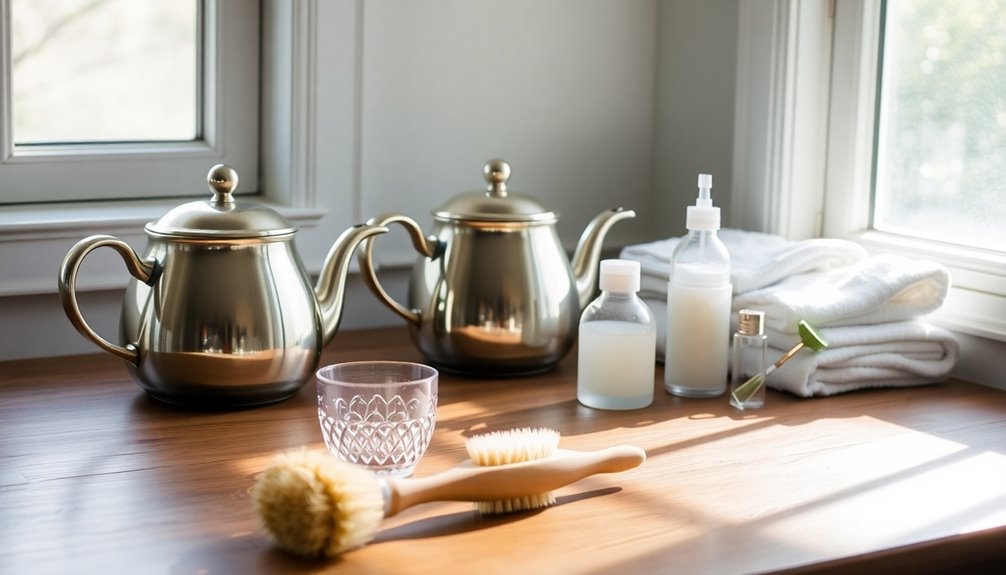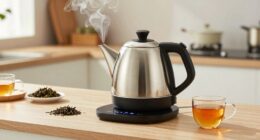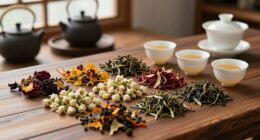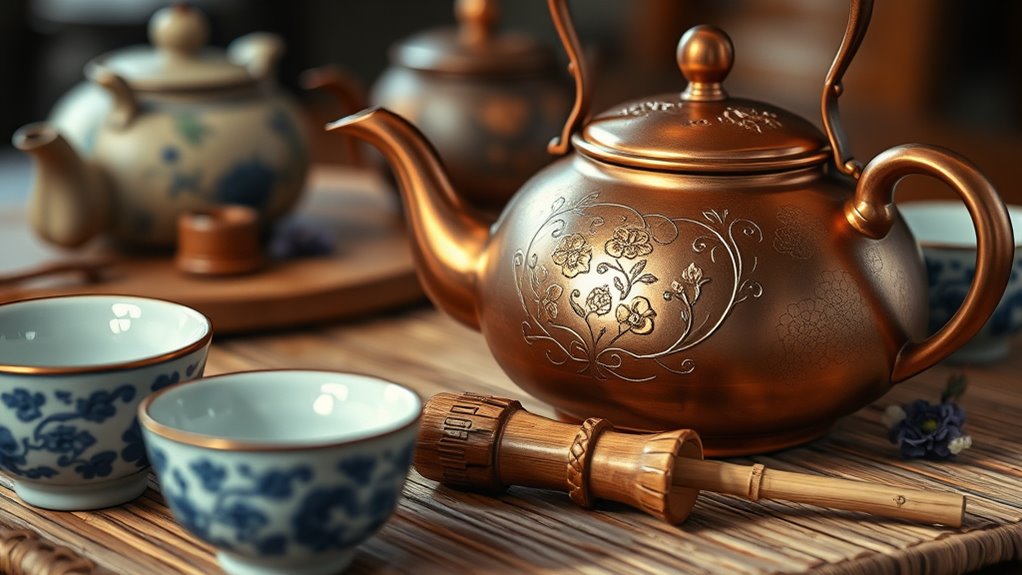
Tea brewing equipment holds deep cultural significance, reflecting centuries of tradition, social values, and artistry. When you use these tools, you engage in rituals that emphasize harmony, respect, and aesthetic appreciation. Each piece, from teapots to cups, carries symbolic meaning and showcases craftsmanship passed down through generations. Handling these items connects you to a rich cultural heritage that celebrates craftsmanship, history, and community—exploring further reveals how these traditions shape meaningful experiences.
Key Takeaways
- Tea brewing equipment embodies centuries-old cultural traditions, reflecting social values like respect, harmony, and aesthetic appreciation.
- Specific ritual movements and symbolic items deepen cultural identity and connect participants to historical customs.
- Handcrafted ceramics showcase artistic expression, regional stories, and cultural craftsmanship passed through generations.
- Ceramic materials and designs signify social status, reverence, and philosophical ideals such as wabi-sabi.
- The use of traditional equipment emphasizes the importance of craftsmanship, cultural heritage, and the aesthetic principles of tea ceremonies.
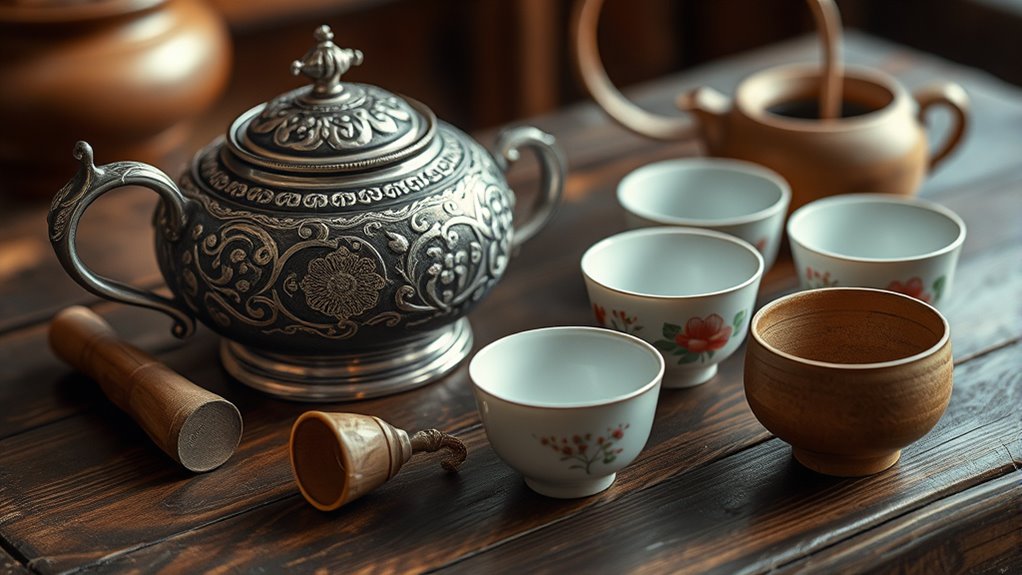
Tea brewing equipment is more than just tools; it reflects centuries of cultural traditions and social values. When you engage with these tools, you’re participating in a practice that goes far beyond the act of making tea—it’s a ritual rooted in history, respect, and community. In many cultures, especially those with a rich history of tea, the equipment used is integral to tea ceremony traditions that emphasize harmony, mindfulness, and aesthetics. These traditions often involve precise movements and a deep reverence for the process, where every piece of equipment—from teapots to cups—holds symbolic meaning. The way you handle each item, the choice of materials, and the presentation all contribute to a shared experience that honors time-honored customs.
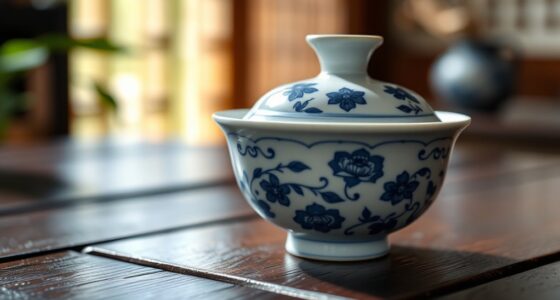
Ceramic craftsmanship stands out as a key element in understanding the cultural significance of tea brewing equipment. The ceramics used in traditional tea sets are often handcrafted by skilled artisans whose techniques have been passed down through generations. This craftsmanship isn’t just about creating functional objects; it’s about embodying cultural identity and artistic expression. The texture, glaze, and form of each ceramic piece tell a story about the region’s history and aesthetic values. When you hold a ceramic teapot or cup, you’re connecting with centuries of tradition, appreciating the meticulous artistry that transforms raw clay into a vessel capable of elevating the entire tea experience.
The choice of ceramic materials also reflects social values. In some cultures, certain types of ceramics are reserved for special occasions, signifying respect and reverence for guests or ancestors. The tactile experience of handling these carefully crafted items enhances the ritual, making it more meaningful. Additionally, the regulatory standards governing the production of ceramic tea ware help ensure safety and quality, further emphasizing the importance of craftsmanship and tradition. In many cases, the design of ceramic tea equipment emphasizes simplicity and natural beauty, aligning with philosophies like wabi-sabi in Japan, which celebrates imperfection and transience. When you participate in a tea ceremony using authentic ceramic ware, you’re not just drinking tea—you’re immersing yourself in a cultural expression that values harmony, craftsmanship, and tradition.
Top picks for "cultural significance brew"
Open Amazon search results for this keyword.
As an affiliate, we earn on qualifying purchases.
Frequently Asked Questions
How Do Specific Materials Influence Tea Flavor and Aroma?
Material influence profoundly shapes your tea’s flavor and aroma. For example, clay pots absorb and enhance natural oils, boosting aroma, while porcelain maintains pure, delicate flavors without adding any taste. Metal equipment can sometimes alter the tea’s profile due to its reactive nature. Choosing the right material, like Yixing clay for oolong or matcha bowls, can optimize aroma enhancement and deepen your appreciation for each brew.
Are Traditional Tea Brewing Tools Still Relevant Today?
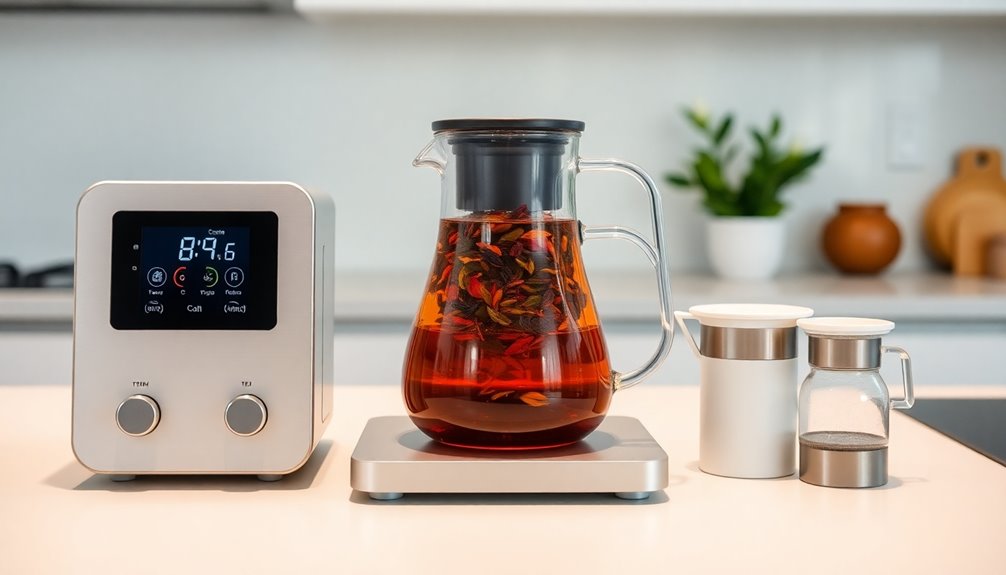
Traditional tea brewing tools remain relevant today because they connect you to centuries of culture, craftsmanship, and tradition. While modern convenience and technological innovation offer quick, effortless brewing, these tools offer a tactile, mindful experience that enriches each cup. You embrace the artistry, the ritual, and the authenticity that traditional equipment provides, making your tea moments more meaningful and memorable amid a fast-paced, tech-driven world.
What Are the Regional Variations in Tea Brewing Equipment?
You’ll notice regional craftsmanship deeply influences tea brewing equipment, with each area showcasing unique styles and techniques. For example, Chinese gaiwans often feature delicate porcelain, symbolizing elegance, while Japanese kyusu are crafted from clay, emphasizing natural harmony. These regional variations reflect local traditions and material symbolism, making each piece not just functional but also a cultural expression. Exploring these differences enriches your tea experience, connecting you to diverse cultural histories.
How Does the Design of Tea Equipment Reflect Cultural Values?
Did you know that over 80% of tea cultures use specific equipment to showcase artistry? The design of your tea equipment reflects cultural values by emphasizing artistic expression and social identity. For example, delicate porcelain teapots highlight elegance, while simple clay cups emphasize humility. Your choice of tools reveals what your culture treasures—whether tradition, craftsmanship, or community—making each piece a symbol of deeper cultural meaning.
What Role Does Tea Equipment Play in Ceremonial Practices?
You participate in tea ceremonies where the equipment plays a essential role. The utensils follow strict etiquette, emphasizing respect and harmony. Each piece, like the teapot or ladle, holds symbolic significance, representing tradition and spiritual connection. As you handle these utensils with care, you honor cultural values, making the ritual more meaningful. The tools aren’t just functional—they embody the essence of the ceremony, enhancing your appreciation of its deep cultural roots.
Conclusion
You might be surprised to learn that in some cultures, over 70% of social gatherings revolve around tea brewing rituals. This highlights how equipment isn’t just functional but deeply symbolic, representing hospitality, tradition, and community. By appreciating these tools, you connect more profoundly with cultural stories and values. So, next time you brew tea, remember you’re participating in a centuries-old tradition that unites people worldwide through shared craftsmanship and meaning.