
To effectively pair tea brewing and preparation with meals and snacks, focus on matching the strength and flavor profiles of your tea with your food. Robust black teas work well with hearty dishes, while delicate green or white teas suit lighter fare. Pay attention to brewing times and water temperature, as they influence flavor intensity. Using the right brewing vessel can enhance aroma and taste, creating harmony. Keep exploring these tips to master your perfect pairing.
Key Takeaways
- Match tea flavor intensity and notes with the dish’s strength and ingredients for harmonious pairing.
- Adjust steeping time and temperature to enhance tea’s compatibility with specific meals or snacks.
- Choose brewing vessels that complement the tea type, enhancing aroma and flavor during meal pairing.
- Consider cultural traditions to guide appropriate tea types and preparation methods for traditional dishes.
- Balance flavors and textures by aligning tea’s aroma and notes with the dish’s spices, acidity, and richness.
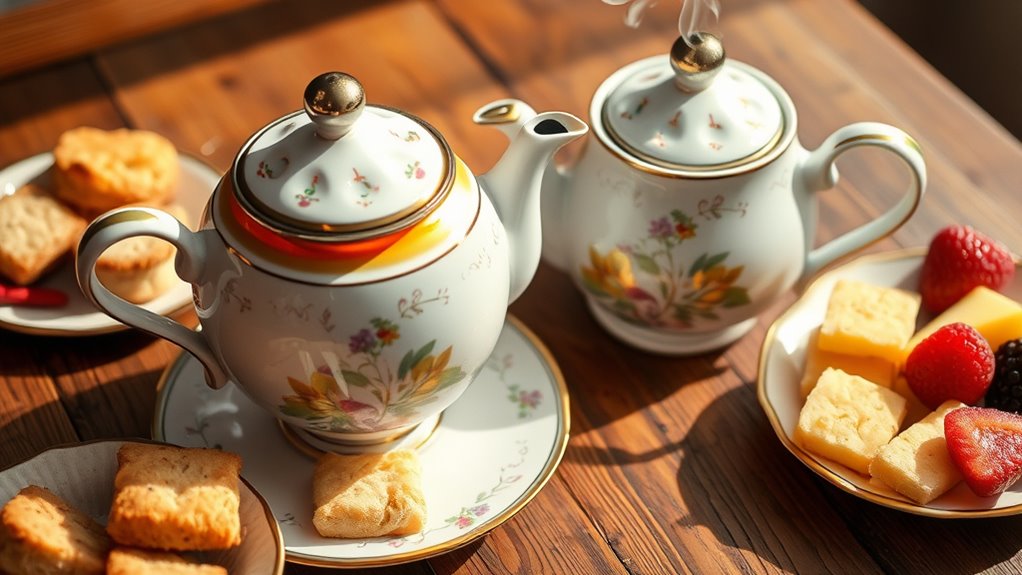
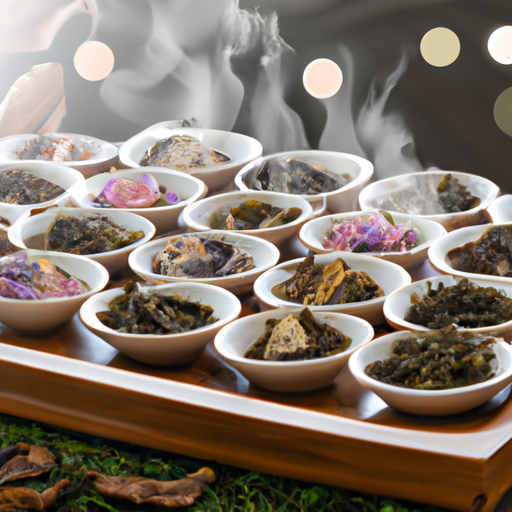
Tea brewing is both an art and a science that can elevate your dining experience when paired thoughtfully with meals. Understanding tea flavor profiles is key to making these pairings successful, as it allows you to match the subtle nuances of the tea with the flavors of your food. For example, a robust black tea with malty, smoky notes pairs well with hearty, savory dishes like roasted meats or rich cheeses. Conversely, delicate green teas with grassy or floral notes complement lighter fare such as salads, seafood, or steamed vegetables. The goal is to create a harmony where neither the tea nor the food overpowers the other but instead enhances the overall tasting experience.
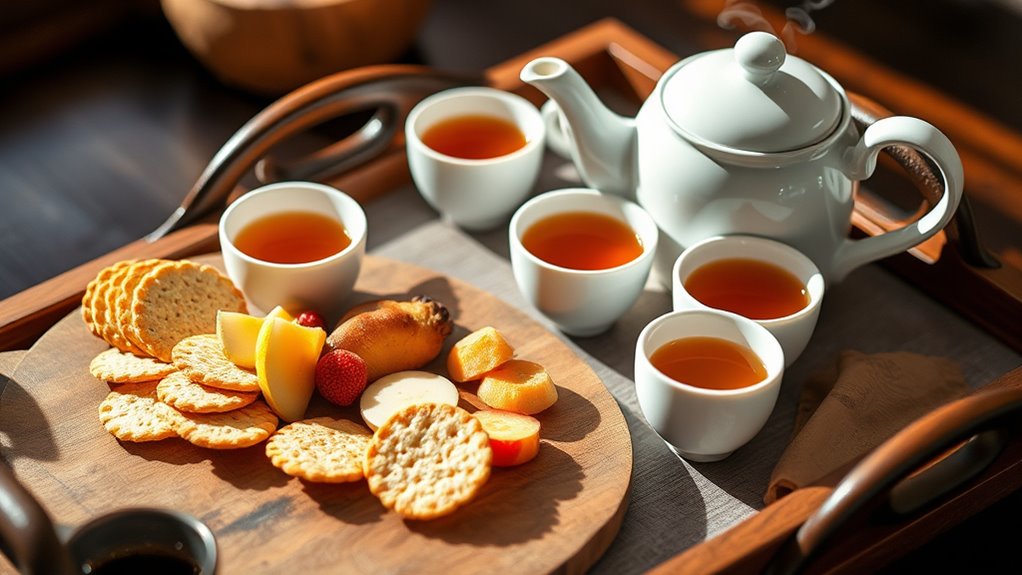
Cultural pairing traditions offer valuable insights into how tea has been combined with meals across the globe. In Japan, for instance, green teas like sencha are often served alongside sushi or tempura, emphasizing freshness and umami. Meanwhile, Chinese tea culture emphasizes the pairing of oolong or Pu-erh teas with dim sum or roasted meats, balancing the richness of these dishes with the teas’ complex, earthy flavors. In Britain, black teas like Assam or English Breakfast are traditionally enjoyed with hearty breakfast dishes or afternoon tea snacks, such as scones and sandwiches. These cultural customs highlight how specific tea types and preparation methods are tailored to complement traditional cuisines, a principle you can adapt to your own meals.
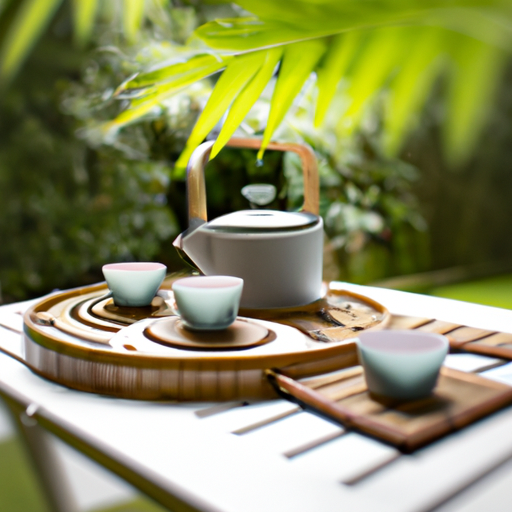
When you prepare tea for pairing, consider not only the tea’s flavor profile but also its brewing method. A longer steep can intensify flavors, making black teas more robust, while a shorter steep preserves the delicate qualities of green or white teas. Temperature also plays a role; hotter water extracts more intense flavors, which might be ideal for bold dishes, whereas slightly cooler infusions suit lighter fare. By paying attention to these details, you can fine-tune your tea’s taste to match your meal perfectly. Additionally, selecting the right brewing vessel can influence the extraction and aroma, further enhancing your pairing experience.
Ultimately, successful pairing comes down to balancing flavors and textures. Think about how the tea’s aroma, strength, and subtle notes interact with the dish’s spices, acidity, and richness. Experimenting with different combinations will deepen your understanding of tea flavor profiles and cultural pairing traditions, making your meals not only more enjoyable but also a reflection of global culinary practices. With a little attention, you’ll discover that the right tea pairing transforms ordinary dining into a memorable, harmonious experience.
Top picks for "pair brew preparation"
Open Amazon search results for this keyword.
As an affiliate, we earn on qualifying purchases.
Frequently Asked Questions
How Does the Water Temperature Affect Tea Flavor Pairing?
Water temperature plays a vital role in tea flavor pairing because it directly affects flavor extraction. When you use the right temperature, it helps release the tea’s unique aromas and tastes, enhancing your pairing experience. Too hot, and you might extract bitterness; too cool, and you miss out on full flavor. Adjusting the water temperature guarantees you get the perfect flavor profile to complement your meals or snacks.
Can Herbal Teas Be Paired With Main Courses?
Certainly, herbal teas can complement main courses beautifully. You’ll find herbal tea benefits include aiding digestion and soothing senses, making them versatile for meals. For example, mint pairs well with lamb, while chamomile complements poultry. With a variety of herbal tea varieties, you enhance your eating experience, elevating flavors and fostering focus. Feel free to experiment, pairing robust herbal infusions with hearty dishes or delicate blends with lighter fare.
What Are the Best Teas for Spicy Foods?
For spicy foods, you should try cooling teas like mint or chamomile, which enhance spicy food by providing a soothing contrast. Green or oolong teas also work well, as they balance the tea flavor with subtle grassy or nutty notes, preventing the heat from overpowering your palate. These teas help reduce heat and refresh your taste buds, making each spicy bite more enjoyable and better complemented.
How Long Should Tea Be Steeped for Optimal Pairing?
You should steep your tea for about 3 to 5 minutes for ideal pairing. This steeping duration allows for proper flavor extraction without making the tea too bitter or overpowering. If you prefer a stronger flavor, extend the steeping time slightly, but be careful not to overdo it. Monitoring the steeping process ensures the tea complements your spicy foods perfectly, enhancing the overall dining experience.
Are There Specific Teas That Complement Desserts Best?
Imagine a delicate sip of jasmine green tea, its floral notes dancing on your tongue, perfectly balancing the sweetness of a berry tart. For dessert tea pairings, black teas like Darjeeling or Assam complement rich, chocolatey desserts with their bold profiles. Light, fruity green teas enhance citrus desserts, while oolong teas add complexity to caramel treats. Choose teas that highlight the sweet flavor complements of your dessert for an unforgettable experience.
Conclusion
Now that you know how to pair tea with your favorite meals and snacks, you’re basically armed with a secret weapon to elevate every bite. Whether you’re enjoying a delicate green tea with a light salad or a robust black tea with hearty snacks, your taste buds are in for a treat. Remember, pairing tea perfectly can turn an ordinary meal into an extraordinary culinary adventure—like revealing a treasure chest of flavor that’s almost too good to believe!