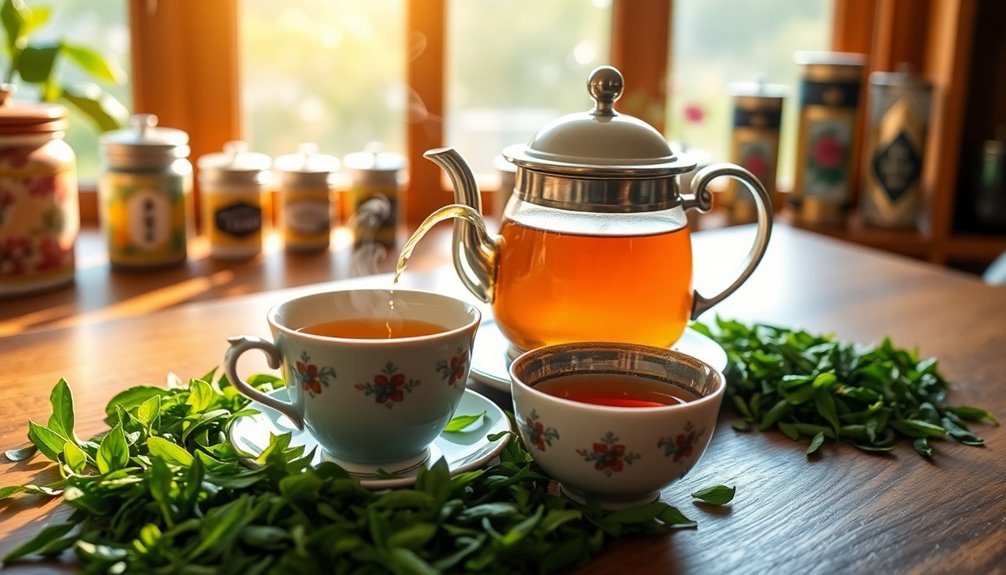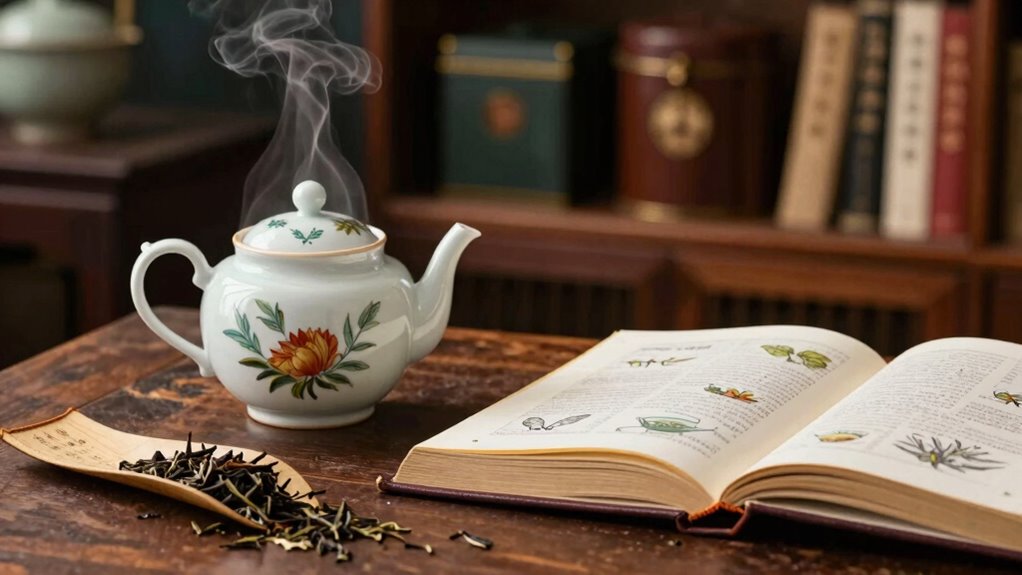

Tea books and literature shape your understanding of tea’s rich history, cultural significance, and rituals. They inspire respect for traditional practices and deepen your appreciation for different varieties and brewing techniques. As a result, you can connect with tea’s spiritual symbolism and social role. These stories and guides help preserve centuries-old customs while influencing modern ceremonies. By exploring this literature, you’ll discover how tea fosters community and cultural identity—keeping its legacy alive for generations to come.

Get coffee and tea gear delivered free — and shop member deals
- Fast, free delivery on millions of items
- Access to Prime Big Deal Days deals on October 6–7
- Prime Video, Amazon Music and more included
Key Takeaways
- Tea literature educates enthusiasts on varieties, brewing techniques, and historical context, fostering deeper appreciation.
- Books preserve traditional tea rituals and ceremonies, ensuring cultural practices are passed down.
- Literature highlights tea’s symbolic meanings, inspiring mindful and respectful modern tea practices.
- Stories connect tea to cultural identities, strengthening community and global appreciation of tea heritage.
- Written works serve as tools to promote sustainable and authentic tea experiences, preserving its cultural significance.

Throughout history, books and literature have shaped how we perceive and enjoy tea, transforming it from a simple beverage into a rich cultural experience. When you read about tea’s origins and its role in different societies, you gain a deeper appreciation for its significance beyond just flavor. Historical references in literature often highlight tea’s journey from ancient China to the rest of the world, emphasizing its role in diplomacy, trade, and social rituals. These stories connect you to centuries of tradition, revealing how tea has served as a symbol of hospitality, peace, and social bonding. For instance, the Chinese tea ceremonies depicted in classical texts showcase the importance of mindfulness and respect, setting a tone for how tea is viewed as more than just a drink.
Cultural symbolism plays an essential role as well. When you explore literature that references tea, you see it symbolize more than refreshment; it embodies ideas of harmony, purity, and even spiritual awakening. These symbolic meanings influence modern tea culture, encouraging you to see each cup not just as a beverage but as a ritual that fosters connection and mindfulness. Literature often portrays tea as a catalyst for conversation and reflection, reinforcing its place in social and spiritual life. This symbolism persists today, inspiring tea enthusiasts to incorporate ceremonial aspects into their own practices, elevating everyday tea-drinking into an art form. Additionally, the historical significance of tea in different civilizations continues to inform contemporary practices and rituals, helping keep these traditions alive and relevant.
Books about tea also serve as educational tools. They inform you about different varieties, brewing techniques, and the history behind each type, enriching your knowledge and appreciation. As you read, you begin to see tea as a cultural artifact—one that carries stories, values, and traditions from diverse societies. This depth of understanding influences modern tea culture by encouraging you to approach tea with respect and curiosity. You’re more likely to seek out authentic experiences, whether it’s participating in a traditional Japanese tea ceremony or exploring loose-leaf blends from distant lands.
In addition, literature often highlights the cultural significance of tea, helping you understand its role in shaping societal identities and practices across civilizations. In essence, literature acts as a bridge connecting you to the past, giving you context and meaning. It shapes your perception of tea as more than a casual drink, elevating it into a symbol of cultural identity and historical continuity. As you immerse yourself in these stories and references, you carry forward the legacy of tea’s rich symbolism, allowing it to influence your modern practices and appreciation. Books and literature continue to inspire a thoughtful, meaningful approach to tea, ensuring that its cultural significance endures through generations. Moreover, the ongoing publication of tea-related literature fosters a global appreciation that unites enthusiasts worldwide in celebrating tea’s rich heritage.
As an affiliate, we earn on qualifying purchases.
Frequently Asked Questions
How Have Tea Books Evolved Over Different Historical Periods?
You’ll notice that tea books have evolved considerably across historical periods, reflecting changing perspectives. Early works focus on medicinal and ritualistic aspects, shaped by historical perspectives, while later texts emphasize cultural narratives, social customs, and personal experiences. Modern tea literature blends tradition with innovation, showcasing diverse stories and practices. This evolution helps you appreciate tea’s cultural depth and its role in shaping modern tea culture, connecting history, stories, and contemporary appreciation.
What Specific Literary Works Have Shaped Modern Tea Rituals?
You see that works like Kakuzo Okakura’s *The Book of Tea* and Emily Dickinson’s poetry serve as powerful literary inspiration, shaping your understanding of tea symbolism. These texts emphasize tea’s cultural and spiritual significance, influencing modern tea rituals by fostering mindfulness and appreciation. Their poetic and philosophical insights inspire you to approach tea not just as a beverage but as a meaningful ritual rooted in tradition and symbolism.
Do Tea Literature Trends Differ Across Cultures?
Yes, tea literature trends differ across cultures, reflecting their unique cultural symbolism and values. In Japan, poetic works emphasize harmony and mindfulness, while Chinese texts highlight tradition and history. Western literature often explores tea as a social ritual or comfort. Literary adaptations in each culture influence modern tea practices, shaping how people perceive and enjoy tea, making these trends diverse and deeply rooted in local cultural identity.
How Do Tea Books Influence Commercial Tea Marketing Strategies?
Think of tea books as a blueprint for crafting authentic tea stories. You harness their insights to shape tea branding and marketing narratives, making your products resonate deeply with consumers. By integrating literary themes, you create an emotional connection that elevates your brand’s appeal. These books guide you in highlighting tradition, quality, and culture, turning your marketing strategies into compelling tales that invite consumers to experience tea’s rich heritage firsthand.
Are There Any Hidden or Lesser-Known Tea Literary Influences?
You might not realize it, but hidden literary influences shape tea culture through subtle tea symbolism and literary references. Classic works like Lu Yu’s *The Classic of Tea* or Shakespeare’s mentions of tea create a cultural backdrop that informs modern perceptions. These lesser-known influences embed a sense of tradition and depth, inspiring contemporary tea enthusiasts and writers to explore deeper meanings, blending history with present-day appreciation.
Conclusion
Through the pages of tea books and the stories they tell, you find yourself sipping not just tea, but a centuries-old tradition woven into your very soul. Literature acts as a bridge, connecting you to distant cultures and timeless rituals, turning each cup into a shared secret across generations. Remember, as the leaves steep and stories unfold, it’s not just tea you’re tasting, but the essence of human connection—an eternal dance of words and warmth.
Halloween Picks
halloween
As an affiliate, we earn on qualifying purchases.