Tea accessories and tools carry deep cultural significance, symbolizing respect, artistry, and tradition across many cultures. They enhance your brewing experience while honoring centuries of craftsmanship. Using proper utensils reflects reverence for history and elevates the ritual to a mindful act. These tools often embody symbolic meanings and aesthetic beauty, connecting you to a rich cultural legacy. Keep exploring, and you’ll discover even more about how these accessories shape the art of tea.
Key Takeaways
- Tea accessories embody cultural traditions, enhancing the brewing process and reflecting historical significance across different societies.
- Proper use and handling of tea tools demonstrate respect, mindfulness, and adherence to cultural etiquette during tea ceremonies.
- Unique designs and materials of tea tools symbolize cultural values, artistry, and symbolic meanings within various tea-drinking traditions.
- The evolution of tea accessories highlights their importance beyond function, emphasizing aesthetic beauty and cultural identity.
- Selecting and using traditional tea tools connects individuals to cultural heritage, emphasizing reverence, harmony, and personal or communal identity.
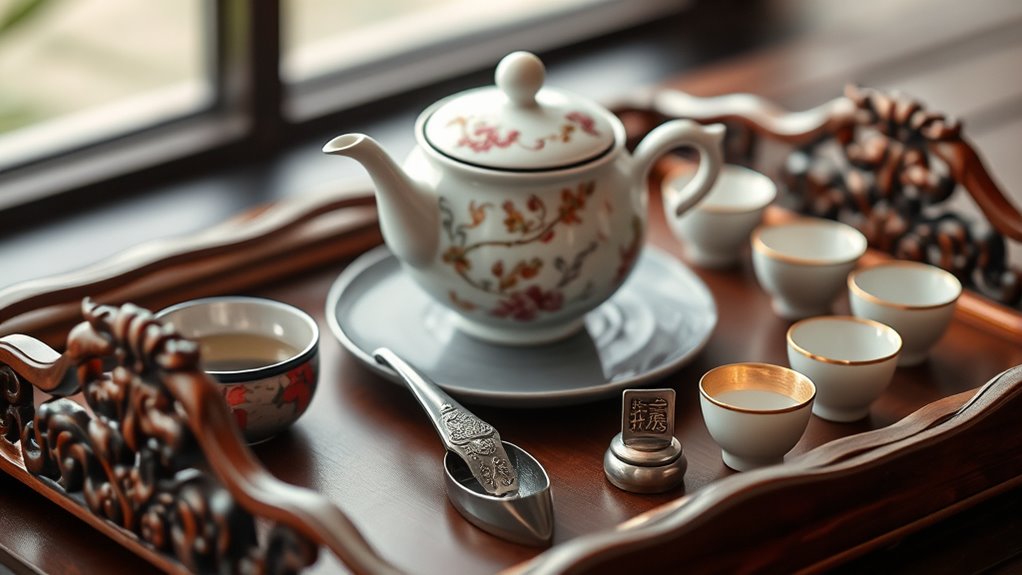
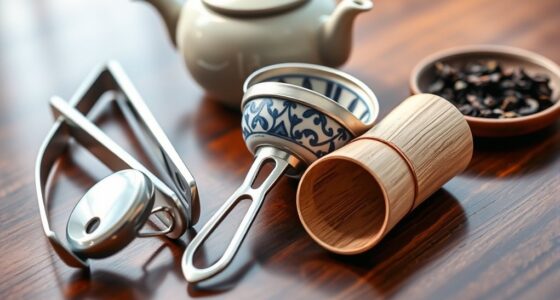
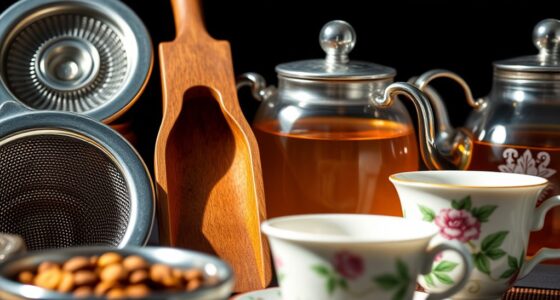
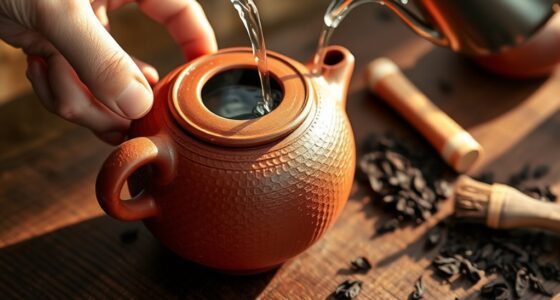
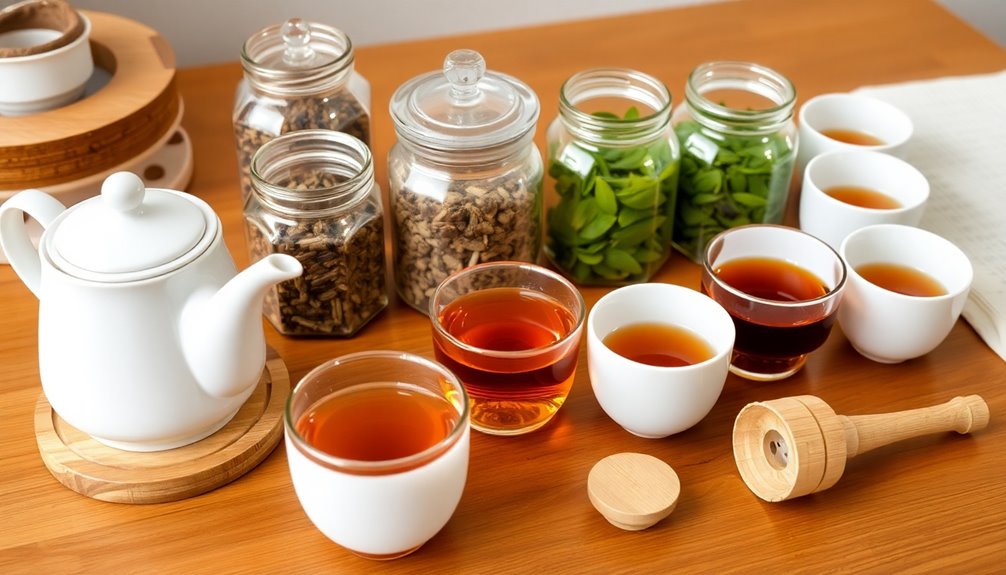
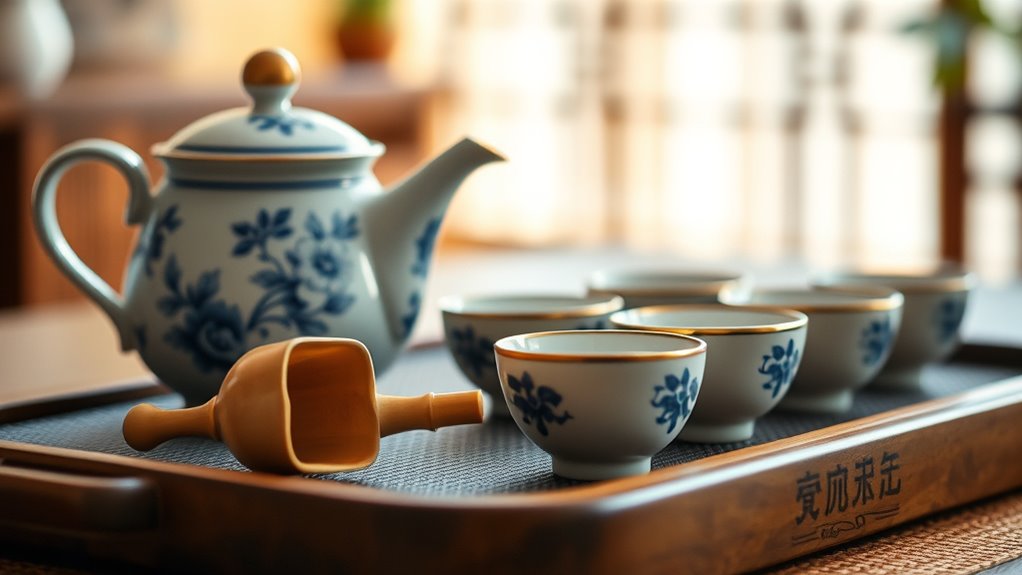
Tea accessories and tools are indispensable for enhancing your brewing experience and ensuring every cup is perfect. When you pay attention to these items, you’re not just making tea—you’re honoring a rich cultural tradition that spans centuries. One key aspect of this tradition is tea ceremony etiquette, which guides how you handle and use your tools. These rules aren’t just about manners; they deepen your appreciation for the process, encouraging mindfulness and respect for the craft. For example, using a proper tea scoop or whisk with care reflects reverence for the tea and its history. Following these customs enriches your experience and connects you to a broader cultural context. Additionally, understanding the role of tools in various tea cultures allows you to appreciate their significance beyond mere functionality. Understanding the historical evolution of tools adds another layer of significance. Over time, different cultures developed unique utensils that serve specific purposes. In Chinese tea culture, the Gaiwan—a lidded bowl—became a popular vessel, emphasizing elegance and practicality. Japanese tea ceremonies introduced tools like the chashaku (tea scoop) and chasen (bamboo whisk), crafted with precision to enhance the ritual. These tools evolved not just for functionality but also for aesthetic beauty, symbolizing harmony and respect. Recognizing how these tools have transformed over centuries helps you appreciate their cultural importance beyond mere convenience. Your choice of accessories can reflect respect for tradition or a desire to personalize your brewing ritual. For instance, selecting a handcrafted tea tray or an intricately designed gaiwan shows an appreciation for the artistry involved. Using a proper tea strainer ensures your brew remains clear and smooth, aligning with the etiquette of careful preparation. Each tool plays a crucial role in shaping your experience, guiding you to brew with intention rather than haste. When you follow traditional etiquette, you honor the cultural stories embedded in each utensil, turning an ordinary act into a meaningful ritual. Moreover, the design and materials of your tools often carry symbolic meanings. Porcelain, bamboo, or teak wood are chosen not just for their durability but also for their cultural significance. As you incorporate these tools into your routine, you participate in a lineage of tea connoisseurs who have valued beauty, harmony, and tradition. Whether you’re a casual tea drinker or a dedicated enthusiast, understanding the historical context and etiquette surrounding your accessories elevates your appreciation. It transforms your simple act of brewing into a cultural experience, connecting you to the centuries of craftsmanship and reverence that have shaped tea practices around the world.
Top picks for "cultural significance accessory"
Open Amazon search results for this keyword.
As an affiliate, we earn on qualifying purchases.
Frequently Asked Questions
How Do Tea Accessories Reflect Cultural Identity?
You see that tea accessories reflect your cultural identity through the tea ceremony rituals you follow and the regional craftsmanship behind each piece. When you use specific utensils, you honor traditions unique to your area, showcasing your cultural heritage. These tools and accessories embody local artistry and customs, making your tea experience a meaningful expression of your identity. They connect you to history and community through mindful, ceremonial practices.
What Are the Symbolic Meanings Behind Specific Tea Tools?
You see, many tea tools carry symbolic meanings that enhance the ritual’s significance. For example, a bamboo whisk symbolizes humility and resilience, while a porcelain teapot represents purity and harmony. These tools aren’t just functional—they embody values and traditions, elevating the experience. By using them, you connect with centuries of cultural ritual, embracing deeper spiritual and social meanings. The tools serve as visual symbols that deepen your appreciation of tea’s cultural importance.
How Are Traditional Tea Accessories Preserved Over Generations?
You actively preserve traditional tea accessories by passing down craftsmanship and practicing heritage conservation. You cherish the skills behind making each tool, ensuring they’re crafted with care and respect for tradition. By sharing stories and techniques with younger generations, you help maintain the cultural significance of these tools. This dedication keeps the artistry alive, fostering a deep connection to history and ensuring these cherished accessories continue to be appreciated for years to come.
Do Different Cultures Have Unique Etiquette for Using Tea Tools?
You’ll notice that different cultures have unique etiquette for using tea tools, much like a dance with specific steps. For example, Japanese tea ceremonies emphasize precise handling of tea tools, showcasing their craftsmanship and respect. Today, modern tea accessory trends blend tradition with innovation, but these rituals remain essential. You’ll find that respecting these customs enhances your experience, connecting you deeply with each culture’s rich history and craftsmanship.
How Do Tea Accessories Influence Social Status Historically?
You see, tea accessories have historically influenced social status through their symbolism and exclusivity. Precious tea utensils signified wealth and refined taste, often indicating your place in social hierarchy tea. Owning and using high-quality, ornate tools showcased your status and sophistication. These accessories became symbols of privilege, and their presence at social gatherings reinforced class distinctions, making the act of sharing tea a subtle yet powerful expression of social rank.
Conclusion
As you appreciate tea accessories and tools, remember they’re more than just items—they’re symbols of tradition and craftsmanship. Each piece tells a story, connecting you to centuries of cultural heritage. Embrace the beauty in every detail, for as the old saying goes, “A journey of a thousand miles begins with a single step.” By honoring these tools, you deepen your appreciation for tea’s rich cultural significance and create your own meaningful experience.