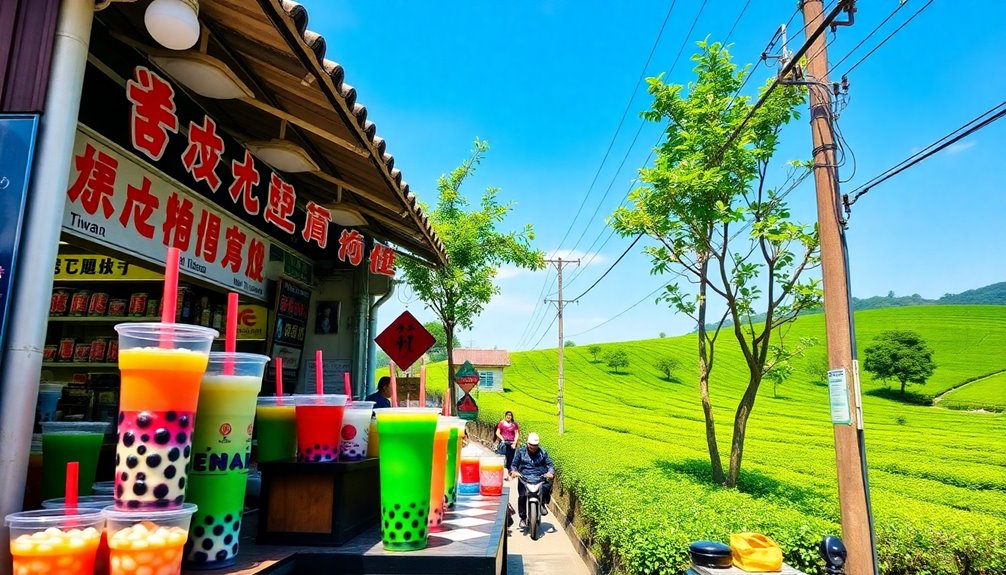
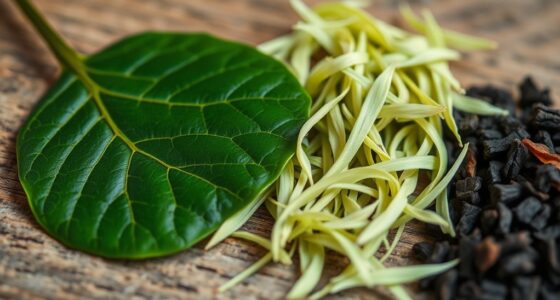
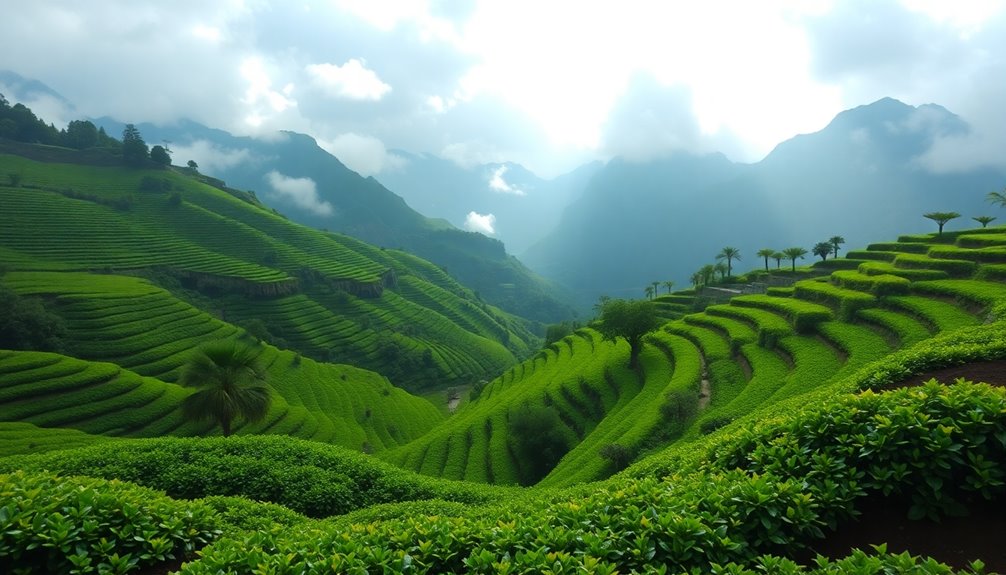
Taiwanese tea has a rich history rooted in indigenous practices, Chinese influences, and innovative techniques that date back centuries. Over time, it evolved through unique processing methods like oolong and high-mountain teas, shaped by Taiwan’s diverse climate and mountainous landscape. Tea remains a essential part of local culture, symbolizing hospitality and tradition. If you explore further, you’ll discover how these historical roots continue to influence Taiwan’s vibrant tea scene today.
Key Takeaways
- Taiwanese tea has roots dating back centuries, evolving through indigenous practices and Chinese influences.
- The island’s diverse climate and mountainous terrain produce unique regional tea varieties.
- Traditional tea ceremonies in Taiwan emphasize mindfulness, respect, and community bonding.
- Innovations in cultivation and processing have modernized Taiwanese tea while preserving its heritage.
- Globally, Taiwanese tea is celebrated for its high quality, distinct flavors, and cultural significance.

Taiwanese tea has a rich history rooted in centuries of cultivation and innovation, making it renowned worldwide for its unique flavors and quality. When you explore Taiwanese tea, you’ll quickly notice that tea cultivation is more than just farming; it’s an integral part of the island’s cultural fabric. The land’s diverse climate and mountainous terrain have shaped the way tea is grown, harvested, and processed. From the misty highlands to the lush valleys, each region produces distinct varieties that reflect local traditions and environmental conditions. The careful cultivation methods passed down through generations ensure that each batch of tea embodies both the land’s character and the skill of the growers.
In Taiwan, tea cultivation isn’t just about producing a beverage; it carries deep cultural significance. Tea has historically served as a social cornerstone, symbolizing hospitality, respect, and community bonding. You’ll find that traditional tea ceremonies, which emphasize mindfulness and respect, still hold an important place in Taiwanese culture. These rituals highlight the importance of harmony and patience, connecting people through shared experience. The cultural significance extends beyond social gatherings, influencing art, poetry, and local customs that celebrate the island’s rich heritage. Tea villages and plantations are often considered cultural landmarks, preserving age-old techniques and stories that reinforce Taiwan’s identity.
Throughout its history, Taiwanese tea has evolved through a blend of indigenous practices and external influences, especially Chinese tea traditions introduced centuries ago. This fusion has led to innovative processing techniques and styles, such as oolong and high-mountain teas, which are now celebrated globally. Additionally, the adoption of modern cultivation techniques has helped improve quality and yield, ensuring Taiwan remains a leader in tea production. As you taste Taiwanese tea, you’re experiencing a culmination of centuries of experimentation and refinement. The island’s dedication to maintaining high standards of quality and craftsmanship ensures that each sip offers a glimpse into Taiwan’s historical journey and cultural pride.
In essence, Taiwanese tea is more than just a drink; it embodies the island’s enduring devotion to cultivation and cultural expression. Its long-standing traditions and regional variations reflect a deep respect for nature, history, and community. Whether you’re enjoying a cup during a quiet moment or participating in a traditional ceremony, you’re engaging with a centuries-old legacy that continues to thrive today. This rich heritage makes Taiwanese tea a truly unique experience—one that connects you to the roots of Taiwan’s history, landscape, and cultural soul.
Frequently Asked Questions
What Are the Health Benefits of Taiwanese Tea?
Drinking Taiwanese tea offers numerous health benefits. You’ll enjoy its antioxidant properties, which help fight free radicals and support your immune system. Plus, it promotes digestive health by soothing your stomach and aiding digestion. The natural compounds in Taiwanese tea can boost your energy levels and improve focus, making it a great daily beverage. Incorporate this tea into your routine to enhance overall well-being and enjoy its flavorful, healthful qualities.
How Is Taiwanese Tea Traditionally Brewed?
To brew Taiwanese tea traditionally, you’ll want to use a small teapot or gaiwan, following traditional brewing techniques. Heat fresh water to just below boiling, then pour over the tea leaves. Steep for a few seconds to a minute, depending on the tea type. During tea ceremonies, this process becomes a mindful experience, emphasizing patience and appreciation, allowing you to enjoy the full flavors and aromas of Taiwanese tea.
Which Taiwanese Teas Are Most Popular Internationally?
Taiwanese teas top the charts in export markets, especially popular are oolong, bubble, and high-mountain varieties. You’ll notice these tea leaf varieties captivate consumers worldwide with their rich flavors and fragrant aromas. Oolong’s outstanding complexity, bubble tea’s bubbly brilliance, and mountain teas’ mellow magic make them the most sought-after internationally. Their popularity propels Taiwan’s tea industry, turning traditional tastes into global treasures that tantalize taste buds everywhere.
How Do Climate Changes Affect Taiwanese Tea Production?
Climate impact greatly affects Taiwanese tea production by causing unpredictable weather patterns and temperature changes. These shifts can stress tea crops, impacting their growth and quality. You’ll notice that farmers are working to improve crop resilience through better irrigation, selective breeding, and other adaptive strategies. By addressing climate impact, they aim to safeguard tea quality and ensure sustainable production, even as climate variability continues to challenge traditional cultivation methods.
Are There Any Unique Tea Festivals in Taiwan?
You’ll love experiencing the Pinglin Tea Festival, a vibrant cultural celebration in Taiwan. During this annual tea festival, locals and visitors alike gather to enjoy traditional tea tastings, tea-making demonstrations, and cultural performances. It’s a unique opportunity to immerse yourself in Taiwanese tea culture, learn about local tea varieties, and celebrate the island’s rich tea heritage. This festival truly highlights Taiwan’s passion for tea and its deep-rooted traditions.
Conclusion
As you explore Taiwanese tea, you discover its rich history rooted in indigenous traditions and Japanese influence. Did you know Taiwan produces over 100 million kilograms of tea annually, making it one of the world’s top tea exporters? This fascinating statistic highlights Taiwan’s essential role in global tea culture. So, next time you sip your favorite brew, remember you’re tasting centuries of history and craftsmanship woven into every leaf.