
Regulations substantially influence sustainable and ethical tea sourcing by setting standards that ensure fair labor practices, environmental conservation, and transparency in supply chains. They encourage producers to adopt eco-friendly farming methods and implement social programs for communities. Certification requirements and government oversight help prevent exploitation and promote accountability. As a result, consumers can trust that their tea choices support responsible practices. If you explore further, you’ll discover how these rules shape industry standards and impact your purchasing power.
Key Takeaways
- Regulations enforce certification standards, ensuring fair labor practices and environmental sustainability in tea production.
- They promote transparency, enabling consumers to trace tea origin and make ethical purchasing decisions.
- Regulatory oversight encourages producers to adopt eco-friendly farming and social responsibility practices.
- Compliance with regulations reduces exploitative labor and pesticide use, benefiting local communities and ecosystems.
- Market trust increases as regulations guarantee responsible sourcing, encouraging brands to align with sustainability standards.
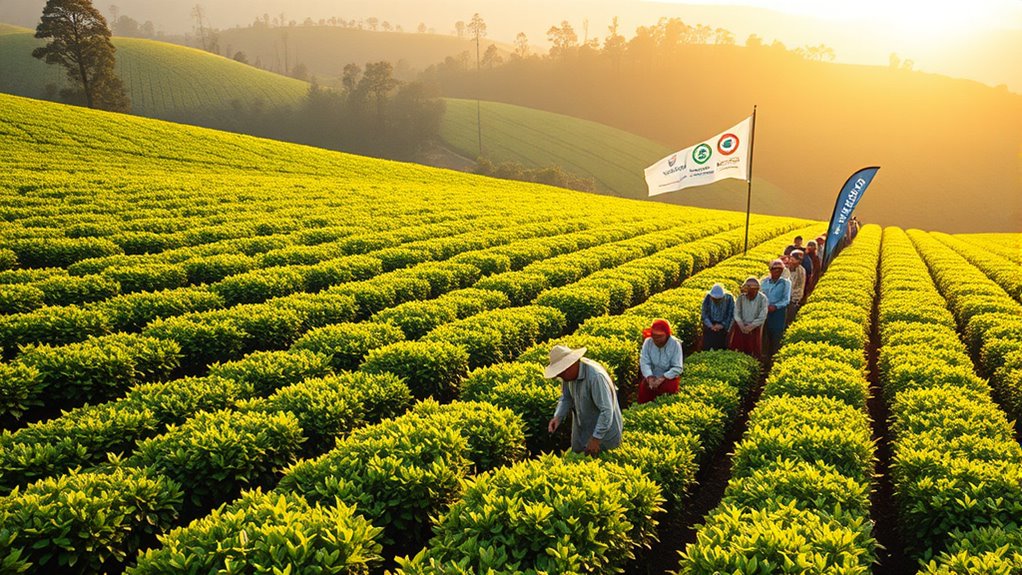
As consumers become more conscious of where their tea comes from, regulations on sustainable and ethical sourcing have gained significance. You now have greater access to information about how your favorite beverage is produced, which influences your purchasing decisions. Regulations that promote transparency and accountability ensure that tea producers adhere to specific standards, creating a more trustworthy supply chain. One of the key elements in this movement is Fair Trade certification, which guarantees that farmers and workers receive fair wages and work under decent conditions. When you choose tea with a Fair Trade label, you’re supporting practices that prioritize social equity and environmental sustainability. These certification standards set clear criteria that producers must meet to be recognized, including fair labor practices, sustainable farming methods, and community development efforts. Moreover, digital platforms and listing services help consumers identify hackathons and innovation events related to sustainable agriculture and ethical sourcing, encouraging ongoing industry improvement.
Choosing Fair Trade tea supports fair wages, ethical practices, and sustainable farming for a healthier planet and community.
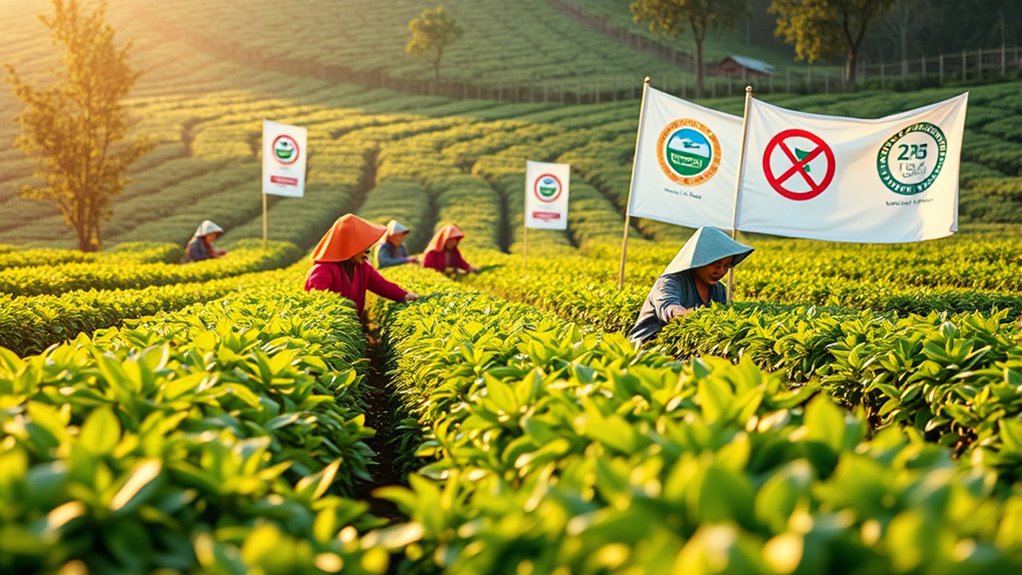
The impact of these certification standards is profound. They compel producers to adopt environmentally friendly practices, such as reducing pesticide use and conserving water, which helps protect ecosystems. Additionally, Fair Trade standards often require producers to implement social programs, like healthcare and education, benefiting local communities. As a result, your purchase becomes more than just a drink; it becomes a statement supporting ethical farming and sustainable development. Governments and independent organizations enforce these certification standards, ensuring compliance through regular audits and inspections. This oversight helps eliminate exploitative labor practices and encourages producers to meet higher environmental benchmarks.
Regulations also influence how tea companies operate globally. Many brands now align their sourcing policies with certification standards to meet consumer demands and avoid reputational risks. By doing so, they promote sustainable practices across entire supply chains, pushing producers worldwide toward more responsible methods. Additionally, these regulations foster transparency, making it easier for you to trace the origin of your tea. Labels and certifications serve as guarantees that your tea is ethically sourced, helping you make informed choices. This transparency is vital because it empowers consumers like you to support companies that prioritize sustainability and fairness.
Ultimately, regulations on sustainable and ethical tea sourcing, especially those centered around Fair Trade and certification standards, drive meaningful change. They ensure that your tea isn’t just a comforting beverage but also a vehicle for positive social and environmental impact. By understanding these standards and choosing products that adhere to them, you help create a market where responsible practices become the norm. Your choices influence producers to prioritize sustainability, fair labor, and environmental health, making your tea-drinking experience both enjoyable and ethically conscious.
Top picks for "impact regulation sustainable"
Open Amazon search results for this keyword.
As an affiliate, we earn on qualifying purchases.
Frequently Asked Questions
How Do Regulations Vary Between Tea-Producing Countries?
You’ll notice that regulations vary between tea-producing countries due to regulatory discrepancies and cultural influences. Some nations enforce strict safety and sustainability standards, while others have more lenient rules, reflecting local traditions and priorities. These differences impact how tea is grown, processed, and exported. Understanding these variations helps you appreciate the diverse practices behind your favorite brews and the importance of supporting ethical sourcing worldwide.
What Are the Penalties for Non-Compliance With Sourcing Standards?
If you don’t comply with sourcing standards like Fair Trade in your supply chain, you face penalties such as fines, product recalls, or bans from certain markets. Non-compliance can damage your reputation and disrupt your supply chain. Authorities enforce these standards strictly to ensure ethical practices, so it’s vital you stay updated and meet all requirements. Failing to do so risks legal action and loss of consumer trust.
How Do Regulations Impact Small-Scale Tea Farmers?
Regulations like Fair Trade and Organic certification directly influence small-scale tea farmers by setting strict standards they must meet to sell their tea ethically and sustainably. You might face higher costs and additional paperwork, but complying can open access to premium markets and better prices. These regulations encourage you to adopt eco-friendly practices, improve quality, and ensure fair wages, ultimately strengthening your farm’s reputation and sustainability.
Are There International Agreements Governing Ethical Tea Sourcing?
You’ll find that international agreements like Fair Trade and Organic Certification act as guiding stars, ensuring ethical tea sourcing across borders. These agreements set standards that protect farmers’ rights and promote sustainable practices. They help create a level playing field, transforming the global tea industry into a tapestry woven with fairness and responsibility. By adhering to these standards, you support a system where ethical practices flourish, nourishing both the land and the people who tend it.
How Do Certifications Influence Consumer Perceptions?
Certifications boost your trust in a tea brand by reassuring you that the product meets ethical and sustainable standards. When you see trusted certifications, you’re more likely to believe the tea is responsibly sourced, which enhances the brand’s reputation. This influence encourages you to choose brands committed to ethical practices, knowing it aligns with your values. Ultimately, certifications serve as a quick, reliable way to verify quality and ethical commitments.
Conclusion
By steering these regulations, you’re planting seeds for a future where tea farms flourish with integrity. Like a careful gardener tending delicate sprouts, you nurture ethical practices and sustainability, ensuring each sip you enjoy supports fair labor and healthy ecosystems. These rules act as the guiding sunlight and nourishing rain, shaping a landscape where responsible sourcing blooms into a vibrant, lush tapestry—reminding you that your choices can cultivate a more just and sustainable tea world.