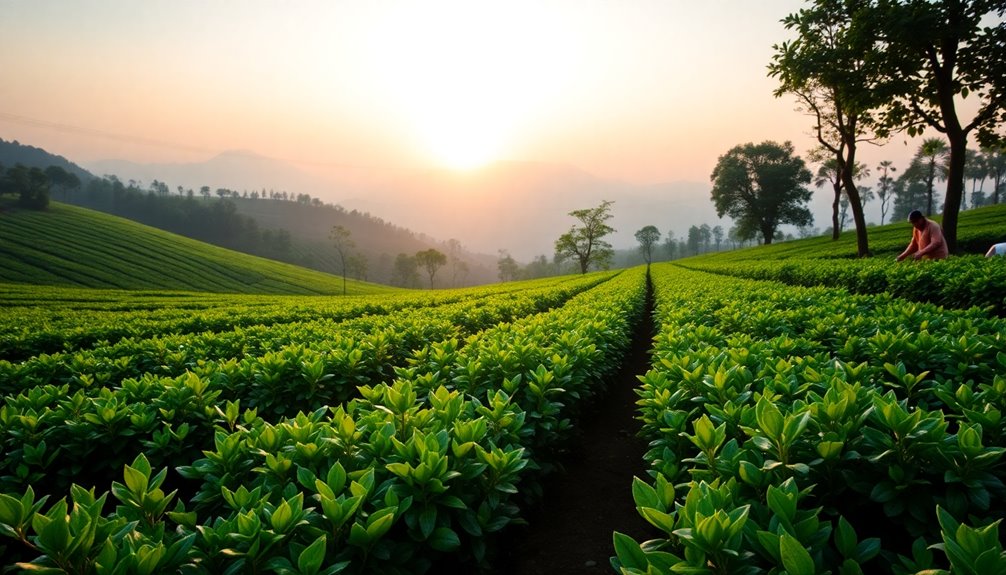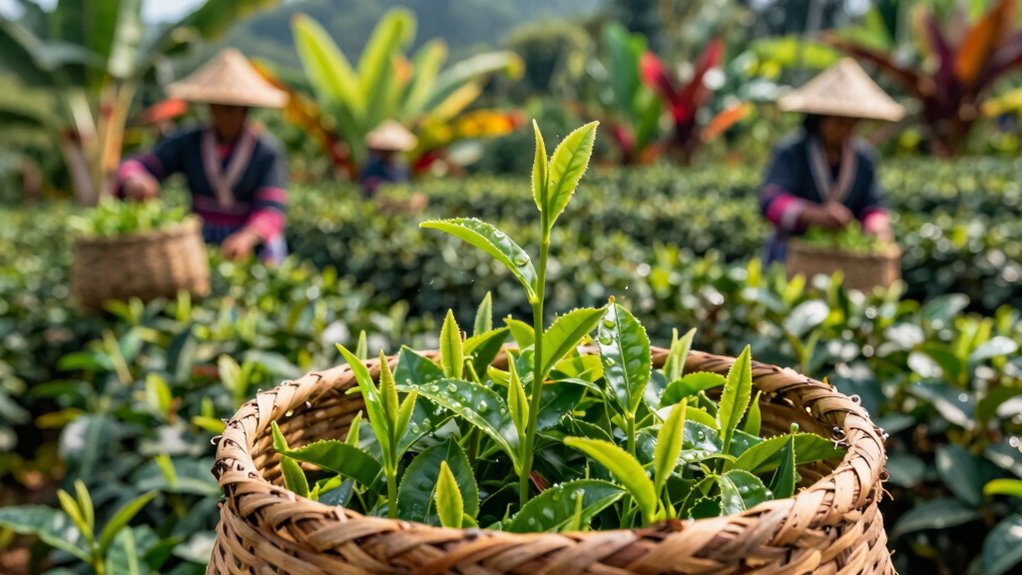

Sustainable and ethical tea sourcing matters because it guarantees fair wages and safe working conditions for farmers and workers, supporting social justice. It also protects the environment by promoting organic farming and biodiversity conservation. When you choose these practices, you help preserve land, reduce pollution, and promote ecological health. By understanding these efforts, you can make more responsible choices that benefit communities and the planet—if you want to learn more, there’s much more to explore.

Get coffee and tea gear delivered free with Prime
- Fast, free delivery on millions of items
- Prime Video, Amazon Music and more included
- Member-only deals all year
Key Takeaways
- Ensures fair wages and safe working conditions for tea farmers and workers, promoting social justice.
- Supports biodiversity and ecological health through sustainable farming practices.
- Prevents environmental harm by avoiding harmful chemicals via organic certification.
- Combines ethical and environmental standards for greater positive impact in supply chains.
- Influences consumer behavior to drive industry-wide adoption of responsible, sustainable practices.
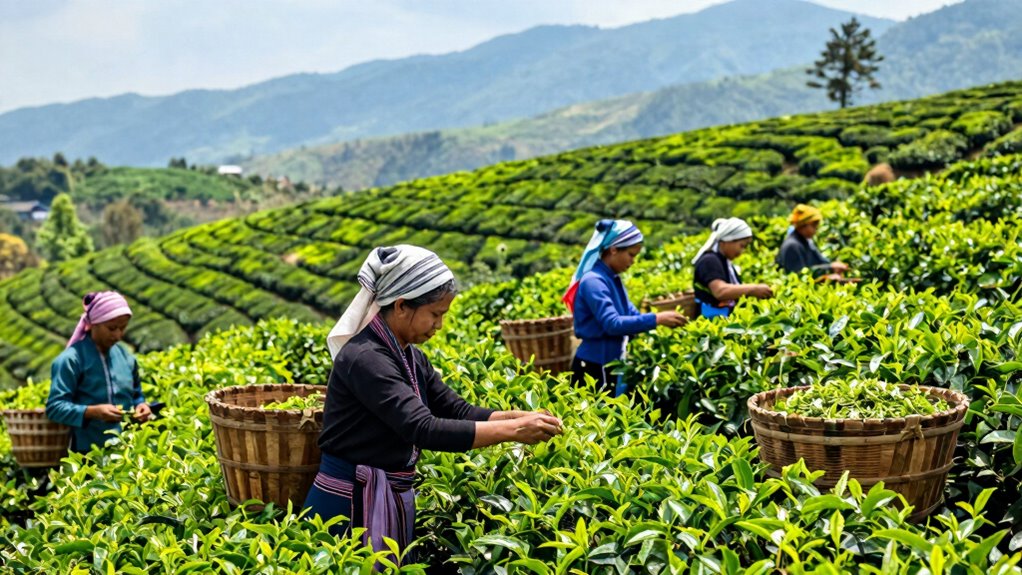
Choosing sustainable and ethical tea sources isn’t just good for the environment—it’s a way to support fair treatment of farmers and workers. When you pick teas that are certified through fair trade standards, you guarantee that the people growing and harvesting your tea receive fair wages, work in safe conditions, and benefit from community development projects. Fair trade certification is a powerful tool that promotes transparency and accountability, making sure that your purchase contributes to a more equitable supply chain. It’s not just about the quality of the tea but also about advocating for social justice and economic stability for those who depend on tea farming as their livelihood. Additionally, supporting biodiversity, helps maintain the ecological balance of tea-growing regions and ensures the sustainability of the land for future generations. Incorporating certification standards into your choices can help you identify truly ethical products in a crowded marketplace. Recognizing the importance of sustainable farming practices can further enhance your impact by encouraging methods that preserve natural resources and reduce environmental harm. To deepen your understanding, learning about ethical sourcing can help you make more informed choices that align with your values. Supporting community development initiatives through your purchase can also contribute to improving local infrastructure, education, and healthcare services in tea-growing areas. Organic certification adds another layer of responsibility to your tea choices. When tea is labeled organic, it means that it’s grown without synthetic pesticides, fertilizers, or genetically modified organisms. This not only protects the environment from harmful chemicals but also preserves the health of the farmers and their communities. Organic farming practices tend to be more sustainable because they focus on maintaining soil health, conserving water, and reducing pollution. By choosing organic-certified teas, you’re supporting methods that are better for the planet and for the people involved in production.
Both fair trade and organic certifications serve as indicators of ethical sourcing, but combining these labels amplifies your positive impact. When you opt for a tea that is both fair trade and organic, you’re assuring that it’s produced in a way that respects human rights and promotes environmental stewardship. This dual commitment is essential because it addresses social and ecological concerns simultaneously, creating a more sustainable and equitable system. It encourages farmers to adopt eco-friendly practices while also guaranteeing they’re paid fairly for their work.
Your choices as a tea consumer have the power to influence the industry toward more responsible practices. By prioritizing ethically sourced teas, you’re not only enjoying a better product but also supporting a movement that values fairness, sustainability, and transparency. It’s about making mindful decisions that align with your values, knowing that your purchase supports farmers who farm sustainably, protect their land, and earn a living wage. As awareness around these issues grows, more brands are adopting fair trade and organic standards, making it easier for you to make a difference with each cup. So, next time you buy tea, remember that your choice can help shape a more just and sustainable future.
organic fair trade loose leaf tea
As an affiliate, we earn on qualifying purchases.
As an affiliate, we earn on qualifying purchases.
Frequently Asked Questions
How Does Sustainable Tea Sourcing Impact Local Communities?
Sustainable tea sourcing positively impacts local communities by fostering community support and ensuring fair wages. It encourages environmentally preservation, which sustains the land and resources for future harvests. When you choose ethically sourced tea, you’re helping small farmers thrive, preserving local traditions, and protecting ecosystems. This creates a cycle of benefit, empowering communities and promoting sustainable development while enjoying your favorite tea.
Are There Certifications to Look for in Ethical Tea Brands?
You should look for certification standards and ethical labels like Fair Trade, Rainforest Alliance, and Organic when choosing tea brands. These certifications act as a shield between you and unethical practices—like a badge of integrity. While some brands may boast quality, certifications guarantee they meet strict ethical standards, giving you peace of mind. They’re your guide to supporting responsible growers and sustainable practices in every sip you take.
What Are Common Challenges Faced by Ethical Tea Producers?
You’ll find that ethical tea producers often face challenges like maintaining Fair Trade standards and practicing Organic farming amidst economic pressures. They struggle with fluctuating market prices, ensuring fair wages, and avoiding chemical use, which can compromise organic integrity. Additionally, sourcing sustainable materials and meeting certification requirements demand significant effort and resources, making it difficult to balance profitability with ethical commitments while supporting local communities and protecting the environment.
How Can Consumers Verify a Tea’s Ethical Sourcing?
Think of verifying a tea’s ethical sourcing as uncovering a hidden treasure map. You check for Fair Trade labels, which act like a compass guiding you toward fair wages and good working conditions. Organic certification is your key to ensuring the tea is free from harmful chemicals. Research brands’ transparency and look for third-party certifications—these signs confirm you’re sipping responsibly, turning your tea time into a small act of kindness.
Does Sustainable Tea Sourcing Affect Taste and Quality?
Sustainable tea sourcing can positively affect taste and quality because it emphasizes consistent harvest timing, which guarantees flavor consistency. When farmers follow ethical practices, they tend to use better soil management and organic methods, resulting in fresher, more vibrant tea. You’ll notice a richer aroma and balanced flavor, as sustainable practices maintain the tea’s natural qualities. Overall, ethical sourcing helps preserve the tea’s integrity, giving you a better, more satisfying cup.
Conclusion
By choosing sustainable and ethical tea sources, you support farmers who care for the environment and their communities. Imagine a lush tea farm where workers thrive, and the land remains healthy for generations. This visual shows how your simple choice can create a ripple effect—protecting ecosystems, empowering workers, and ensuring future tea lovers can enjoy a cup full of integrity. Embrace ethical sourcing and make every sip count toward a better world.
Fall Picks
fall essentials
As an affiliate, we earn on qualifying purchases.