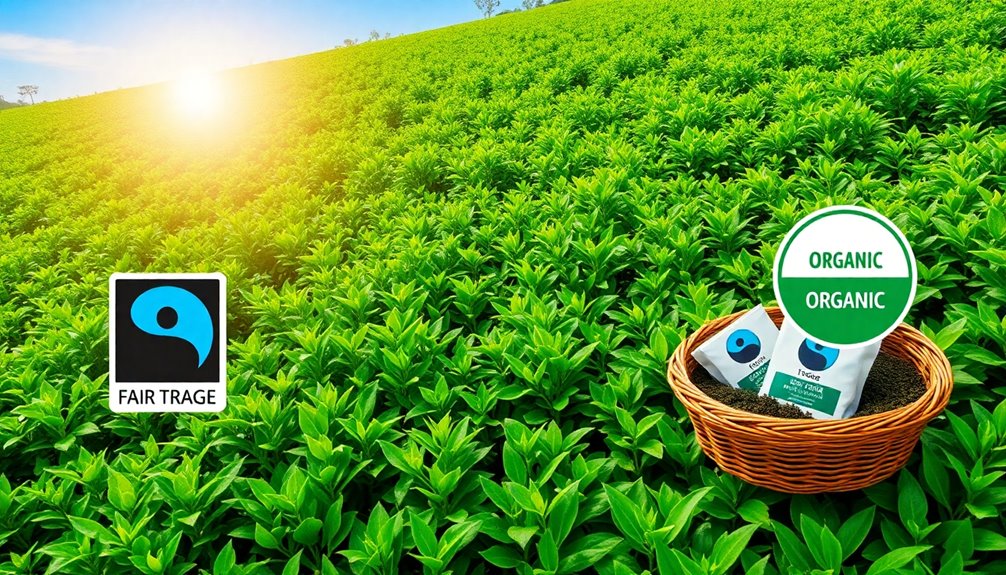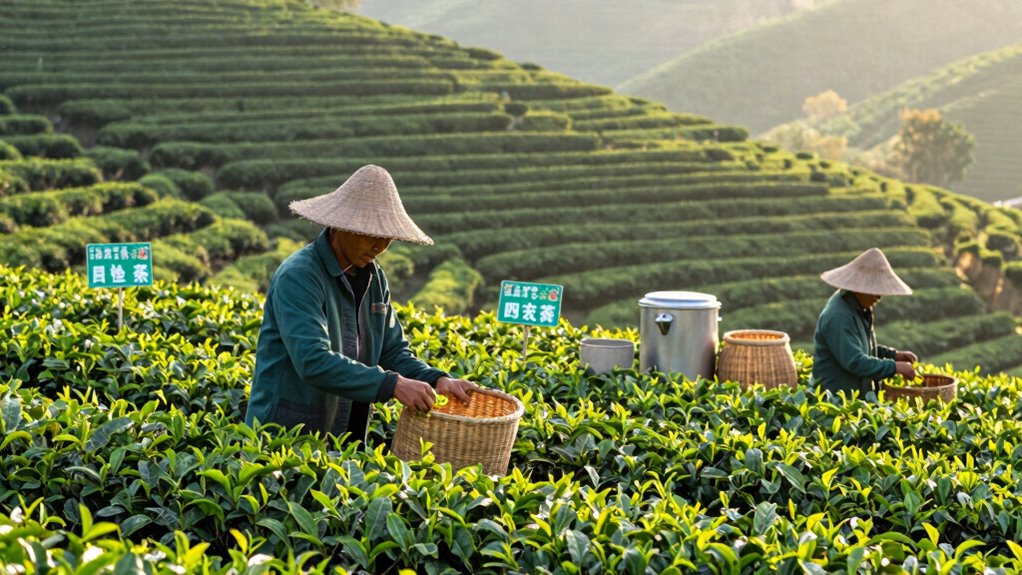

Sustainable and ethical tea sourcing shape your tea experience by ensuring the farmers and workers are treated fairly, and the environment is protected. When you choose fair trade and organic options, you support healthier ecosystems, community well-being, and higher-quality tea. These practices promote transparency and responsibility in the industry, making your tea consumption more meaningful. If you keep exploring, you’ll discover how these choices are transforming modern tea culture for the better.

Get coffee and tea gear delivered free with Prime
- Fast, free delivery on millions of items
- Prime Video, Amazon Music and more included
- Member-only deals all year
Key Takeaways
- Promotes mindful consumption aligned with social justice and environmental responsibility.
- Encourages transparency and ethical practices in the tea industry.
- Drives industry-wide adoption of sustainable farming methods and certifications.
- Enhances tea quality and flavor through eco-friendly and organic cultivation.
- Fosters community empowerment and long-term ecological preservation within tea-producing regions.
Have you ever wondered where your tea comes from and how it impacts the planet and the people behind it? The truth is, the journey of your tea involves more than just the leaves steeping in your cup. It’s a story rooted in ethical choices and sustainable practices that shape modern tea culture. When you choose teas with fair trade certifications, you’re supporting farmers and workers who receive fair wages and work under safe conditions. These certifications guarantee that those cultivating the tea aren’t exploited, helping to uplift communities and promote economic stability. By prioritizing fair trade, you become part of a movement that values social justice and equitable treatment, which directly influences how tea is produced and consumed today.
Choosing fair trade tea supports ethical practices, fair wages, and community upliftment in every cup.
In addition to fair trade, organic farming practices play an essential role in shaping a more sustainable tea industry. Organic farming avoids synthetic pesticides and fertilizers, reducing harmful chemicals leaching into the environment. This approach not only protects ecosystems and biodiversity but also results in a cleaner, healthier product for consumers. When you pick organic tea, you’re supporting farmers who prioritize soil health and environmentally friendly methods, ensuring that future generations can enjoy the same natural resources. These practices also often involve crop diversification and composting, which further contribute to the resilience of local farms and reduce their reliance on harmful chemicals. Moreover, adopting sustainable farming methods encourages the preservation of natural habitats and promotes the long-term health of the planet. Supporting biodiversity in agricultural landscapes strengthens the resilience of ecosystems against climate change and pests.
Your choices as a tea drinker influence the broader industry to shift toward sustainability. By seeking out brands that prioritize fair trade certifications and organic farming, you send a clear message to producers that ethical and environmentally conscious practices matter. This demand encourages more farms to adopt sustainable methods, fostering a ripple effect that benefits communities, ecosystems, and your health. Additionally, many sustainable farms implement water conservation practices to reduce their environmental footprint and ensure the availability of resources for future generations. Moreover, these practices often result in higher-quality tea, with richer flavors and more nuanced profiles, elevating your tea experience while aligning with your values.
Modern tea culture is increasingly defined by mindfulness and responsibility. Your conscious purchasing habits contribute to this shift, emphasizing the importance of supporting transparent, ethical, and sustainable sources. As you sip your tea, remember that your choices help build a more equitable and environmentally friendly industry. When you prioritize fair trade certifications and organic farming practices, you’re not just enjoying a comforting beverage—you’re actively participating in a movement that safeguards the planet and empowers the people behind every leaf.
organic fair trade loose leaf tea
As an affiliate, we earn on qualifying purchases.
As an affiliate, we earn on qualifying purchases.
Frequently Asked Questions
How Does Fair Trade Certification Impact Small Tea Farmers?
Fair trade certification benefits small farmers by ensuring they receive fair wages and better working conditions. When you support fair trade, you’re helping small farmers access fair prices, which boosts their income and sustainability. This certification also encourages ethical practices, empowering small farmers to improve their quality of life and invest in their communities. Your choices promote a more equitable tea industry and foster respect for small farmers’ hard work.
Are Organic Teas Always Sustainably Sourced?
Think of organic teas as a lush garden in full bloom, but not all blooms are equally sustainable. Organic farming adheres to strict Certification standards, ensuring environmentally friendly practices. However, some organic teas may fall short if growers overlook issues like fair labor or water management. So, while organic teas often promote sustainability, it is crucial to verify if they truly meet all ethical and environmental standards.
What Role Do Local Communities Play in Ethical Tea Production?
Local communities play a crucial role in ethical tea production by fostering community empowerment and cultural preservation. When you support teas sourced from these communities, you’re helping guarantee fair wages and improved living standards. These communities often maintain traditional harvesting methods, preserving cultural heritage. Your choices encourage responsible practices, strengthening local economies, and honoring the cultural significance of tea, making your tea-drinking experience more meaningful and sustainable.
How Can Consumers Verify the Sustainability of Their Tea?
Ever wonder if your tea’s truly sustainable? You can verify this by examining the tea packaging for reputable certification labels like Fair Trade or Rainforest Alliance. These labels act as guardians, ensuring ethical practices. Be vigilant—scrutinize packaging details and research brands’ sustainability claims. By doing so, you turn each sip into a conscious choice, supporting eco-friendly and fair practices in every cup you enjoy.
Do Ethical Sourcing Practices Affect Tea Price and Availability?
Yes, ethical sourcing practices impact tea price and availability. When supply chains adhere to certification standards like Fair Trade or Rainforest Alliance, it can increase costs due to fair wages and sustainable farming methods. These costs are often passed on to you, making tea slightly more expensive. However, ethical sourcing also helps stabilize availability by supporting farmers and communities, ensuring consistent access to quality tea over time.
Conclusion
By choosing teas that are sustainably and ethically sourced, you’re helping to promote fair labor practices and protect the environment. Your choices can influence the industry to prioritize transparency and responsibility. As you sip your next cup, consider: isn’t it worth supporting a future where tea farms thrive without harming the planet or its people? Every mindful purchase empowers positive change—so why not make your tea-drinking habits part of that movement?
Columbus Day / Indigenous Peoples' Day Picks
long weekend sales
As an affiliate, we earn on qualifying purchases.