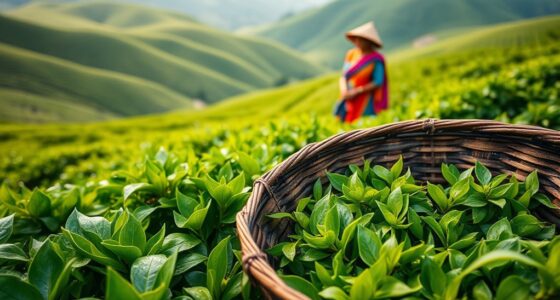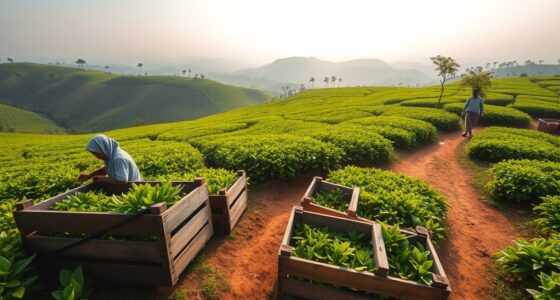
Choosing Sri Lankan tea produced through sustainable cultivation and ethical sourcing means you’re supporting environmentally friendly practices and fair treatment of farmers. Organic farming methods eliminate harmful chemicals and promote soil health, while fair trade standards ensure fair wages and community development. Advanced techniques like precision farming improve efficiency and sustainability. By opting for such tea, you contribute to environmental preservation and social equity. If you want to discover more about how this impacts quality and ethics, keep exploring further.

Get coffee and tea gear delivered free with Prime
- Fast, free delivery on millions of items
- Prime Video, Amazon Music and more included
- Member-only deals all year
Key Takeaways
- Organic farming practices eliminate synthetic chemicals, promoting soil health, biodiversity, and authentic flavor in Sri Lankan tea.
- Fair Trade standards ensure fair wages, community development, and social equity for tea farmers and workers.
- Ethical sourcing supports poverty alleviation and encourages farmers to adopt sustainable, eco-friendly cultivation methods.
- Advanced agricultural techniques like precision farming improve resource efficiency and sustainability in tea production.
- Sustainable cultivation protects ecosystems, maintains water quality, and reduces chemical pollution, ensuring long-term tea farm viability.

Sri Lankan tea, renowned worldwide for its rich flavor and quality, is increasingly cultivated with a focus on sustainability and ethical sourcing. As a consumer, you can appreciate that the farmers and companies behind your favorite brew are adopting practices that protect the environment and support local communities. One significant approach is organic farming, which eliminates synthetic fertilizers and pesticides, reducing chemical runoff and preserving soil health. When tea is grown organically, it not only benefits the ecosystem but also results in a purer, more authentic flavor that discerning drinkers like you appreciate. Organic cultivation methods also promote biodiversity, encouraging a variety of plants and insects that maintain the natural balance of the tea estates. By choosing teas labeled as organic, you’re supporting farmers who prioritize ecological harmony over chemical shortcuts.
Alongside organic farming, fair trade practices play a vital role in ensuring ethical sourcing. Fair trade standards guarantee that farmers receive fair compensation for their labor, which helps lift communities out of poverty and promotes social equity. When you purchase fair trade-certified Sri Lankan tea, you’re contributing to fair wages, safe working conditions, and community development projects that benefit the local population. These practices foster transparency throughout the supply chain, so you know your tea isn’t linked to exploitation or environmental harm. Additionally, fair trade encourages farmers to adopt sustainable methods, including organic farming, by providing access to resources, training, and fair pricing that make eco-friendly cultivation viable and profitable. Moreover, integrating advanced agricultural techniques such as precision farming can further enhance sustainability and productivity in tea cultivation.
As an affiliate, we earn on qualifying purchases.
Frequently Asked Questions
How Do Sri Lankan Tea Farms Ensure Water Conservation?
You can see Sri Lankan tea farms guarantee water conservation through effective water management and advanced irrigation techniques. They use drip and sprinkler systems to minimize water waste, applying water directly to the plants’ roots. Additionally, they implement rainwater harvesting and monitor soil moisture levels regularly, ensuring they use only what’s necessary. These practices help conserve water while maintaining healthy tea crops, promoting sustainability on the farms.
What Certifications Indicate Ethical Sourcing of Sri Lankan Tea?
You can spot ethically sourced Sri Lankan tea through certifications like Fair Trade and Organic Certification. Fair Trade guarantees farmers receive fair wages and work under safe conditions, while Organic Certification certifies the tea is grown without harmful chemicals. These labels show that the tea was produced with respect for environmental sustainability and social responsibility, helping you make more ethical and eco-friendly choices with every cup.
How Do Farmers Receive Fair Wages in Tea Production?
You can guarantee farmers receive fair wages through fair wage practices and strong labor rights enforcement. When companies commit to paying fair wages, they support workers’ livelihoods and promote ethical sourcing. Look for certifications that verify these practices, and choose tea brands that prioritize labor rights, ensuring farmers earn a living wage. By supporting these initiatives, you help improve working conditions and promote sustainability in Sri Lankan tea production.
Are Traditional Farming Methods Used in Sustainable Cultivation?
Yes, traditional farming methods are often used in sustainable cultivation. You’ll find farmers employing organic practices, avoiding synthetic chemicals, and practicing crop rotation to maintain soil health. These methods help preserve the environment and guarantee the tea remains high-quality. By sticking to these traditional techniques, farmers support eco-friendly farming, promote biodiversity, and produce better tasting, ethically-sourced tea that benefits both the land and the community.
How Is Biodiversity Preserved in Sri Lankan Tea Plantations?
You can help preserve biodiversity in Sri Lankan tea plantations by supporting practices that maintain ecosystem balance. Many plantations implement biodiversity preservation techniques by planting native trees, creating buffer zones, and avoiding chemical pesticides. These efforts protect local flora and fauna, ensuring a healthy environment. Your choices as a consumer encourage plantations to prioritize biodiversity preservation, which ultimately sustains the ecosystem and produces high-quality tea sustainably.
Conclusion
By choosing Sri Lankan tea, you’re supporting more than just a beverage—you’re helping to preserve the environment and uplift local communities. As sustainable practices grow, they become as essential as the leaves themselves, weaving a stronger fabric of ethical sourcing. Your mindful choice is like a ripple in a pond, spreading positive change far and wide. Together, we can guarantee that Sri Lankan tea continues to thrive, rich in tradition and responsibility for generations to come.
Halloween Picks
halloween
As an affiliate, we earn on qualifying purchases.