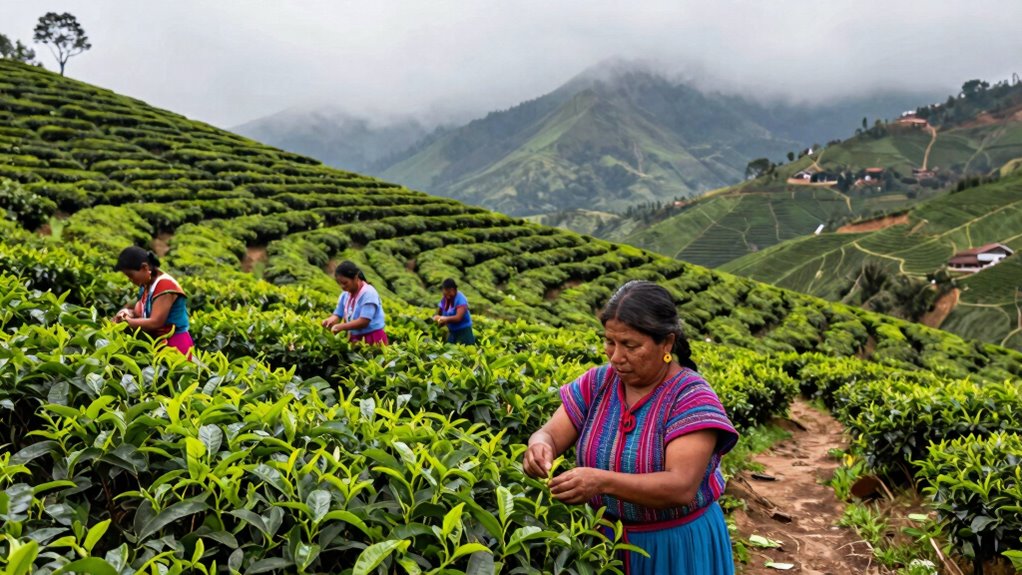
South American tea has a rich history rooted in indigenous traditions and diverse ecosystems. Its flavors are earthy and complex, shaped by unique regional terroirs and sustainable farming practices. Cultivated in small-scale farms, these teas emphasize quality, cultural heritage, and ecological balance. More than just a beverage, tea here strengthens social bonds and honors ancestral rituals. If you want to discover the full story behind these unique brews, there’s much more to explore below.
Key Takeaways
- South American tea has a rich history rooted in indigenous traditions and diverse ecological practices, often overshadowed by Asian varieties.
- Cultivated using sustainable, small-scale methods that emphasize biodiversity and ecological balance.
- Flavors are complex and earthy, shaped by regional terroir and traditional cultivation techniques.
- Tea plays a vital cultural role, used in ceremonies and social rituals to strengthen community bonds.
- Growing recognition of South American teas highlights their health benefits and unique, region-specific flavors.
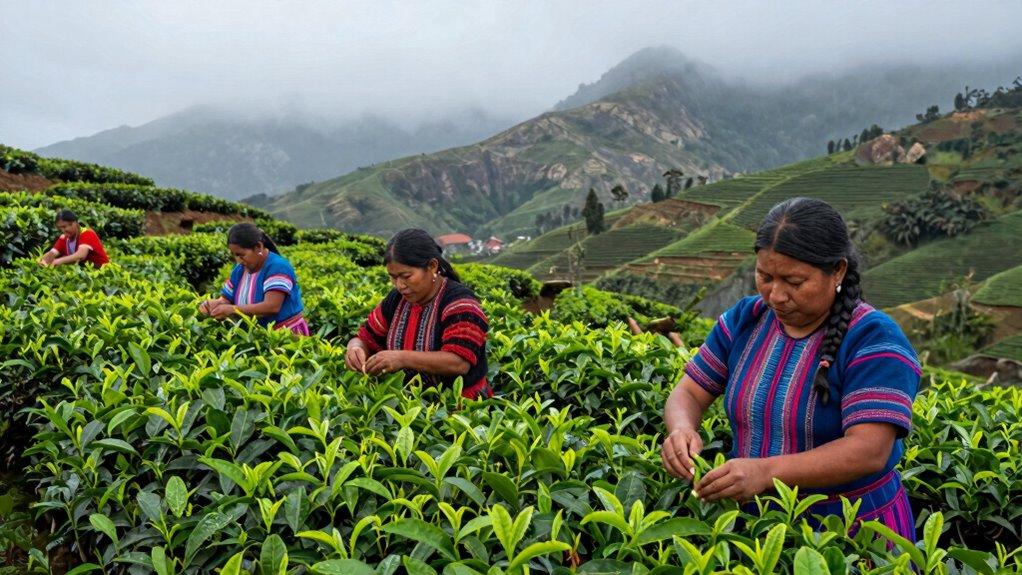
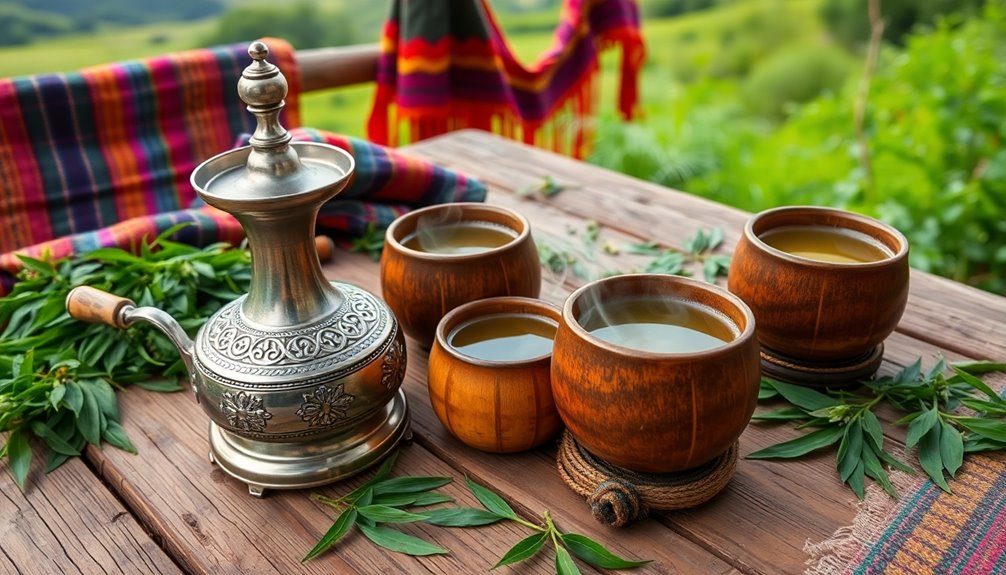
South American tea often gets overshadowed by its more famous counterparts, but its rich history and unique flavors tell a story worth exploring. Unlike the well-known teas from Asia, South American varieties have developed through a different blend of climate, soil, and cultural influences. Tea cultivation in this region isn’t just about growing leaves; it’s about preserving traditions and adapting to diverse environments. You might be surprised to learn that in countries like Argentina, Colombia, and parts of Brazil, small-scale farmers have cultivated native plants and tea-like infusions for generations. These practices are often rooted in indigenous traditions, where tea is more than just a beverage—it’s a symbol of community, healing, and social connection.
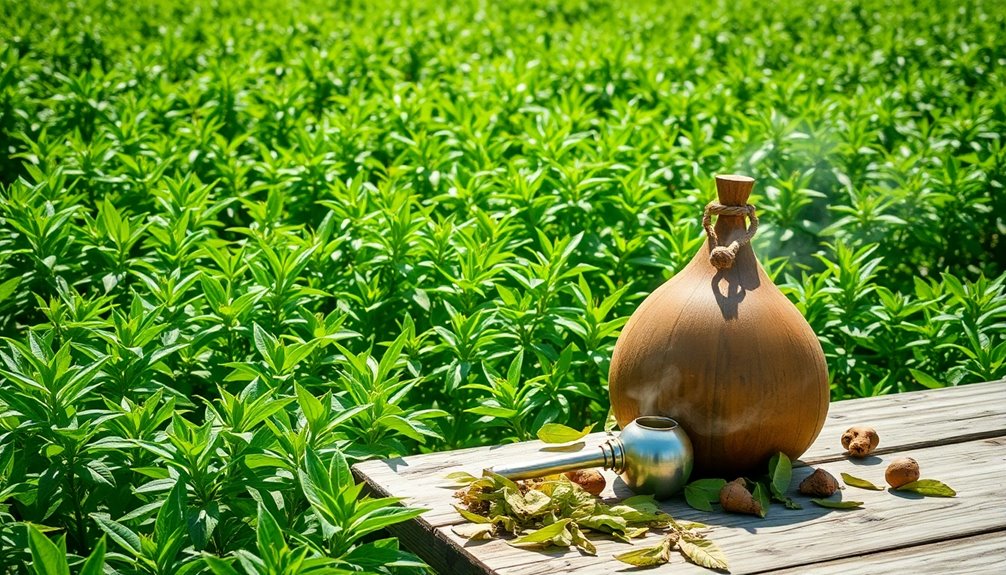
The process of tea cultivation here reflects a deep understanding of local ecosystems. Farmers often grow native plants that thrive in subtropical and tropical climates, utilizing sustainable methods that respect the land. Unlike large plantations seen elsewhere, many South American tea growers work on a smaller scale, focusing on quality and cultural preservation rather than mass production. This approach allows them to maintain the authenticity of their teas and support local economies. As you explore these teas, you’ll notice that their flavors are often more complex and earthy, shaped by the unique terroir of the region. Additionally, the cultivation of native plants often involves traditional farming techniques that have been passed down through generations, blending ecological knowledge with cultural practices. These techniques exemplify a sustainable agricultural approach that prioritizes ecological balance and long-term resilience. Furthermore, this method often involves biodiversity conservation, which is vital for maintaining healthy ecosystems.
South American tea reflects local ecosystems, emphasizing sustainability, authenticity, and complex, earthy flavors shaped by unique terroir.
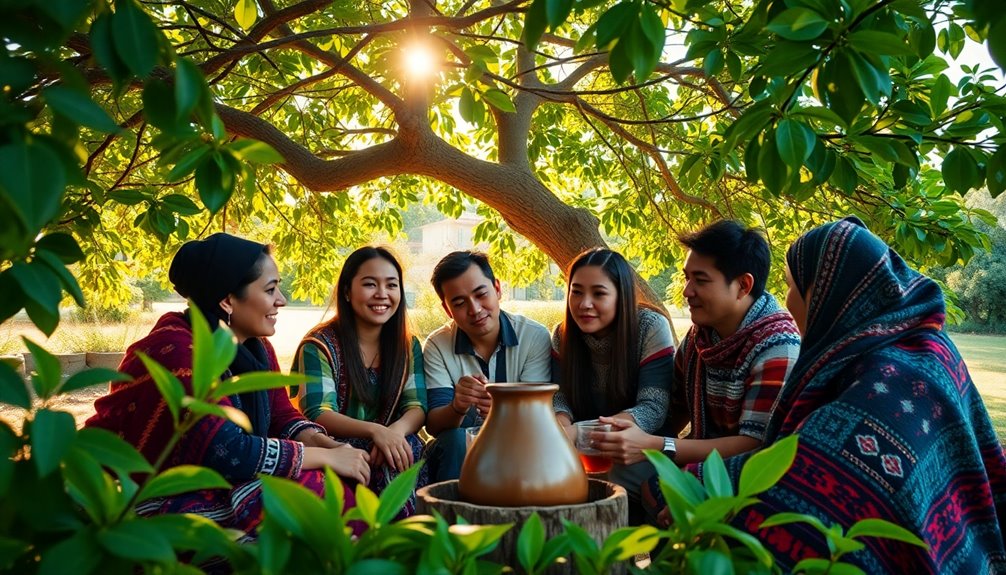
Cultural significance plays a crucial role in how tea is integrated into daily life across South America. In many communities, tea isn’t just a drink; it’s a ritual that strengthens social bonds and carries spiritual meaning. For example, in some Andean cultures, traditional infusions made from native herbs and leaves are used in ceremonies to honor ancestors or mark important events. The act of preparing and sharing tea is often communal, fostering relationships and reinforcing cultural identity. These traditions have persisted despite modernization, highlighting how deeply tea is woven into the social fabric. Additionally, the cultivation of native plants for tea reflects a deep ecological knowledge that has been passed down through generations. This sustainable approach to farming helps protect biodiversity and promotes resilience against environmental challenges.
You’ll also find that South American teas are gaining recognition for their health benefits and unique flavors. As more people seek alternatives to conventional teas, these regional varieties offer a fresh perspective rooted in history and tradition. Whether you’re sipping a fragrant herbal brew or a more robust, earthy tea, you’re experiencing a piece of South America’s cultural mosaic—one that’s been cultivated with care, respect for nature, and a profound sense of community. This story reminds you that tea isn’t just a beverage but a reflection of the land and people who nurture it.
South American herbal tea set
As an affiliate, we earn on qualifying purchases.
As an affiliate, we earn on qualifying purchases.
Frequently Asked Questions
What Are the Health Benefits of South American Tea?
South American tea offers health benefits like improved digestion and boosted immunity through its herbal infusions. The tea fermentation process enhances antioxidants, helping your body fight free radicals. Drinking these teas can also reduce inflammation and promote relaxation. Whether you enjoy traditional or fermented varieties, incorporating South American tea into your routine provides a natural way to support overall health and wellness with rich flavors and beneficial herbal properties.
How Is South American Tea Traditionally Prepared?
You start by harvesting the tea leaves carefully, often by hand, during peak seasons. For traditional brewing, you place the freshly picked leaves in a pot or teapot, then pour hot water over them. Let it steep for several minutes to extract flavor and benefits. Afterwards, strain the leaves and enjoy your tea, often accompanied by local herbs or sweeteners, preserving age-old customs in every cup.
Which Countries in South America Produce the Most Tea?
You’ll find that Argentina and Brazil produce the most tea in South America. These countries have extensive tea plantations where traditional farming methods, like hand-picking and careful processing, are common. Argentina’s tea plantations thrive in the subtropical climate, while Brazil’s regions focus on sustainable farming practices. Their dedication to quality and innovative farming methods help them lead the continent in tea production, making their teas popular both locally and internationally.
Are There Any Unique Tea Varieties Exclusive to South America?
Yes, South America has unique tea varieties rooted in local traditions and indigenous plant uses. For example, yerba mate is a famous South American tea leaf tradition from Argentina, Paraguay, and Brazil, made from the Ilex paraguariensis plant. These teas often reflect indigenous practices and cultural heritage, offering distinct flavors and health benefits. Exploring these varieties lets you experience the rich history and diverse plant uses unique to the continent.
How Does Climate Affect Tea Quality in South America?
You’re right on the mark—climate plays a vital role in tea quality. The soil composition in South America’s diverse regions adds unique flavors, while altitude effects influence leaf maturity and aroma. High elevations typically produce more nuanced, fragrant teas, whereas lower areas might yield bolder tastes. Fundamentally, the climate’s a double-edged sword, shaping each batch’s character and ensuring that the tea’s quality remains consistently exceptional or, at least, worth the effort.
organic native plant teas
As an affiliate, we earn on qualifying purchases.
As an affiliate, we earn on qualifying purchases.
Conclusion
So, next time you sip that mysterious South American tea, remember you’re basically tasting centuries of secret botanical espionage. Who knew a humble leaf could carry such a wild history? Now, go ahead—impress your friends with your newfound knowledge, or just enjoy your brew and pretend you’re a tea connoisseur on a clandestine mission. Either way, you’re officially in on the delicious, undercover world of South American tea. Cheers to that!
sustainable small-batch tea
As an affiliate, we earn on qualifying purchases.
As an affiliate, we earn on qualifying purchases.
traditional South American tea infusions
As an affiliate, we earn on qualifying purchases.
As an affiliate, we earn on qualifying purchases.