Many believe Pu-Erh tea is made through secret methods or that aging time is the only factor in its quality, but these are myths. Its fermentation involves microbial activity rooted in traditional processes, and proper storage conditions influence its flavor and value. While some health claims are supported by studies, they shouldn’t replace medical advice. Understanding the true processes behind Pu-Erh reveals its rich cultural history and complex qualities—if you keep exploring, you’ll discover even more.
Key Takeaways
- Pu-Erh tea’s fermentation is a traditional microbial process, not a mystical or secret method.
- Proper aging involves specific storage conditions that influence flavor and increase value over time.
- Health benefits are supported by some studies but should not replace medical advice or a balanced diet.
- The unique flavor is linked to traditional production methods and careful fermentation, not just time passing.
- Fermentation transforms the tea through microbial activity, requiring patience and proper environmental conditions.
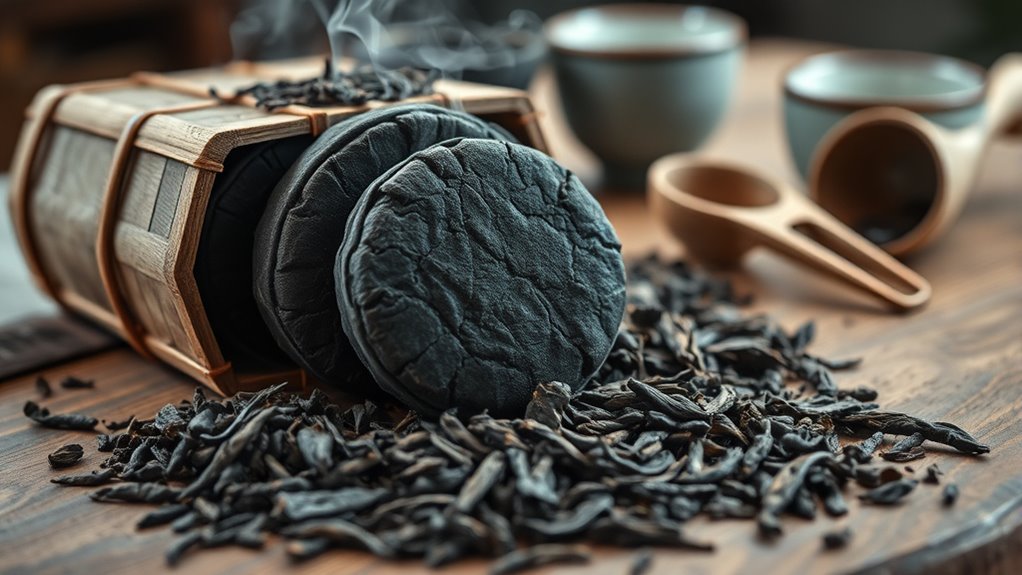
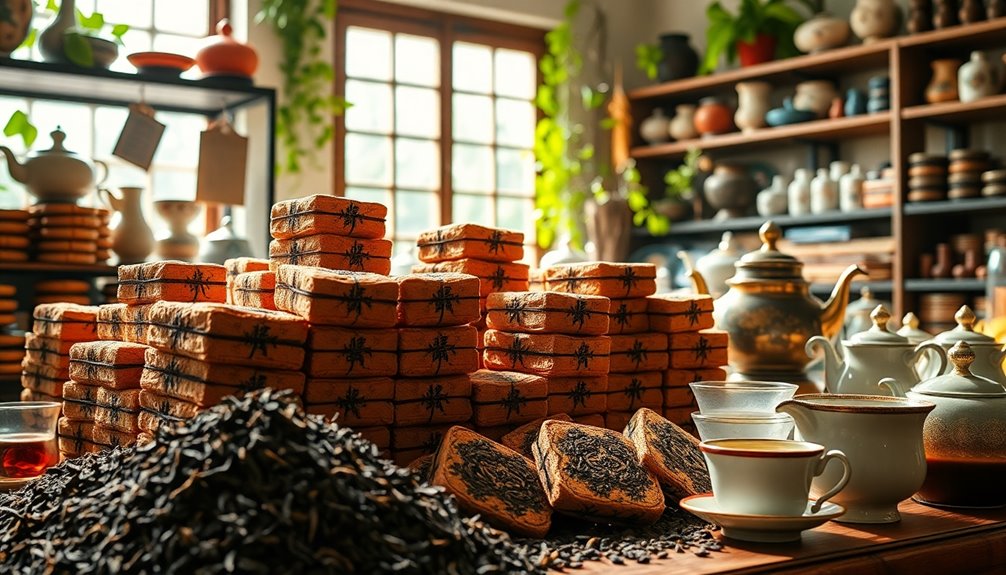
Pu-Erh tea has gained popularity worldwide, but it’s also surrounded by numerous myths that can mislead even seasoned tea enthusiasts. One common misconception is that all Pu-Erh tea is made through a mystical or secret process. In reality, traditional fermentation plays a vital role in creating its unique flavor profile. Traditional fermentation involves microbial activity that transforms the tea leaves over time, giving Pu-Erh its distinctive earthy aroma and smooth texture. This process isn’t a quick fix; it requires patience and careful control, often taking months or even years to develop the desired characteristics. The fermentation process is what sets Pu-Erh apart from other teas, making it a living product that evolves with age. Understanding the fermentation process can deepen appreciation for its complex flavors and cultural significance. Many people believe that aging Pu-Erh tea is purely a matter of time, but it’s actually a carefully managed process. As the tea ages, it undergoes chemical changes that deepen its flavor and mellow its bitterness. The aging process is influenced by storage conditions—humidity, temperature, and airflow all matter. Proper storage guarantees the tea develops the right balance of flavors without spoilage. You might think that any old storage space will do, but dedicated aging environments help maintain the quality and prevent mold or unpleasant odors. Over time, aged Pu-Erh can become more complex and valuable, with some collectors paying top dollar for vintage cakes. It’s also a myth that Pu-Erh tea’s health benefits are exaggerated or that it’s a miracle cure. While it’s true that the fermentation and aging process can produce beneficial compounds, drinking Pu-Erh shouldn’t replace a balanced diet or medical advice. Its purported benefits—such as aiding digestion, lowering cholesterol, and promoting weight loss—are supported by some studies, but not all claims are scientifically proven. The real advantage lies in its unique taste and the cultural tradition behind its production. Gaining knowledge about the fermentation process can enhance your understanding of its unique qualities and health aspects.
Frequently Asked Questions
Can Pu-Erh Tea Help With Weight Loss?
Yes, pu-erh tea can help with weight loss by boosting your metabolism and suppressing your appetite. When you drink it regularly, the natural compounds may increase fat breakdown and reduce your hunger, making it easier to stick to a calorie-controlled diet. While it’s not a magic solution, incorporating pu-erh tea into your routine could support your weight loss efforts alongside healthy eating and exercise.
Is Pu-Erh Tea Safe for Pregnant Women?
Pu-erh tea isn’t advised for pregnant women because of potential pregnancy safety issues and herbal concerns. It contains caffeine and other compounds that might affect your pregnancy or baby. Always consult your healthcare provider before adding any herbal teas, including Pu-erh, to your diet. Staying cautious helps ensure you protect your health and your baby’s well-being during pregnancy.
How Does Aging Affect Pu-Erh Tea’s Flavor?
You’ll find that aging markedly enhances Pu-Erh tea’s flavor, with some varieties developing over decades. During the fermentation process, complex chemical changes occur, leading to richer, smoother tastes. Statistics show that aged Pu-Erh can have 20-30% more nuanced flavor profiles compared to fresh leaves. As it matures, the fermentation process deepens the flavor development, creating a more refined, mellow experience that true tea connoisseurs cherish.
Are There Any Side Effects From Drinking Pu-Erh Regularly?
Drinking pu-erh tea regularly can cause side effects if you’re sensitive to caffeine or have tea allergies. You might experience jitters, insomnia, or increased heart rate. If you’re caffeine-sensitive, limit your intake to avoid these issues. People with tea allergies should be cautious, as allergic reactions can include skin rashes or stomach upset. Always listen to your body and consult a healthcare professional if you notice adverse effects.
What’s the Best Way to Store Pu-Erh Tea?
Imagine a treasure chest, safe and secure—this is your pu-erh’s best storage. Keep it in a cool, dark place with good airflow, avoiding sunlight and strong odors. Use breathable containers like paper or clay to maintain ideal conditions. Store your pu-erh away from humidity and temperature fluctuations, ensuring it ages beautifully. These storage tips protect its flavor, preserving its richness for years to come.
Conclusion
Now that you know the truth behind pu-erh tea, don’t let myths steer you wrong. With facts in hand, you can enjoy this unique brew with confidence, appreciating its rich history and health benefits. Remember, knowledge is power, and it’s better to be safe than sorry. So, don’t judge a book by its cover—dig deeper and savor every sip. The more you learn, the more you’ll see pu-erh for what it truly is.