To brew a perfect cup of oolong tea, start with water heated to around 190°F to 200°F (88°C to 93°C). Use fresh, filtered water and warm your teapot beforehand. Steep for 1 to 3 minutes, adjusting based on the tea’s type and your taste preference. Keep the temperature steady during brewing and taste periodically to prevent over-steeping. If you continue, you’ll discover how small adjustments reveal its full floral, roasted, and sweet flavors.
Key Takeaways
- Use water heated to 190°F–200°F (88°C–93°C) for optimal flavor extraction.
- Steep oolong tea for 1–3 minutes, adjusting based on tea variety and desired strength.
- Use fresh, filtered water and pre-warm your teapot or cup to maintain consistent temperature.
- Pour water gently over tea leaves and cover during steeping to ensure even saturation and heat retention.
- Taste periodically during steeping to prevent over-extraction and achieve the perfect flavor balance.
Have you ever wondered how to release the full flavor of oolong tea? The key lies in understanding how to optimize your brewing process, starting with the right brewing temperature. The temperature directly influences the tea flavor, revealing the intricate balance of sweetness, floral notes, and a slight roasted undertone that make oolong so distinctive. If you brew at too high a temperature, the tea might taste bitter or overly astringent, masking its delicate nuances. Conversely, brewing at too low a temperature can result in a weak, underdeveloped flavor. To get it just right, aim for a temperature between 190°F and 200°F (88°C to 93°C). This range ensures you extract the tea’s full spectrum of flavors without overpowering its natural qualities. Maintaining the correct brewing temperature is essential for a balanced cup. Once you’ve set the correct brewing temperature, you should focus on how long you steep the tea. Generally, a steep time of about 1 to 3 minutes works well, but this can vary depending on the specific oolong variety. Lighter oolongs, such as greenish or more floral types, often require a shorter steep, around a minute, to preserve their delicate notes. Darker, more roasted oolongs can handle longer steeping times, allowing their richer, more robust flavors to develop fully. Keep in mind that over-steeping can lead to a bitter taste, so it’s best to taste the tea after a minute or two and decide if you’d like a stronger infusion.
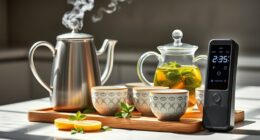
The quality of your water also plays a role in the overall tea flavor. Use fresh, filtered water with a neutral mineral content to avoid introducing unwanted flavors that could compete with the tea. Before pouring the water over your tea leaves, warm your teapot or cup to maintain a consistent brewing temperature. Once the water reaches the ideal temperature, pour it over the leaves gently, ensuring even saturation. Cover the teapot or cup to keep the heat steady during steeping.
Frequently Asked Questions
Can I Reuse Oolong Tea Leaves Multiple Times?
Yes, you can reuse oolong tea leaves multiple times. Tea leaf reuse allows for different flavor infusion with each steep, revealing subtler notes over several infusions. To get the best results, use high-quality leaves and adjust steeping times for each round. Keep in mind that the flavor will become lighter with each reuse, but many tea enthusiasts enjoy exploring the evolving taste profile in successive infusions.
What’s the Ideal Water Temperature for Brewing Oolong Tea?
You should aim for water around 190-200°F (88-93°C) to brew oolong tea. The ideal temperature balances tea leaf oxidation, revealing its complex flavors, while preventing bitterness. Use fresh, filtered water with low mineral content for the best taste. Too hot can scorch the leaves, and too cool won’t fully release the aroma. Adjust slightly based on your preference, but stay within this temperature range for best brewing.
How Long Should I Steep Oolong Tea for the Best Flavor?
Think of steeping oolong as opening a treasure chest of flavor; you want just enough time to reveal its richness. For the best flavor, steep your oolong tea for about 3 to 5 minutes. This allows maximum flavor extraction without bitterness. Keep an eye on the clock, as too long might turn your tea bitter, while too short won’t do justice to its aromatic potential.
Does the Type of Oolong Affect Brewing Time?
Yes, the type of oolong tea affects brewing time because of varying levels of tea leaf oxidation. Heavily oxidized oolongs may need slightly longer steeping, while lighter ones require less. Additionally, the brewing vessel material, like porcelain or clay, influences heat retention and extraction. Adjust your steeping time based on these factors to achieve ideal flavor, ensuring you don’t over- or under-extract the delicate nuances of each oolong type.
Can I Add Milk or Sugar to Oolong Tea?
You can add milk or sugar to oolong tea if you enjoy creamier or sweeter flavors. Notably, about 60% of tea drinkers prefer adding these for a personalized touch. For tea flavoring, try a splash of milk to enhance smoothness or a touch of sugar for sweetness. Keep in mind, experimenting with sweetening options can bring out new dimensions in your oolong experience.
Conclusion
Now that you know how to brew the perfect cup of oolong tea, you’re all set to enjoy its rich flavor and aroma anytime. Did you know that oolong tea accounts for about 2% of the world’s tea production? By mastering these simple steps, you can elevate your tea experience and savor every sip. So go ahead, brew confidently, and discover the delightful nuances this unique tea has to offer!