
Many tea lovers overlook oolong’s true complexity, missing its diverse flavor profiles that change with brewing techniques. You might not realize that lighter brews reveal subtle floral and fruity notes, while darker, roasted varieties need longer steeping to *discover* their richness. Paying attention to water temperature, leaf quantity, and infusion times can transform your experience. If you keep exploring, you’ll discover how mastering these details uncovers a fascinating world of flavor and aroma you’ve yet to enjoy.

Get coffee and tea gear delivered free — and shop member deals
- Fast, free delivery on millions of items
- Access to Prime Big Deal Days deals on October 6–7
- Prime Video, Amazon Music and more included
Key Takeaways
- Many tea lovers overlook Oolong’s complex flavor evolution, which varies with brewing techniques and infusions.
- Underestimating the importance of precise brewing variables can lead to missing subtle flavor nuances.
- The balance of floral, fruity, roasted, and creamy notes is often underappreciated without proper tasting methods.
- Proper equipment and technique significantly enhance the depth of Oolong’s flavors, often overlooked by casual drinkers.
- Patience and experimentation reveal Oolong’s full spectrum, which many tea enthusiasts miss with quick or improper brewing.

Oolong tea often remains underrated among tea enthusiasts, yet many lovers miss its unique complexity and nuanced flavors. If you’ve only scratched the surface by sipping it quickly or sticking to a single brewing method, you’re missing out on a world of depth that transforms with the right approach. The secret lies in understanding its flavor complexity and mastering the proper brewing techniques. When you pay attention to these details, you’ll discover that oolong isn’t just a casual beverage—it’s an experience that evolves with every cup.
Unlock oolong’s true depth by exploring its flavors and perfecting your brewing technique.
The flavor complexity of oolong is what sets it apart from other teas. It offers a delicate balance between the freshness of green tea and the richness of black tea, often featuring floral, fruity, roasted, and even creamy notes all in one sip. But these flavors are not static; they change based on how you prepare the tea. You might find that a light, floral oolong reveals its subtle nuances with a gentle steep, while a darker, more roasted variety comes alive with a slightly longer brew or higher temperature. Recognizing these flavor profiles and experimenting with brewing parameters helps you appreciate the tea’s multidimensional character. Additionally, understanding the flavor development process can deepen your appreciation for how each infusion reveals new layers of complexity. Exploring different brewing variables such as leaf quantity or water quality can also significantly influence the final taste. Paying attention to the tea’s oxidation level can further help you select the right brewing approach to enhance specific flavor notes.
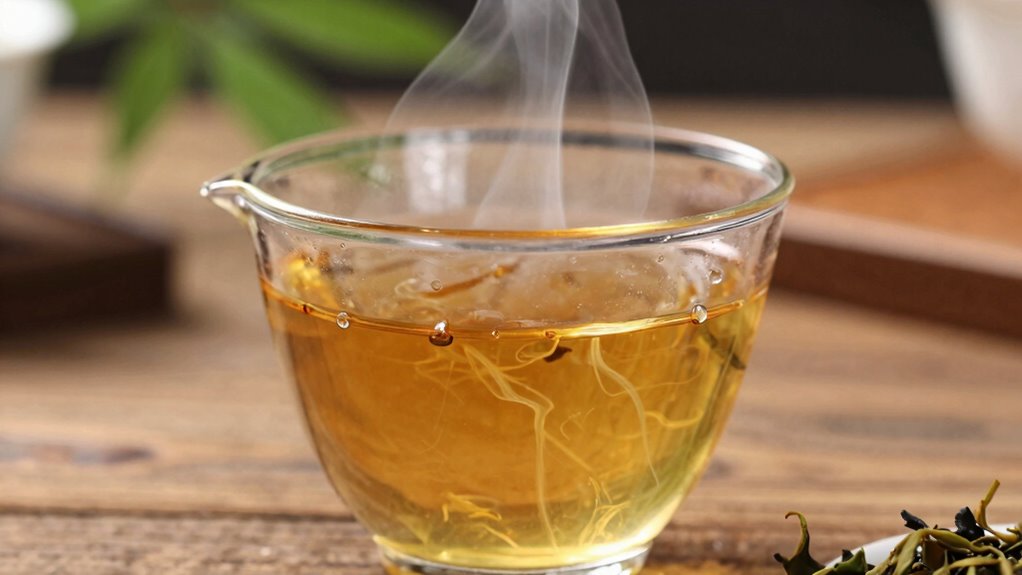
Brewing techniques are crucial to unlocking oolong’s full potential. Unlike standard teas, oolong benefits from specific water temperatures—usually between 185°F and 205°F—and precise steep times, often ranging from 1 to 3 minutes. If you’re too hot or steep too long, you risk overwhelming the delicate flavors, resulting in a bitter or flat taste. Conversely, under-brewing can leave the tea tasting weak and underdeveloped. The key is to find that sweet spot for each type of oolong you enjoy. Multiple infusions are also common and encouraged; each steep can reveal new layers of flavor. Using a gaiwan or a Yixing teapot can enhance your control over brewing variables, allowing for a more nuanced extraction.
Many tea lovers overlook the importance of proper brewing techniques in bringing out oolong’s complexity. They may brew at the wrong temperature or steep for too long, missing the subtle flavor transitions that make oolong so special. By paying attention to water temperature, steeping time, and using the right equipment, you give yourself the best chance to experience the full spectrum of flavors. When you approach oolong with curiosity and precision, you’ll find it’s a tea that rewards patience and experimentation. In doing so, you’ll uncover a richness that can turn a simple cup into a memorable journey of taste.
As an affiliate, we earn on qualifying purchases.
Frequently Asked Questions
How Does Oolong Tea Differ From Green or Black Tea?
Oolong tea differs from green or black tea mainly in its unique tea aroma and processing. It’s partially oxidized, giving it a flavor profile that’s richer than green but lighter than black tea. You should brew it at a specific temperature, usually around 190°F, to reveal its full aroma and taste. Unlike green or black, oolong’s complex flavors develop with careful brewing, making it a delightful experience for tea lovers.
What Are the Best Brewing Techniques for Oolong Tea?
To brew oolong tea perfectly, you should start by controlling water temperature—around 190-200°F—to avoid over-oxidation. Use high-quality, loose tea leaves and rinse them briefly with hot water to awaken their flavors. Steep for 1-3 minutes for a lighter taste or longer for a richer flavor. Repeat steepings, adjusting time, to explore the tea’s complex notes. Proper technique reveals the nuanced balance of oxidation and aroma.
Are There Health Benefits Unique to Oolong Tea?
Like a delicate dance, oolong tea offers unique health benefits you might overlook. It can boost metabolism, improve heart health, and aid digestion, thanks to antioxidants that fight free radicals. Its complex flavor profiles are often highlighted in traditional ceremonies, enhancing mindfulness. By appreciating these benefits, you deepen your connection to the tea, transforming a simple sip into a moment of wellness and tradition.
Can Oolong Tea Help With Weight Management?
Yes, oolong tea can aid weight management. Its caffeine effects boost your metabolism and increase fat burning, similar to herbal comparisons like green tea. Unlike some herbal infusions, oolong contains caffeine, which helps suppress appetite and improve energy levels. Incorporating oolong into your routine may support your weight goals, especially when paired with a balanced diet and exercise, making it a smart choice for those seeking natural weight management support.
What Are Popular Oolong Tea Varieties Worldwide?
You’ll find popular oolong tea varieties worldwide like Tie Guan Yin from China, known for its floral aroma, and Da Hong Pao, famous for its roasted flavor. These teas showcase diverse regional flavor profiles resulting from different tea leaf processing methods, such as oxidation levels and roasting techniques. Exploring these varieties lets you experience the unique tastes that reflect each region’s tradition and craftsmanship, enriching your tea journey.
Conclusion
So, next time you sip on oolong, remember its hidden depths and delicate nuances. Don’t just drink it—experience it. Let each cup be a journey, a dance of flavors that awakens your senses and whispers secrets of tradition. Because in every drop, oolong holds a story waiting to be uncovered. Embrace its mystery, and you’ll find that what you’ve been missing isn’t just flavor, but a world of wonder ready for you to explore.
Fall Picks
fall essentials
As an affiliate, we earn on qualifying purchases.