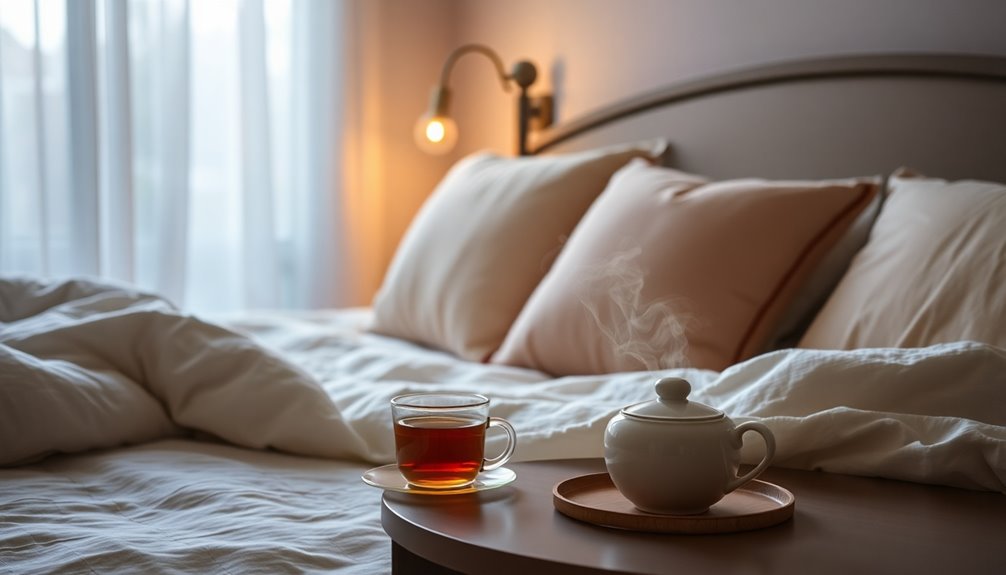
When you enjoy tea, your sensory pathways respond to its aroma, warmth, and taste, activating relaxation signals in your brain. Compounds like L-theanine increase calming neurotransmitters such as GABA, serotonin, and dopamine, which reduce stress hormones. Drinking tea also triggers your parasympathetic nervous system, promoting rest and digestion. Plus, the ritual of preparation and mindfulness strengthens neural circuits tied to calmness. Stay tuned to discover how these processes work together to enhance your sense of peace.

Get coffee and tea gear delivered free — and shop member deals
- Fast, free delivery on millions of items
- Access to Prime Big Deal Days deals on October 6–7
- Prime Video, Amazon Music and more included
Key Takeaways
- Tea’s aroma, taste, and warmth activate sensory pathways that promote relaxation and stimulate the brain’s calming regions.
- Compounds like L-theanine increase GABA, serotonin, and dopamine levels, reducing stress and enhancing mood.
- Neurochemical shifts from tea consumption dampen cortisol levels, alleviating stress responses.
- Drinking tea activates the parasympathetic nervous system, fostering a ‘rest and digest’ state of relaxation.
- The tea ritual reinforces neural pathways associated with mindfulness and reward, amplifying its calming effects.

Tea has long been celebrated for its calming effects, but recent neuroscience research reveals the underlying mechanisms that make this possible. When you take a sip, your brain responds in ways that promote relaxation through complex interactions within your brain chemistry and sensory pathways. These pathways are responsible for processing the sensory input from the aroma, taste, and even the warmth of the tea, all of which contribute to your calming experience. As you inhale the fragrant aroma or savor the subtle flavors, sensory receptors in your nose and mouth send signals via sensory pathways to your brain. These signals are then interpreted in regions like the limbic system, which governs emotion and mood, triggering feelings of comfort and tranquility.
Your brain chemistry plays a pivotal role in this process. The compounds present in tea, such as the amino acid L-theanine, influence neurotransmitter activity, promoting a sense of relaxation without drowsiness. L-theanine increases levels of gamma-aminobutyric acid (GABA), serotonin, and dopamine—neurotransmitters linked to reducing stress and enhancing mood. When these chemicals are boosted, your brain becomes more adept at dampening the effects of stress hormones like cortisol. This biochemical shift helps you feel more at ease, even in stressful situations.
L-theanine in tea boosts GABA, serotonin, and dopamine, promoting relaxation and reducing stress naturally.
Moreover, the act of drinking tea itself can activate the parasympathetic nervous system, which is responsible for the ‘rest and digest’ response. This activation is partly driven by the sensory pathways that relay calming signals from your mouth and nose to your brain. As the sensory input from the warm cup, the gentle aroma, and the soothing taste reaches your brain, it encourages your nervous system to shift from a state of alertness to one of relaxation. This shift is reinforced by the chemical changes in your brain chemistry, creating a feedback loop that amplifies the calming effect.
In addition, the ritual of preparing and drinking tea helps reinforce these neural responses. The repetitive, mindful actions stimulate additional sensory pathways and activate brain areas associated with reward and relaxation. The combined influence of sensory signals and neurochemical adjustments fosters a holistic calming effect that can reduce anxiety and promote mental clarity. Basically, your brain interprets the sensory experience and chemical changes as signals to relax, making tea not just a beverage but a powerful tool for soothing your mind. Furthermore, engaging in this ritual can enhance mindfulness and deepen the calming experience, contributing to overall mental well-being.
As an affiliate, we earn on qualifying purchases.
Frequently Asked Questions
Does Decaffeinated Tea Have the Same Calming Effects?
Decaffeinated tea still offers calming benefits, as it contains the same antioxidants and compounds that influence brain chemistry. While it lacks caffeine, which can sometimes increase anxiety, the relaxation effects come from other elements like the amino acid L-theanine. You’ll enjoy the soothing experience without the jitters, making decaffeinated tea a great choice for calming your mind and body while still benefiting from tea’s natural properties.
How Does Tea Compare to Meditation for Stress Relief?
Like a gentle lullaby for the mind, tea and meditation both soothe stress, but they do so differently. Tea provides sensory stimulation through warmth and aroma, offering a calming ritual. Meditation, a mindfulness practice, trains you to observe thoughts calmly. While tea can quickly relax you, meditation builds long-term resilience. Combining both can deepen your stress relief, creating a harmonious balance of sensory pleasure and mental clarity.
Can Individual Brain Chemistry Influence Tea’S Calming Benefits?
Your brain chemistry and genetic factors can definitely influence how you experience tea’s calming benefits. If your brain produces more calming neurotransmitters or has specific genetic traits, you might feel more relaxed after drinking tea. Conversely, variations in brain chemistry could make the calming effects less noticeable. So, individual differences play a role, meaning tea’s impact isn’t the same for everyone, depending on your unique genetic makeup.
Are There Specific Teas More Effective for Anxiety?
When choosing teas for anxiety, you might find certain herbal blends and tea varieties more effective. For instance, chamomile and lavender teas are known for their calming properties, while valerian root and lemon balm can also help reduce stress. Experiment with different herbal blends to discover which ones soothe your nerves best. Remember, individual reactions vary, so it’s worth trying a few options to find what works best for you.
How Quickly Does Tea Impact Brain Activity Related to Relaxation?
Imagine your brain as a symphony, where tea acts as a gentle conductor. You might notice brain wave modulation within 20 minutes, as tea stimulates neurotransmitter responses like increased GABA, promoting relaxation. Research suggests these effects can be quite rapid, often felt in just a few sips. So, when you brew a calming cup, you’re effectively tuning your brain’s harmony, encouraging tranquility almost instantly.
Conclusion
As you sip tea, you’re gently steering a symphony of neural signals, each note contributing to a calmer mind. The compounds in tea act like soothing musicians, quieting your stress and tuning your brain to a peaceful rhythm. By understanding this dance of neurons, you realize that your calming experience isn’t just in your head—it’s a beautifully orchestrated performance within your brain, turning a simple cup into a sanctuary of serenity.
Fall Picks
fall essentials
As an affiliate, we earn on qualifying purchases.