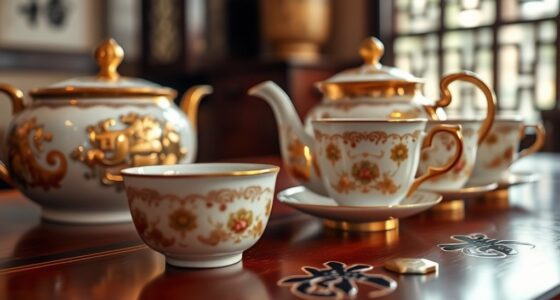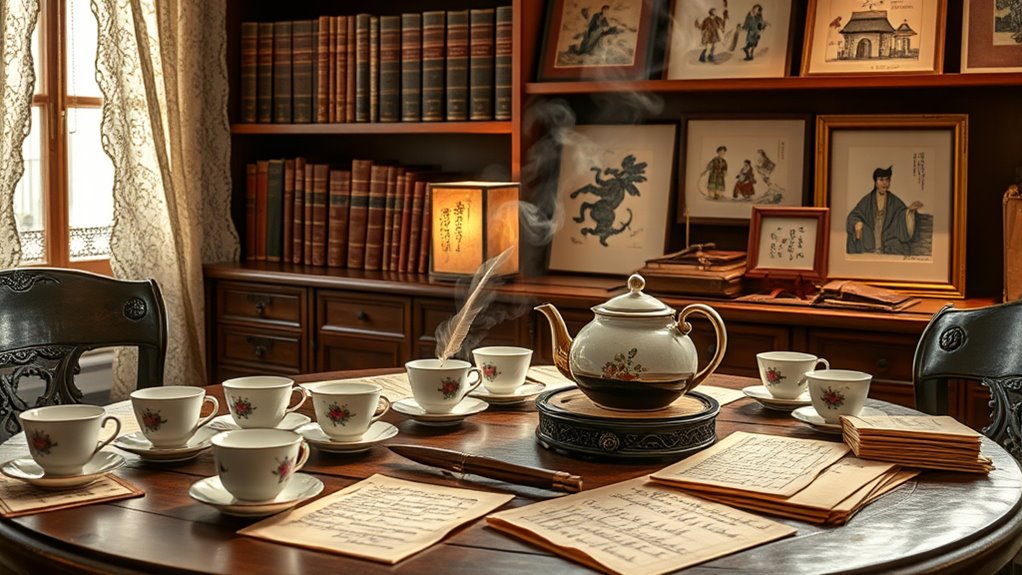

The historical significance of tea greatly influences art and literature by inspiring themes of serenity, social harmony, and cultural identity. You’ll see how tea embodies hospitality and spiritual reflection, shaping paintings, poetry, and stories across cultures. Artists and writers use tea to explore tradition, personal transformation, and cross-cultural exchanges. Its layered symbolism continues to inspire modern creations, connecting past and present. To discover how this rich history shapes creative expressions today, explore further.
Key Takeaways
- Tea’s cultural symbolism influences artistic themes representing hospitality, social harmony, and spiritual reflection across civilizations.
- Artistic depictions highlight tea’s role in rituals, emphasizing serenity, mindfulness, and cultural identity.
- Literature uses tea as a metaphor for social change, nostalgia, and personal transformation throughout history.
- Cross-cultural exchanges around tea shape diverse artistic styles, reflecting shared values and historical connections.
- The historical significance of tea continues to inspire contemporary art and literature, reinforcing cultural legacy and identity.

Tea’s historical significance has profoundly influenced art and literature, shaping creative expression across cultures and eras. When you explore the rich tapestry of tea’s history, you’ll notice how deeply it’s woven into the fabric of cultural symbolism and artistic inspiration. Tea isn’t merely a beverage; it’s a symbol that embodies hospitality, social harmony, and spiritual reflection in many societies. Its presence in ancient rituals, poetic verses, and visual storytelling offers a window into the values and beliefs of diverse civilizations. As you probe into historical artworks and literary works, you’ll see how tea’s symbolism elevates these pieces, transforming everyday moments into profound expressions of cultural identity.
Tea’s rich history reflects cultural values, inspiring art and literature across civilizations.
Throughout history, artists and writers have drawn inspiration from tea’s cultural significance. In East Asia, for example, tea ceremonies became a subject of paintings and poetry, emphasizing serenity, mindfulness, and the pursuit of harmony. These artistic representations serve as visual and literary testament to tea’s role as more than a drink; they highlight its importance as a conduit for cultural values. Similarly, in European art, tea was associated with refinement, social status, and leisure, inspiring paintings that capture elegant gatherings and intimate conversations. Writers, too, often used tea as a motif to explore themes of tradition, social connection, and introspection. The beverage’s symbolism has given artists and authors a versatile tool to convey complex ideas about identity, community, and spirituality.
You’ll also find that the influence of tea extends into the domain of literature, where it often functions as a metaphor for social change or personal transformation. Classic poets and modern novelists alike have incorporated tea into their works to evoke a sense of nostalgia, tranquility, or cultural pride. Its recurring presence in stories and poems helps to connect readers with historical moments and cultural practices, enriching the narrative with layers of meaning. Additionally, research into the historical significance of tea reveals its role in fostering cross-cultural exchanges and influencing artistic styles worldwide. Its recurring presence in stories and poems helps to connect readers with historical moments and cultural practices, enriching the narrative with layers of meaning. As you examine these creative pieces, you’ll recognize how tea’s symbolism enhances storytelling, making it a powerful element that bridges the past and present.
In essence, the historical significance of tea continues to inspire artists and writers, fueling their creativity with its layered meanings. Whether through visual art, poetry, or prose, tea’s cultural symbolism offers endless inspiration, allowing you to appreciate its role in shaping cultural narratives and artistic expressions across the globe. It’s a tribute to how a simple beverage can carry profound historical weight, inspiring generations to explore and celebrate their cultural identities through art and literature.
Top picks for "impact historical significance"
Open Amazon search results for this keyword.
As an affiliate, we earn on qualifying purchases.
Frequently Asked Questions
How Did Tea Influence the Development of Specific Art Movements?
You see, tea influenced art movements by inspiring artistic symbolism and shaping the aesthetic movement. Artists used tea as a symbol of serenity and refinement, capturing its cultural significance. During the aesthetic movement, tea represented beauty and sensory experience, inspiring paintings and decorative arts. Your appreciation for these works deepens as you recognize how tea’s cultural symbolism helped shape artistic themes emphasizing elegance, tranquility, and sensory pleasure.
Which Literary Works Prominently Feature Tea as a Central Theme?
You’ll find tea prominently featured in literary works like Lewis Carroll’s *Alice’s Adventures in Wonderland*, where tea symbolism highlights themes of curiosity and whimsy. In Jane Austen’s *Emma*, literary tea scenes serve as social settings, emphasizing character interactions. These scenes enrich stories by using tea as a symbol of tradition, civility, and change, making it a central theme that captures cultural nuances and human relationships across various works.
How Did Tea’s Cultural Significance Vary Across Different Regions?
You’ll notice that tea’s cultural significance varies widely across regions. In China, tea symbolizes harmony and tradition, reflected in elaborate rituals and regional customs. Meanwhile, in Britain, tea became a social staple, representing hospitality and refinement. In Japan, matcha tea embodies spiritual practice and cultural expressions. These differences showcase how tea adapts to and shapes regional customs, deeply influencing cultural identity and social interactions worldwide.
What Role Did Tea Play in the Social Settings Depicted in Art?
Imagine yourself in a 17th-century European painting, where a delicate tea set highlights the importance of tea symbolism in social rituals. Tea often signifies hospitality, refinement, and social bonding. Artists depict these moments to emphasize elegance and status, showing how tea plays a central role in social settings. You see it as a symbol of civility, turning everyday gatherings into cherished rituals that reflect cultural values.
Are There Notable Artists or Writers Specifically Inspired by Tea?
You’ll find that many artists and writers have found inspiration in tea, using it as a symbol of hospitality, serenity, or social change. For instance, James McNeill Whistler’s paintings often feature tea sets, highlighting its symbolism in daily life. Writers like Virginia Woolf also drew on tea’s cultural significance, inspiring scenes that evoke calm or introspection. Tea serves as a powerful muse, enriching art and literature through its layered symbolism.
Conclusion
You can’t ignore how tea has shaped art and literature throughout history. It’s inspired countless paintings, poems, and stories that capture its cultural depth and allure. As you reflect on these creative works, ask yourself—what would our world look like without this simple yet powerful beverage? Tea’s enduring influence reminds you that even the smallest things can leave the biggest mark, inspiring generations and enriching our cultural tapestry.