Many myths surround hibiscus tea, like it causing rapid weight loss or being unsafe for everyone. In reality, research shows it offers health benefits such as lowering blood pressure and supporting heart health, but it’s not a miracle cure. Its herbal properties are most effective when paired with a balanced lifestyle. If you want to uncover the truth behind these myths and learn how to enjoy hibiscus safely, there’s more to discover below.
Key Takeaways
- Hibiscus tea is rich in antioxidants and supports health but is not a miracle cure for weight loss or medical conditions.
- It can help lower blood pressure and improve heart health, confirmed by scientific studies.
- Myths claiming it causes drastic weight loss or is unsafe for everyone are false; moderation and consultation are advised.
- Historically, hibiscus holds cultural significance and traditional medicinal uses across many societies.
- For optimal benefits, hibiscus tea should complement a balanced diet and healthy lifestyle, not replace medical treatment.
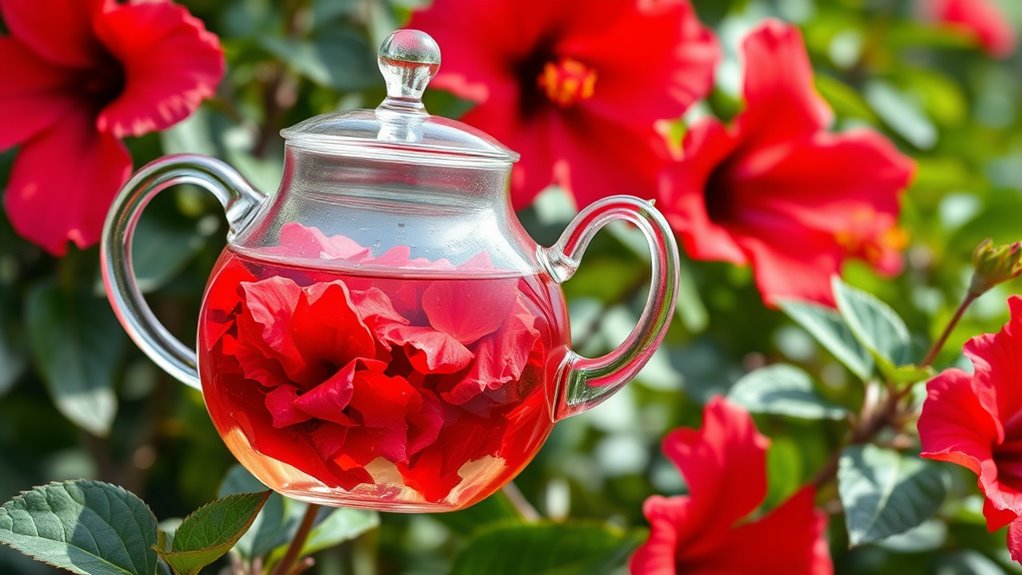
Hibiscus tea is often celebrated for its vibrant color and numerous health benefits, but it’s also surrounded by myths that can lead to misconceptions. When you explore its herbal benefits, you discover that hibiscus is rich in antioxidants, vitamin C, and other nutrients that support your immune system, lower blood pressure, and improve overall heart health. These attributes have made hibiscus tea a popular choice worldwide, especially in regions where traditional herbal remedies hold cultural significance. In many cultures, hibiscus has been used for centuries not just as a invigorating beverage but also as part of medicinal practices, symbolizing health, vigor, and even spiritual well-being. This cultural significance adds depth to its popularity, making it more than just a drink—it’s a essential part of traditional rituals and social gatherings.
However, some myths cloud the understanding of hibiscus tea’s true effects. One common misconception is that drinking hibiscus tea can cause drastic weight loss overnight. While it’s true that the tea may support weight management by aiding digestion and reducing water retention, it’s not a miracle cure. Relying solely on hibiscus tea without a balanced diet and regular exercise won’t lead to significant weight loss. Another myth is that hibiscus tea is always safe for everyone. While generally considered safe for most people, those with low blood pressure, pregnant women, or individuals on certain medications should consult their healthcare provider before consuming it regularly. Believing that hibiscus tea can replace prescribed medical treatments is misleading and potentially dangerous.
Some folks also think that the herbal benefits of hibiscus are exaggerated or that it’s only a trendy health fad. But scientific research supports its role in promoting cardiovascular health and reducing oxidative stress. Still, it’s important to remember that herbal benefits are most effective when used as part of a healthy lifestyle, not as a substitute for medical advice. The cultural significance of hibiscus further underscores its importance in various societies. In Egypt, hibiscus is used in traditional medicine and celebrations; in Mexico, it’s a staple in drinks like Jamaica’s agua de Jamaica; and in parts of Asia, it’s valued for its cooling properties and spiritual symbolism. These cultural contexts help explain why hibiscus tea remains beloved across different regions, despite myths suggesting it’s a cure-all or dangerous to consume in any amount.
Understanding these truths and misconceptions allows you to appreciate hibiscus tea for what it truly offers—an enjoyable beverage with notable herbal benefits deeply rooted in cultural traditions.
Frequently Asked Questions
Can Hibiscus Tea Help Lower Blood Pressure Quickly?
Hibiscus tea can help lower blood pressure quickly, thanks to its blood pressure benefits. Drinking it may cause a noticeable reduction in systolic and diastolic numbers within hours or days. Compared to other herbal teas, hibiscus is particularly effective for hypertension. However, you should still consult your doctor before relying solely on it, especially if you’re on medication, to guarantee safe herbal tea comparisons and maximum health advantages.
Is Hibiscus Tea Safe During Pregnancy and Breastfeeding?
Hibiscus tea is generally considered safe during pregnancy and breastfeeding in moderation, but consult your healthcare provider first. About 80% of pregnant women experience some form of nausea, and you’ll want to avoid anything that could trigger it, including potential herbal risks. For pregnancy safety and breastfeeding considerations, limit intake, as high doses might affect hormone levels or cause uterine contractions. Always speak with your doctor for personalized advice.
Does Hibiscus Tea Cause Any Allergic Reactions?
Hibiscus tea can cause allergic reactions if you have allergic sensitivities or a tea allergy. You might experience symptoms like itching, swelling, or difficulty breathing. If you notice any tea allergy symptoms after drinking hibiscus tea, stop consumption immediately and consult a healthcare professional. Always check ingredient labels and consider doing a patch test first, especially if you have a history of allergies.
How Does Hibiscus Tea Compare to Other Herbal Teas?
Like a book with many chapters, hibiscus tea offers a unique flavor profile—tart, floral, and slightly fruity—that sets it apart from other herbal teas. It often holds cultural significance, especially in tropical regions. You might find it more vibrant and tangy than calming chamomile or mint. While each herbal tea has its charm, hibiscus’s bold taste and cultural roots make it a invigorating choice for those seeking something distinctive.
Can Hibiscus Tea Interfere With Medications?
Yes, hibiscus tea can interfere with medications due to drug interactions, especially if you’re taking blood pressure or diabetes medicines. It has herbal cautions because it may lower blood pressure too much or affect how your body absorbs certain drugs. To stay safe, consult your healthcare provider before adding hibiscus tea to your routine, especially if you’re on medication or have health concerns.
Conclusion
As you sip hibiscus tea, remember it’s more than just a vibrant bloom—it’s a symbol of vitality and tradition. Dispel the myths, embrace the facts, and let its rich hue remind you of nature’s wisdom. Like the enduring flower, your understanding can blossom, transforming misconceptions into clarity. So, drink with confidence, knowing each cup is a reflection of history, health, and the timeless dance between myth and truth.