Herbal teas boost your health naturally by providing powerful antioxidants that fight free radicals and slow aging. They support digestion, ease bloating, and reduce inflammation, especially with herbs like ginger and peppermint. Plus, herbal teas improve hydration and help your body detoxify toxins. They’re easy to include in your daily routines, promoting wellness and energy. Keep exploring to discover how different herbs can be tailored to meet your specific health needs.
Key Takeaways
- Herbal tea is rich in antioxidants that combat free radicals, helping to slow aging and protect cells.
- It aids digestion, reduces bloating, and calms stomach discomfort through soothing herbs like ginger and peppermint.
- Herbal teas promote hydration and assist in detoxification by supporting the body’s natural toxin elimination processes.
- Easy to incorporate into daily routines, they enhance energy, immunity, and overall well-being with consistent use.
- They serve as natural health boosters, supporting immunity, reducing inflammation, and providing tailored benefits for individual needs.
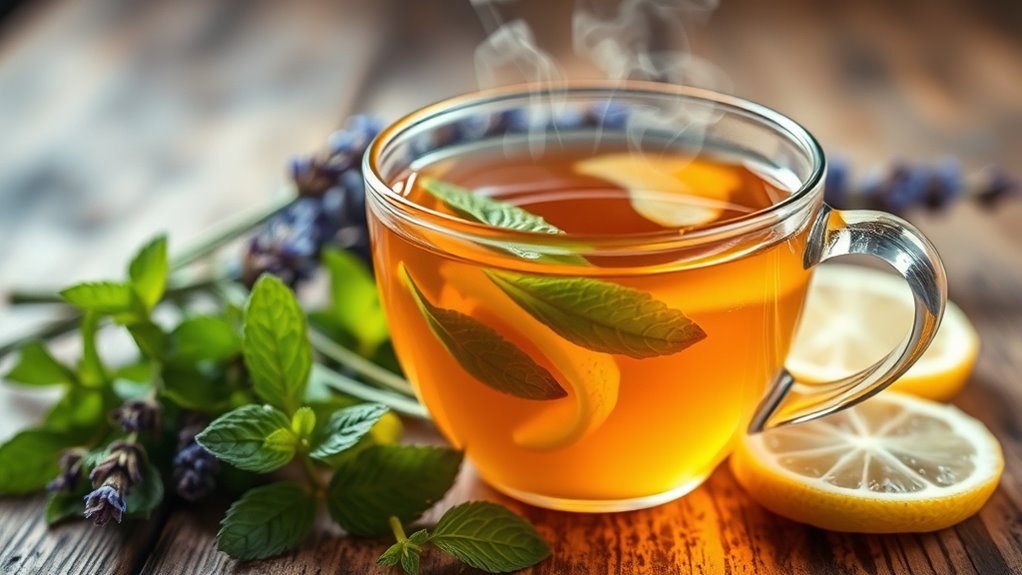
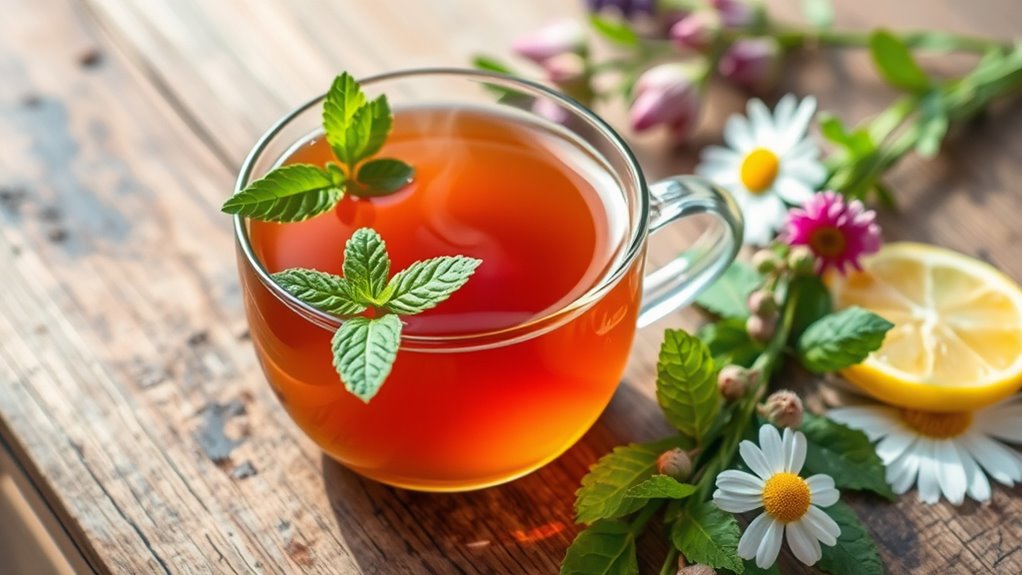
Herbal tea offers a flavorful way to boost your health naturally. When you sip on a warm cup of herbal tea, you’re not just enjoying its comforting aroma and taste—you’re also giving your body a boost with powerful herbal tea antioxidants. These antioxidants help fight free radicals, which are unstable molecules that can cause cellular damage and accelerate aging. By incorporating herbal tea into your daily routine, you’re supporting your body’s natural defenses and promoting overall wellness. Whether it’s chamomile, peppermint, or hibiscus, each herbal tea variety brings its unique blend of antioxidants, making your choice both delicious and beneficial.
Herbal teas boost health with antioxidants that fight aging and support wellness naturally.
Aside from its antioxidant content, herbal tea is also renowned for aiding digestion. If you often feel bloated or uncomfortable after meals, herbal teas like ginger or peppermint can be your best allies. These teas help soothe your stomach, reduce inflammation, and stimulate gastric juices, making digestion smoother and more comfortable. Drinking herbal tea after a meal can prevent indigestion and ease symptoms of gas or stomach upset. Plus, many herbs used in teas possess anti-inflammatory properties that can calm irritated digestive tissues, helping you feel better faster. Over time, regular consumption of herbal teas tailored for digestion can support your gut health, encouraging a balanced and healthy digestive system.
You might also notice that herbal teas can contribute to better hydration, which is essential for overall health. Unlike caffeinated beverages, herbal teas typically contain little to no caffeine, so you can enjoy them throughout the day without worrying about dehydration. Their natural compounds may also support detoxification processes, helping your body eliminate toxins more effectively. Additionally, herbal teas can serve as a gentle remedy for common ailments—like chamomile to promote relaxation or licorice root for sore throats—adding to their versatility as natural health boosters. Incorporating herbal teas with high antioxidant content can further enhance your health benefits by combating oxidative stress more effectively.
The best part is that herbal teas are easy to incorporate into your daily routine. Whether you prefer a calming cup before bed or an invigorating brew during the afternoon, there’s a herbal tea suited for every mood and purpose. Just be mindful of the quality and ingredients to maximize health benefits. By consciously choosing herbal teas rich in antioxidants and supportive of digestion, you’re actively nurturing your body. This simple habit can lead to improved energy levels, better immune function, and a greater sense of well-being over time. So, next time you reach for a drink, consider herbal tea—it’s a tasty, natural way to support your health every day.
Frequently Asked Questions
Can Herbal Teas Replace Medical Treatments?
Herbal teas can’t replace medical treatments, as their efficacy varies and they aren’t a substitute for professional care. While herbal tea longevity can support overall wellness, you should see a healthcare provider for serious health issues. Relying solely on herbal tea might delay necessary treatments, so use it as a complementary addition rather than a replacement. Always consult with your doctor before making significant health changes.
Are There Any Side Effects From Herbal Teas?
Yes, there can be possible side effects from herbal teas, especially if you have herbal tea allergies or sensitivities. You might experience reactions like allergic responses, stomach upset, or interactions with medications. It’s important to check ingredient labels and consult your healthcare provider if you’re unsure. Be cautious with excessive consumption, as some herbal ingredients can cause adverse effects, particularly for pregnant women or those with pre-existing health conditions.
How Much Herbal Tea Is Safe to Drink Daily?
You can safely enjoy 2-3 cups of herbal tea daily, as research suggests this amount balances benefits and minimizes risks. Keep in mind, herbal teas typically have low or no caffeine content and are calorie-free, making them a healthy choice. Drinking within this range helps you avoid potential side effects like upset stomach or sleep disturbances, ensuring you benefit from their soothing properties without overdoing it.
Do Herbal Teas Interact With Medications?
Herbal teas can interact with medications through medication interactions and herbal contraindications. You should always check with your healthcare provider before drinking herbal teas if you’re on medication, as some herbs can alter drug effectiveness or cause adverse effects. For example, certain herbs may increase bleeding risks or interfere with blood pressure medicines. Being aware of herbal contraindications helps you enjoy herbal teas safely without risking negative interactions.
Which Herbal Teas Boost Immunity the Most?
You can feel a gentle boost in your defenses by sipping herbal teas rich in antioxidants and immune-boosting herbs. Teas like echinacea, elderberry, and ginger are known for their immune-enhancing properties, helping you stay resilient during seasonal changes. These herbal teas work quietly yet effectively, supporting your body’s natural defenses, so you can face each day with renewed vigor and a sense of well-being.
Conclusion
So, next time you sip on herbal tea, remember you’re opening nature’s secret treasure chest. With each cup, you’re nurturing your body and calming your mind—like a gentle whisper from Mother Earth herself. Embrace these natural remedies not just as drinks, but as allies in your wellness journey. After all, isn’t it beautiful how a simple brew can hold so much power? Let herbal tea be your daily ritual of health and harmony.