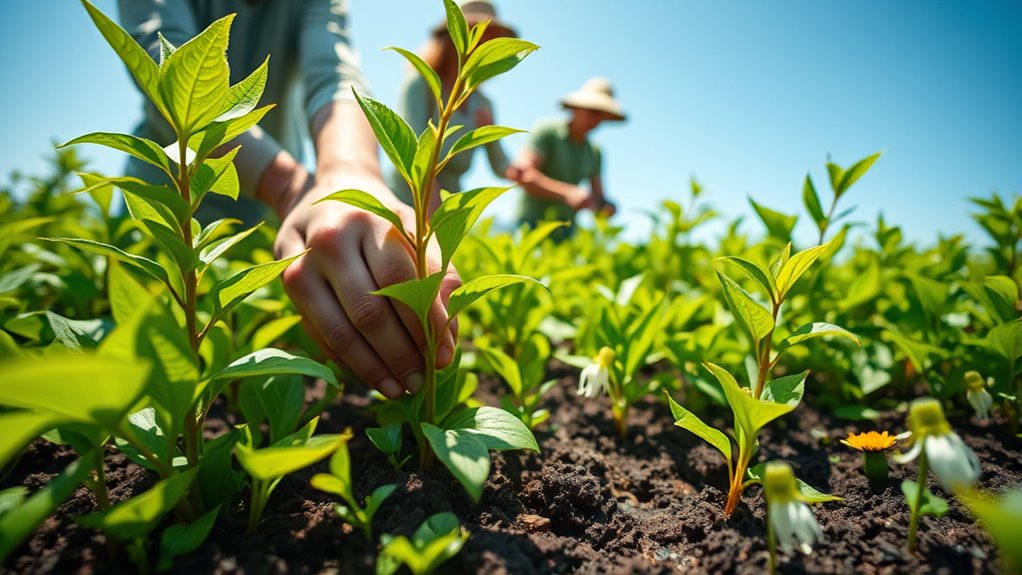
Choosing herbal teas crafted through sustainable cultivation and ethical sourcing helps protect the environment, promote biodiversity, and guarantee high-quality flavors. By supporting farms that use eco-friendly practices like organic pest control, water conservation, and crop rotation, you’re contributing to healthier ecosystems and soil. These farms prioritize pollinator safety and reduce chemical use, ensuring a cleaner product. To discover how these methods can make a difference, continue with the next steps.

Get coffee and tea gear delivered free with Prime
- Fast, free delivery on millions of items
- Prime Video, Amazon Music and more included
- Member-only deals all year
Key Takeaways
- Organic cultivation methods prevent chemical residues, ensuring herbal teas are pure and environmentally friendly.
- Water conservation techniques like drip irrigation and rainwater harvesting promote sustainable resource use.
- Using natural pest control preserves biodiversity and avoids harmful chemicals in herbal products.
- Ethical sourcing supports fair trade practices and benefits local communities and ecosystems.
- Consumers can promote sustainability by choosing herbal teas produced with eco-conscious farming practices.
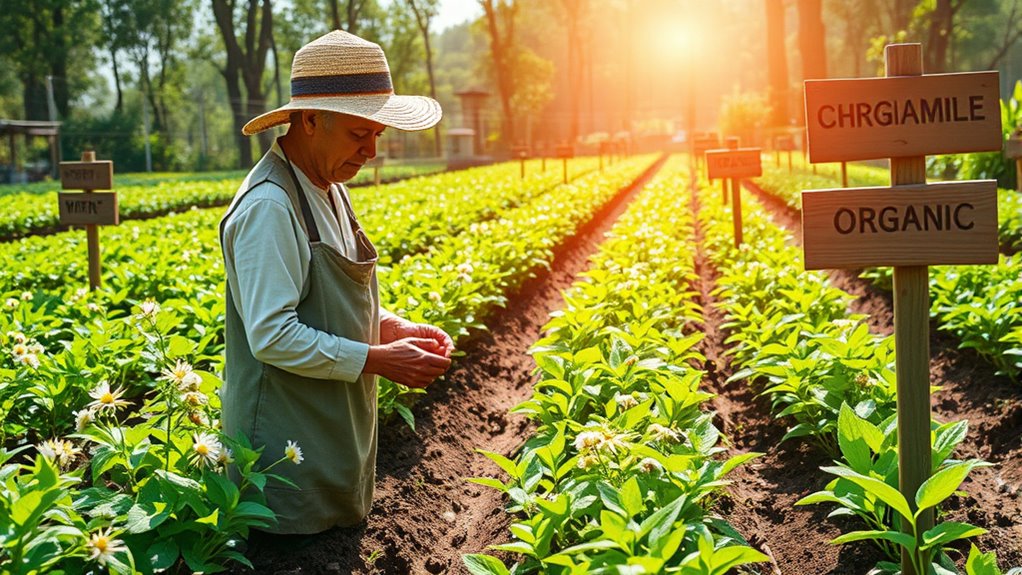
Sustainable cultivation of herbal tea is essential for preserving both the environment and the quality of your favorite beverages. When you choose herbal teas cultivated with eco-conscious practices, you’re supporting healthier ecosystems and ensuring the plants you enjoy remain abundant and vibrant. One key aspect of sustainable farming is organic pest control, which eliminates harmful chemicals that can pollute soil and water. Instead of relying on synthetic pesticides, farmers often use natural predators, companion planting, or neem oil to manage pests. These methods keep pests in check without jeopardizing the health of the land or the safety of the tea you drink. Organic pest control not only safeguards pollinators like bees and butterflies but also maintains the soil’s natural balance, leading to higher-quality herbs that are free from chemical residues. Additionally, integrating crop rotation helps prevent soil depletion and reduces the likelihood of pest infestations, further supporting sustainable practices.
Water conservation plays a crucial role in sustainable herbal tea cultivation. Water is a precious resource, and excessive use can lead to depletion of local water sources and harm surrounding ecosystems. Farmers committed to sustainability employ techniques like drip irrigation, which delivers water directly to the plant roots, minimizing waste. Mulching around plants helps retain moisture in the soil, reducing the need for frequent watering. Rainwater harvesting systems are also becoming more common, allowing farms to collect and use natural rainfall efficiently. By conserving water, farmers not only reduce their environmental footprint but also promote healthier plant growth. When water is used responsibly, it helps prevent soil erosion and maintains the land’s fertility, ensuring that future harvests remain viable. You can be confident that herbal teas produced through such sustainable practices are better for the planet and often taste fresher and more robust.
Choosing herbal teas cultivated with organic pest control and water conservation practices means you’re actively supporting eco-friendly farming. These methods help reduce pollution, conserve essential resources, and protect biodiversity. When farmers prioritize sustainability, they also tend to pay closer attention to soil health, crop rotation, and minimal use of non-renewable resources, all of which contribute to a cleaner, greener supply chain. By being mindful of how your herbal tea is grown, you’re not only enjoying a flavorful beverage but also making a positive impact on the environment. Sustainable cultivation practices foster resilient farms that can withstand climate challenges and still produce high-quality herbs. Your choices matter, and opting for teas cultivated with these principles ensures you’re supporting a healthier planet while savoring the natural goodness of herbal infusions.
As an affiliate, we earn on qualifying purchases.
Frequently Asked Questions
How Does Ethical Sourcing Impact Local Communities?
Ethical sourcing positively impacts local communities by promoting community empowerment and fair trade initiatives. When you support ethically sourced herbal tea, you help guarantee fair wages and better working conditions for farmers. This encourages community development, preserves local traditions, and fosters economic stability. Your choices directly contribute to empowering farmers and their families, creating a sustainable cycle of growth and fairness that benefits everyone involved.
What Are the Certification Standards for Sustainable Herbal Tea?
You’ll be amazed by how these standards protect your herbal tea choices. Certification standards like Fair Trade ensure farmers receive fair wages, while biodiversity preservation guidelines safeguard ecosystems. Look for labels like Fair Trade and Rainforest Alliance, which verify sustainable practices. These standards guarantee your tea is ethically sourced, supports local communities, and helps preserve biodiversity—making every sip a conscious, impactful choice that’s as powerful as a tidal wave.
How Can Consumers Identify Ethically Sourced Herbal Tea?
To identify ethically sourced herbal tea, you should look for herbal sourcing information on the packaging and check for ethical labels like Fair Trade or Rainforest Alliance. These labels indicate that the tea was produced with fair labor practices and environmentally friendly methods. Additionally, research brands committed to transparency and sustainability, as they often share details about their sourcing. This way, you guarantee your tea supports ethical practices and responsible cultivation.
Are There Any Certifications for Organic Herbal Tea?
Yes, there are certifications for organic herbal tea. Look for certification labels like USDA Organic, EU Organic, or other reputable organic standards. These labels guarantee the tea meets strict criteria for organic cultivation, without synthetic pesticides or fertilizers. When you see these certifications on packaging, you can trust that the herbal tea has been produced following recognized organic standards, supporting sustainable and ethical practices.
What Are the Environmental Benefits of Sustainable Cultivation Practices?
Imagine you’re living in a world where sustainable farming is the new Renaissance. By practicing sustainable cultivation, you improve soil health, which boosts crop resilience and reduces the need for chemicals. You also preserve biodiversity, supporting ecosystems and wildlife. These methods lower environmental impact, conserve water, and fight climate change. Your choices in herbal tea cultivation help create a healthier planet, ensuring lush landscapes and vibrant life for generations to come.
Conclusion
By choosing herbal teas cultivated sustainably and sourced ethically, you support environmental health and fair labor practices. Did you know that over 80% of herbal tea producers are now adopting eco-friendly methods? Your conscious choices help protect ecosystems and guarantee fair wages for farmers. Every cup you enjoy can make a positive impact, fostering a more sustainable and ethical herbal tea industry. So, next time you sip, remember your role in promoting responsible cultivation.
Halloween Picks
halloween
As an affiliate, we earn on qualifying purchases.