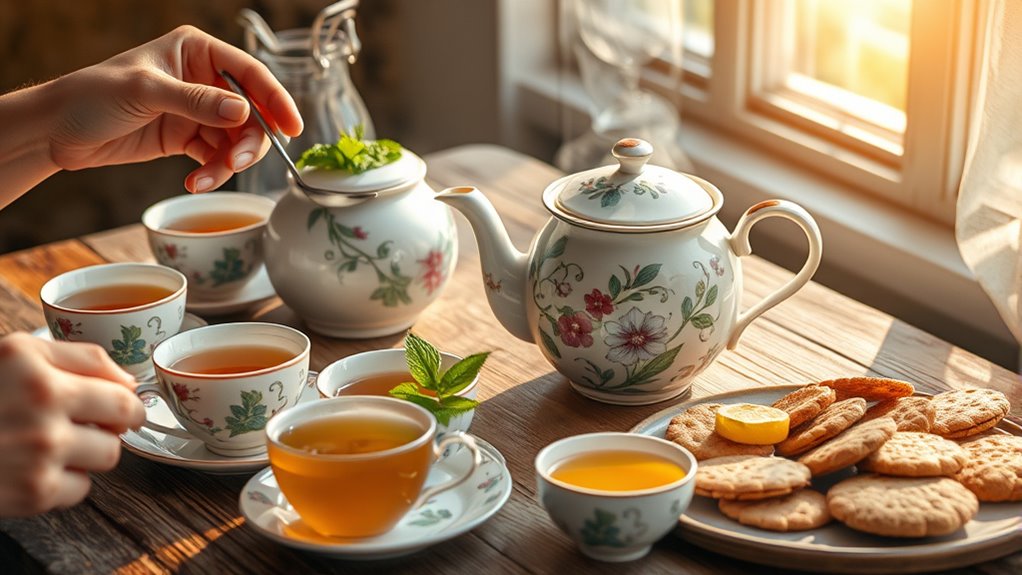

To enhance the health benefits of your tea, create a mindful daily ritual by setting aside a specific time each day to fully enjoy your brew without distractions. Focus on the aroma, flavor, and warmth, practicing gratitude and presence. Incorporate herbal infusions for additional antioxidants and unique health perks. Consistently turning tea into a nourishing habit can improve digestion, relaxation, and overall well-being. Keep exploring ways to deepen this calming routine for lasting benefits.
Key Takeaways
- Dedicate specific times daily for mindful tea preparation and consumption to deepen relaxation and focus.
- Use high-quality leaves or herbs and pay attention to water temperature and steeping time for maximum benefits.
- Create a calming ritual space free of distractions to enhance mindfulness and appreciation of each sip.
- Incorporate herbal infusions like chamomile or ginger to support digestion and reduce inflammation regularly.
- Focus on aroma, flavor, and warmth during tea drinking to cultivate gratitude, reduce stress, and promote overall well-being.

Incorporating simple daily rituals can substantially boost the health benefits you get from tea. One of the most effective ways is by paying attention to your tea brewing process. Instead of rushing through it, take time to select quality leaves or herbs, and pay attention to water temperature and steeping time. Using proper techniques guarantees you extract the maximum nutrients and flavors, which can enhance the antioxidant content and overall health benefits. For example, green tea requires a slightly lower temperature than black tea to avoid bitterness and preserve its delicate compounds. When you focus on the brewing process, it transforms from a mere routine into a mindful practice that amplifies the medicinal qualities of your tea. Additionally, understanding the contrast ratio of your tea’s color can help you gauge the optimal steeping time to maximize flavor and nutrient extraction.
Enhance your tea benefits by mindful brewing—select quality leaves, control water temperature, and steep with intention.
Herbal infusions are another excellent way to elevate your daily tea ritual. Instead of sticking to traditional black or green teas, explore herbal infusions such as chamomile, peppermint, or ginger. These herbal teas are packed with unique antioxidants and healing properties that can support digestion, reduce inflammation, or promote relaxation. Incorporating herbal infusions into your day doesn’t have to be complicated; simply steep dried herbs or fresh leaves in hot water for 5-10 minutes. You can even combine herbs to create personalized blends tailored to your health goals. Making herbal infusions a consistent habit allows you to harness their full benefits over time, whether it’s calming your nerves or boosting your immune system.
Beyond the ingredients, consider creating a dedicated space or time for your tea rituals. Set aside a few moments each day to prepare and enjoy your tea without distractions. This mindful approach not only enhances your appreciation of the drink but also reduces stress, which in itself offers health advantages. As you sip, take a deep breath and focus on the aroma, flavor, and warmth of the tea. This simple act of mindfulness can improve digestion, lower blood pressure, and even improve sleep quality. The ritual of preparing herbal infusions and paying attention to brewing details helps you connect with your body and the natural healing properties of tea.
Incorporating these small, deliberate steps into your daily routine can make a big difference in your health. Whether it’s perfecting your tea brewing technique or exploring herbal infusions, these rituals turn drinking tea into a nourishing act that supports your physical and mental well-being. Over time, you’ll find that these mindful practices not only maximize the benefits but also cultivate a sense of calm and balance in your day.
Frequently Asked Questions
Can Adding Milk to Tea Reduce Its Health Benefits?
Adding milk to tea can cause milk interference, which may diminish the tea’s health benefits by hindering calcium absorption. The proteins in milk bind with tea’s antioxidants, potentially decreasing their effectiveness. If you want to maximize the health benefits, consider drinking your tea without milk or waiting a few minutes after brewing before adding it. This way, you preserve the antioxidants and ensure better calcium absorption.
What’s the Best Time of Day to Drink Tea?
You should drink tea in the morning to kickstart your day or in the evening to unwind and relax. Morning routines with tea energize and sharpen your focus, while evening rituals help you unwind and promote restful sleep. Choosing the right time depends on your goals—embracing tea as part of your morning or evening routine can enhance your well-being and bring a calming, mindful moment to your day.
Do Herbal Teas Have the Same Health Benefits as Green Tea?
Herbal teas offer different benefits compared to green tea, as they often contain antioxidants and compounds unique to their ingredients. While green tea is rich in catechins that boost metabolism and support heart health, herbal teas like chamomile or peppermint can aid relaxation and digestion. In a green tea comparison, herbal teas may not have the same level of antioxidants, but they still provide valuable health benefits tailored to your needs.
How Does Water Temperature Affect Tea’s Health Properties?
Did you know that water temperature can influence up to 70% of tea’s antioxidant release? When you adjust water infusion temperature, you impact the tea’s health properties because of temperature sensitivity. Hotter water extracts more polyphenols and antioxidants, boosting health benefits, while cooler water preserves delicate compounds. So, to maximize health benefits, choose your water temperature wisely based on the type of tea you’re brewing.
Are There Specific Teas Recommended for Different Health Issues?
Yes, certain tea varieties target specific health issues. For example, green tea supports weight management and antioxidant intake, while chamomile helps with relaxation and sleep. If you’re aiming to boost immunity, consider echinacea tea. For digestion, ginger tea is beneficial. Choosing the right tea varieties based on your health goals allows you to maximize benefits and tailor your daily ritual to support your well-being effectively.
Conclusion
By building simple, soothing rituals around your tea time, you boost both your body and mind. Savor each sip slowly, stay mindful in your moments, and let your daily dose of tea transform into a treasured routine. Consistent, calming ceremonies not only cultivate clarity but also create a comforting connection to your health. So, seize these small but significant steps—your wellness wins with every warm, welcoming sip. Cheers to a healthier, happier you!