The Guizhou tea boom hides behind a strategic focus on building robust supply chains, connecting local farmers to global markets, and emphasizing quality control and regional branding. As producers adopt new techniques and certifications, they tap into international demand for high-end, organic teas. Infrastructure investments and cooperation boost export capacity, fueling sustainable growth. If you keep exploring, you’ll uncover how these economic strategies transform Guizhou into a key player in China’s tea industry.
Key Takeaways
- Guizhou’s tea industry is rapidly expanding through integrated supply chains connecting local farmers to global markets.
- Adoption of new technologies and infrastructure investments boost efficiency, quality control, and export readiness.
- Emphasis on branding, organic practices, and certifications helps Guizhou differentiate its teas internationally.
- Export markets drive economic growth, incentivizing sustainable farming and premium product development.
- Government support and trade agreements facilitate market access and foster long-term industry sustainability.

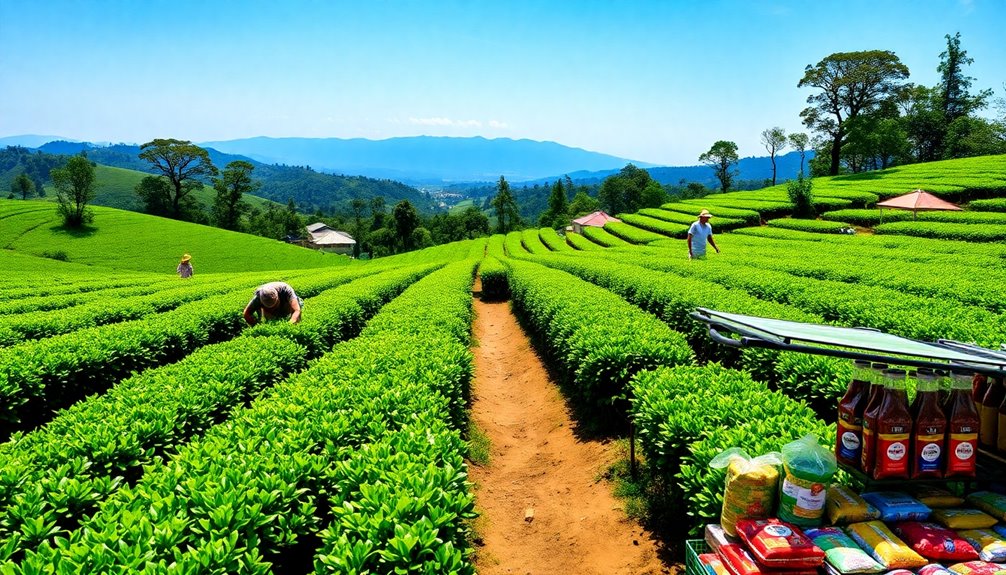
Despite being less known globally, Guizhou Province has experienced a rapid tea industry expansion that’s reshaping its economy. This growth isn’t just about planting more tea bushes; it’s about building a robust supply chain that connects local farmers to international markets. As demand for Chinese tea rises worldwide, Guizhou’s producers are quickly adapting to meet export market standards, ensuring their teas reach consumers across Asia, Europe, and North America. You might not realize it, but behind every cup of Guizhou tea, there’s a carefully managed network of growers, processors, and exporters working diligently to maintain quality and meet international regulations.
The supply chain in Guizhou isn’t just expanding; it’s evolving. Local farmers are adopting new techniques and technologies to improve yields and ensure consistent quality. They’re forming cooperatives to better negotiate with middlemen and exporters, which helps them access higher-value markets. The government supports this shift by investing in infrastructure—roads, storage facilities, and certification programs—that streamline the movement of tea from farm to port. This integrated approach reduces delays and costs, making Guizhou’s tea more competitive on the global stage. You should note that the region’s focus on quality control and branding is also key; by emphasizing organic practices and distinct regional flavors, producers carve out a unique identity in the crowded export markets.
Export markets are now a crucial part of Guizhou’s economic strategy. As China’s tea reputation grows, so does the demand for its regional varieties. Guizhou’s teas are carving out niches in specialty and premium segments, appealing to consumers seeking authentic and high-quality products. Exporters are leveraging international trade agreements and participating in global trade fairs to boost visibility and access new markets. They’re also investing in packaging and certifications that meet foreign standards, making their tea more attractive to overseas buyers. You’ll find that this push into export markets not only increases revenue but also encourages local farmers to adopt sustainable practices, knowing that higher-quality products fetch better prices abroad. Additionally, advancements in self watering plant pots and related agricultural tools are being utilized to optimize water use and improve crop yields, further supporting the region’s sustainable growth.
Frequently Asked Questions
How Has Tea Tourism Impacted Local Guizhou Communities?
You’ve likely noticed that tea tourism in Guizhou boosts local communities by creating new jobs and increasing income. This growth encourages sustainable practices, protecting the environment while supporting economic development. As tourists visit tea plantations, they learn about traditional methods, fostering community development and cultural preservation. Overall, tea tourism helps local residents thrive, balancing economic benefits with environmental and cultural sustainability for long-term growth.
What Environmental Challenges Are Caused by Tea Plantation Expansion?
You might notice that expanding tea plantations causes significant environmental challenges. Deforestation impact becomes evident as forests are cleared, leading to habitat loss and soil erosion. Water pollution also worsens as chemicals from fertilizers and pesticides seep into local waterways. These issues threaten the ecosystem and local communities, making it essential to balance tea growth with sustainable practices to protect Guizhou’s environment.
How Do Global Markets Influence Guizhou Tea Prices?
You see that global markets greatly influence Guizhou tea prices, as global trade affects demand and supply. When international demand rises, prices tend to increase, and vice versa. Price fluctuations occur due to factors like trade policies, currency changes, and economic shifts worldwide. As a tea producer or consumer, you need to stay aware of these trends, since they directly impact your costs, profits, and the overall stability of the tea industry in Guizhou.
Are There Any Cultural Shifts Due to Tea Industry Growth?
You might think tea traditions are timeless, but the booming industry hints at subtle shifts in cultural identity. As new growers and markets emerge, age-old practices sometimes give way to modern methods, blending tradition with innovation. Ironically, what once defined the local culture now adapts to global tastes. These changes reflect a dynamic cultural landscape where the essence of tea traditions evolves, shaping a new identity rooted in both history and progress.
What Role Do Government Policies Play in the Tea Boom?
You’ll see that government policies substantially influence the tea boom through policy impact and subsidy effects. These policies support farmers with financial aid, improve infrastructure, and promote tea exports, which encourage industry growth. By offering subsidies, the government makes tea farming more profitable, motivating more people to join the sector. This active support accelerates production and branding, fueling the overall expansion of Guizhou’s tea industry.
Conclusion
You can see that Guizhou’s tea industry isn’t just about tradition — it’s a powerhouse, with exports increasing by over 20% annually. This surge boosts local incomes and sparks economic growth in the region. As you observe these numbers, remember that behind the growth are countless farmers and entrepreneurs working to turn this tea boom into a lasting legacy. The real story isn’t just about tea; it’s about how smart economic shifts transform communities.