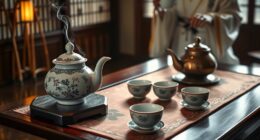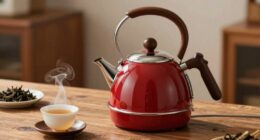
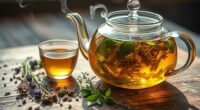
To brew the perfect cup of green tea, start by choosing fresh, high-quality leaves. Heat water to 160-180°F (70-80°C) and avoid boiling it, as too hot water can make your tea bitter. Steep the tea for 1 to 3 minutes to preserve its delicate flavor and benefits. Observe the color and aroma to guarantee proper brewing. Want to master every detail? Keep going to discover more tips for a truly exceptional cup.
Key Takeaways
- Use high-quality, fresh green tea leaves or tea bags for optimal flavor and health benefits.
- Heat water to 160°F–180°F (70°C–80°C), avoiding boiling to prevent bitterness.
- Steep green tea for 1 to 3 minutes to balance flavor and antioxidants.
- Pour hot water over the leaves gently and evenly, ensuring proper infusion.
- Observe the brew’s color and aroma to gauge proper steeping and enjoy at the right temperature.
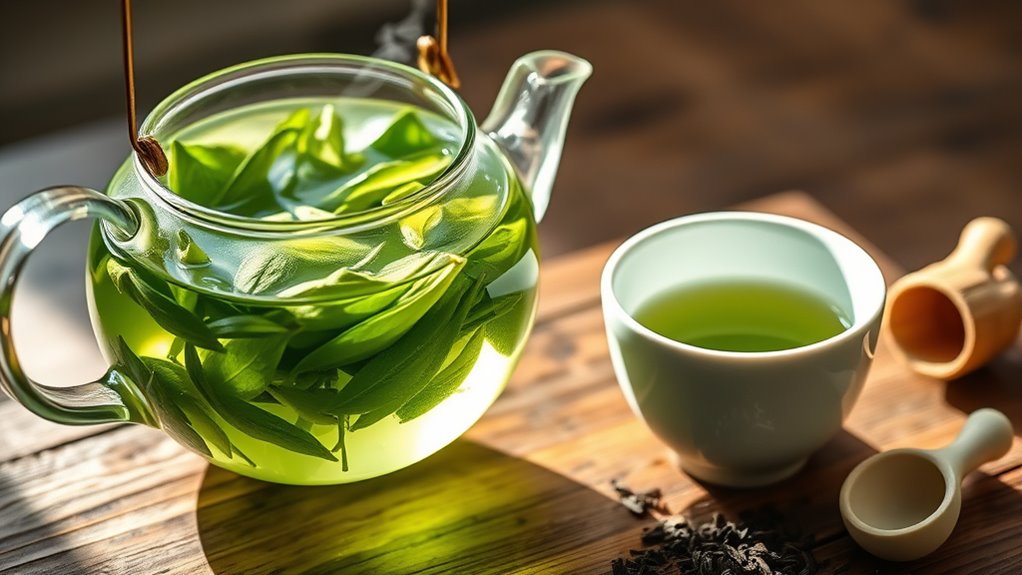
Brewing green tea perfectly requires paying attention to temperature and timing to bring out its delicate flavor. Green tea has a rich tea history dating back thousands of years, originating in China and later spreading across Asia and the world. Its long-standing popularity isn’t just because of its taste but also because of its impressive health benefits. The antioxidants, vitamins, and minerals in green tea can boost your immune system, improve brain function, and even support weight loss. Knowing this background can motivate you to brew it correctly so you can fully enjoy its benefits and history.
When you start brewing, choose high-quality green tea leaves. Freshness really matters—opt for loose leaves or good-quality tea bags. To access its full flavor, the water temperature is vital. Unlike black teas, green tea requires lower temperatures, typically between 160°F and 180°F (70°C to 80°C). Boiling water destroys some of the delicate compounds and can make your tea taste bitter or astringent. To achieve the right temperature, let your water sit for a few minutes after boiling or use a thermometer if you have one. Pouring water directly over the leaves immediately after boiling isn’t ideal for green tea, so patience here makes a difference.
Timing is just as important as temperature. Steep your green tea for about 1 to 3 minutes—longer steeping can extract more tannins, leading to a bitter taste, while shorter times preserve a mild, sweet flavor. If you’re using loose leaves, consider using a timer or watch to keep track. Remember, over-steeping not only affects the flavor but can also diminish some of the health benefits, as certain antioxidants degrade with prolonged exposure to hot water. Conversely, under-steeping might leave you with a weak brew that doesn’t showcase the tea’s nuanced flavors.
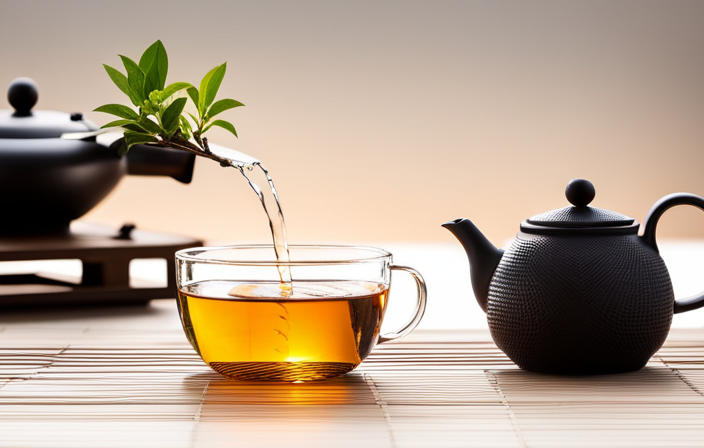
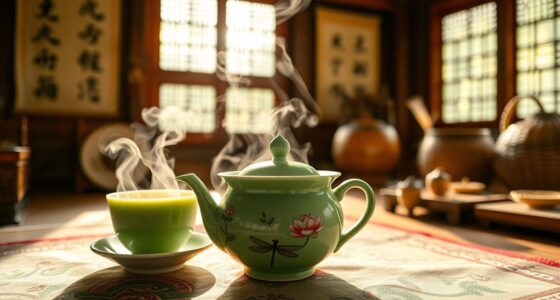
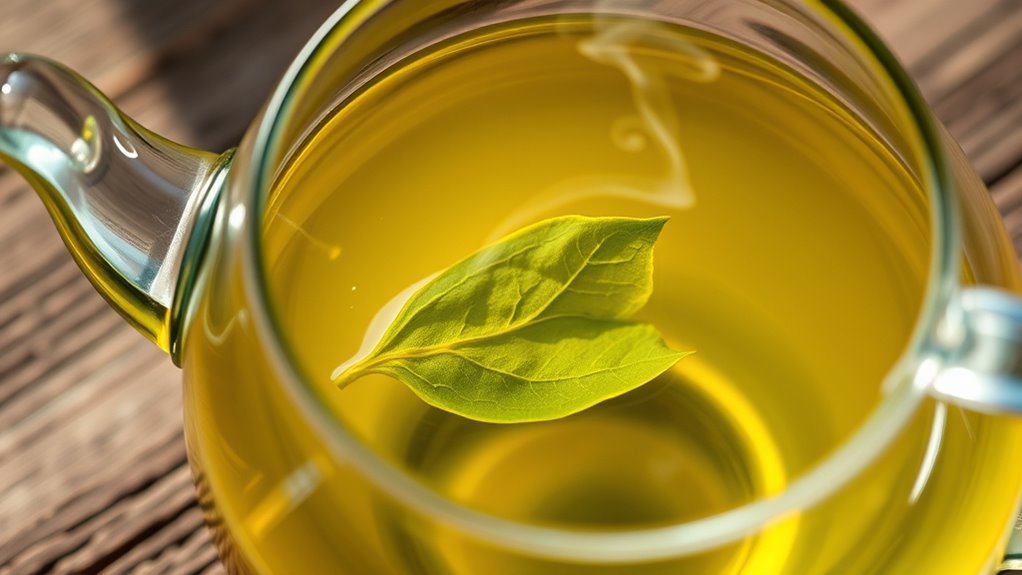
As you pour the tea into your cup, observe its color—bright, light green or yellowish hues indicate a properly brewed cup. Savor your tea without rushing, taking in its aroma and flavor. Proper brewing ensures that you experience the full spectrum of its delicate taste and health benefits, all rooted in centuries of tea history. Additionally, using appropriate brewing equipment can help control temperature and steeping time more precisely, resulting in a consistently better cup. By paying close attention to temperature and timing, you not only respect tradition but also maximize the positive effects green tea can have on your well-being. With practice, you’ll find that the perfect cup becomes an enjoyable daily ritual, connecting you to a centuries-old tradition that’s loved worldwide.
Top picks for "brew perfect green"
Open Amazon search results for this keyword.
As an affiliate, we earn on qualifying purchases.
Frequently Asked Questions
Can I Reuse Green Tea Leaves for Multiple Brews?
Yes, you can reuse tea leaves for multiple brew green tea. Reusing tea leaves allows you to enjoy several cups from one batch, but keep in mind that the flavor will weaken with each brew. To get the best taste, use fresh leaves for each new steep, or rebrew the same leaves a few times, adjusting steeping time to extract more flavor. Just watch for a decline in taste after several infusions.
How Does Water Mineral Content Affect Green Tea Flavor?
You’ll notice that water mineral content, including water pH and mineral balance, greatly influences green tea flavor. Soft water with a balanced mineral content enhances the tea’s natural freshness, while hard water with high mineral levels can cause bitterness and dullness. If your water’s pH is too high or low, it can alter the delicate taste. Use filtered or spring water to optimize flavor and enjoy a more vibrant, nuanced green tea.
Is It Better to Brew Green Tea With Filtered or Tap Water?
You should brew green tea with filtered water because water filtration removes excess minerals that can overpower the delicate flavors. Tap water often contains high mineral content, which can lead to a bitter or flat taste. By using filtered water, you guarantee a cleaner, more balanced flavor profile. This simple step helps you enjoy the true nuances of green tea without interference from unwanted mineral flavors.
What Is the Ideal Green Tea Steeping Temperature for Sensitive Varieties?
Imagine gently coaxing a delicate flower to bloom—your green tea needs similar care. For sensitive varieties, keep your water temperature between 150°F to 160°F, avoiding boiling. Steep for about 1 to 2 minutes to prevent bitterness. This gentle approach ensures your tea’s subtle flavors shine without overpowering, giving you a smooth, invigorating cup every time. Adjust steeping time based on your taste, but always respect the water temperature.
How Does Green Tea Storage Impact Its Freshness and Taste?
Proper storage methods directly impact your tea freshness and taste. Keep green tea in an airtight container, away from light, heat, and moisture to preserve its delicate flavors. Store it in a cool, dark place like a pantry or cupboard. When you follow these storage tips, you’ll enjoy vibrant, fresh green tea with ideal flavor, ensuring each cup remains as delightful as the first.
Conclusion
So, after all that fuss about perfect temperature and steeping times, you might realize that even the best green tea can’t turn a bad day around. Ironically, the simple act of brewing a cup might just be your moment of Zen—until you realize you’ve overstepped and lost that delicate flavor. But hey, isn’t that part of the charm? Sometimes, the imperfect brew makes the perfect story. Cheers to your next, slightly flawed, but utterly satisfying cup.