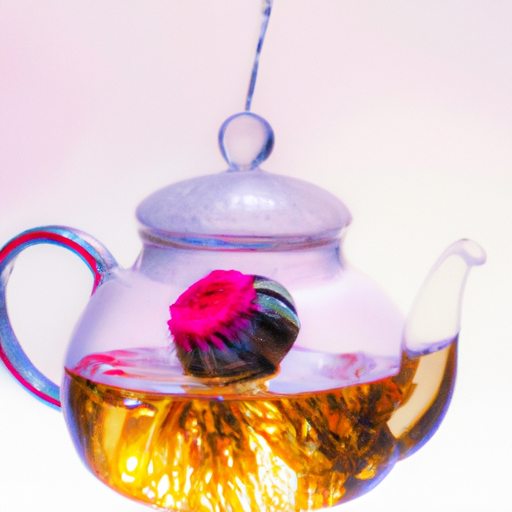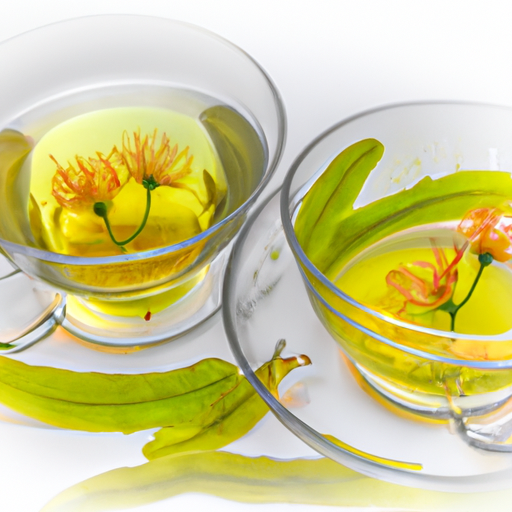
The story behind flower tea is rich with cultural significance and centuries-old traditions. You’ll find it symbolizing purity, harmony, and respect across many societies, especially in Asian and Middle Eastern customs. Its delicate appearance and soothing aroma bring tranquility and mindfulness to daily routines. Plus, the herbal ingredients offer health benefits like stress relief and heart support. If you want to discover more about its history, symbolism, and natural benefits, there’s much more to explore.

Get coffee and tea gear delivered free with Prime
- Fast, free delivery on millions of items
- Prime Video, Amazon Music and more included
- Member-only deals all year
Key Takeaways
- Flower tea has ancient roots, symbolizing virtues and cultural values in various Asian and Middle Eastern traditions.
- It combines aesthetic beauty and soothing aromas to create a calming sensory experience.
- Floral ingredients like jasmine, chamomile, and hibiscus offer health benefits, including relaxation and cardiovascular support.
- Sustainable sourcing of flowers promotes biodiversity, conservation, and ecological awareness.
- It integrates tradition, wellness, and natural herbal benefits, celebrating cultural heritage and mindfulness.
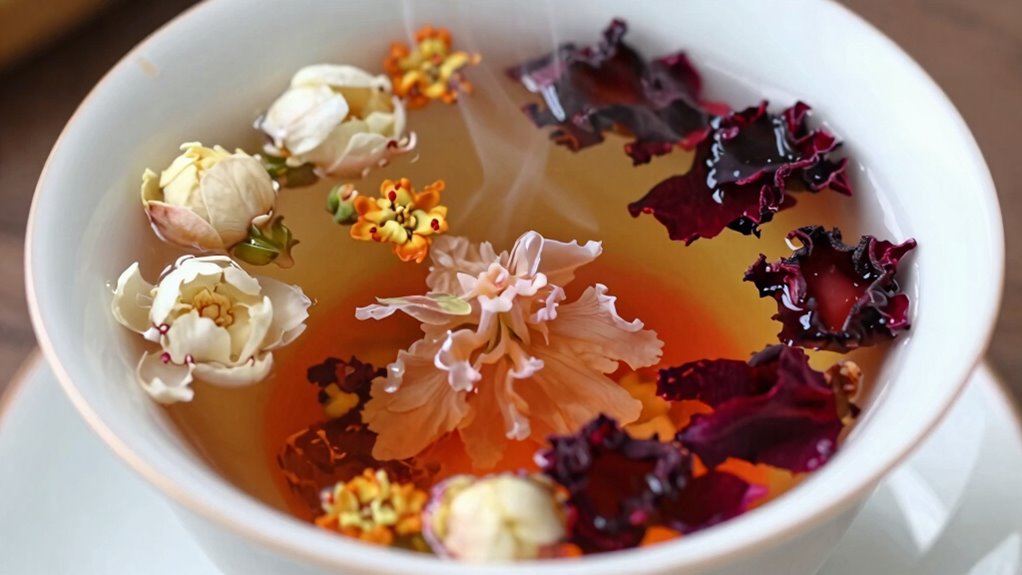
Have you ever wondered what makes flower tea so enchanting? It’s not just about its delicate appearance or soothing aroma—it’s about the rich history and the health benefits wrapped into each cup. Flower tea has been cherished across cultures for centuries, blending herbal benefits with deep cultural significance. When you sip on floral infusions, you’re part of a tradition that dates back hundreds of years, connecting you to ancient practices and beliefs. These teas have long been appreciated not only for their aesthetic appeal but also for their ability to promote wellness and balance within the body.
The herbal benefits of flower tea are impressive and varied. Many floral ingredients, such as jasmine, chamomile, and hibiscus, are known for their calming and healing properties. For instance, chamomile is often used to ease anxiety and promote sleep, while hibiscus can help lower blood pressure and support heart health. The natural antioxidants found in many flowers contribute to fighting free radicals, potentially reducing inflammation and aging. Additionally, some floral teas have detoxifying effects, helping your body eliminate toxins and improve digestion. When you incorporate flower tea into your routine, you’re not just indulging in a fragrant beverage—you’re nourishing your body with nature’s pharmacy and supporting biodiversity. The importance of biodiversity in cultivating these ingredients ensures that these plants are sustainably sourced, supporting conservation efforts.
Beyond the physical health benefits, flower tea holds a profound cultural significance. In many Asian cultures, for example, tea ceremonies involving floral infusions symbolize purity, harmony, and respect. Specific flowers are associated with particular virtues or wishes, and sharing a cup of flower tea often signifies a moment of mindfulness and connection. In China, jasmine tea is revered not just for its fragrance but also as a symbol of love and beauty, often included in celebrations and rituals. In the Middle East, rose water-based teas evoke hospitality and grace, serving as a gesture of welcoming and warmth. These cultural meanings elevate flower tea from a simple drink to a meaningful experience that nurtures both body and soul.
As you explore different types of flower tea, you begin to appreciate the stories and traditions behind each blend. It’s a way to honor history, enjoy natural herbal benefits, and find moments of tranquility in your busy life. Biodiversity plays a vital role in ensuring the sustainability of these plants, and understanding this connection adds depth to your appreciation of flower tea. Whether you’re sipping it for health, relaxation, or cultural connection, flower tea offers a timeless allure that continues to enchant and inspire.
Frequently Asked Questions
Are Flower Teas Suitable for All Skin Types?
Flower teas are generally suitable for most skin types, thanks to their herbal benefits, which can soothe and hydrate your skin. However, you should be cautious of potential skin reactions, especially if you have sensitive skin or allergies. It’s wise to start with a small amount first, observe how your skin responds, and consult a dermatologist if you notice any irritation or unusual reactions.
How Long Does Flower Tea Last Before Losing Flavor?
Like a fleeting whisper in a garden, the flavor of flower tea begins to fade after about one to two years. To preserve its delicate aroma and taste, focus on proper storage—keep it in airtight containers away from sunlight and moisture. This helps extend its shelf life, ensuring each cup remains vibrant and flavorful. Once the tea loses its aroma or flavor, it’s time to refresh your stash for the best experience.
Can Flower Tea Be Used for Medicinal Purposes?
Yes, you can use flower tea for medicinal purposes. Many believe in its herbal synergy, which supports relaxation, digestion, and overall wellness. Traditionally, flower teas have been part of remedies for stress relief and boosting immunity. While scientific evidence varies, incorporating flower tea into your routine aligns with traditional remedies, offering a natural way to enhance health. Just remember to consult a healthcare professional before using it for medical concerns.
Are There Any Allergy Risks With Flower Tea?
They say, “Better safe than sorry,” which is true for flower tea allergy risks. You might experience allergy symptoms like sneezing, itching, or swelling if you’re sensitive to certain flowers. Risk factors include a history of allergies or asthma. Always start with a small amount and monitor your reaction. If you notice symptoms, stop drinking and consult a healthcare professional. Being cautious helps you enjoy your tea safely.
What Are the Best Storage Methods for Flower Tea?
To maintain your flower tea, store it in airtight storage containers to keep out moisture and air, which can degrade the flowers’ aroma and flavor. Keep the containers in a cool, dark place away from direct sunlight, heat, and humidity. Proper flower preservation ensures freshness and longevity, so avoid transparent containers and opt for opaque ones. Regularly check for any signs of moisture or spoilage to sustain your tea’s quality.
Conclusion
As you sip your delicate flower tea, remember there’s more beneath its fragrant surface than just calming aromas. Each bloom holds secrets of ancient traditions, hidden meanings, and a touch of mystery. The next time you brew a cup, ask yourself—what stories are these blossoms quietly telling? Behind their beauty lies a world waiting to be uncovered, inviting you to explore deeply—beyond what meets the eye, into the heart of true floral elegance.
Fall Picks
fall essentials
As an affiliate, we earn on qualifying purchases.