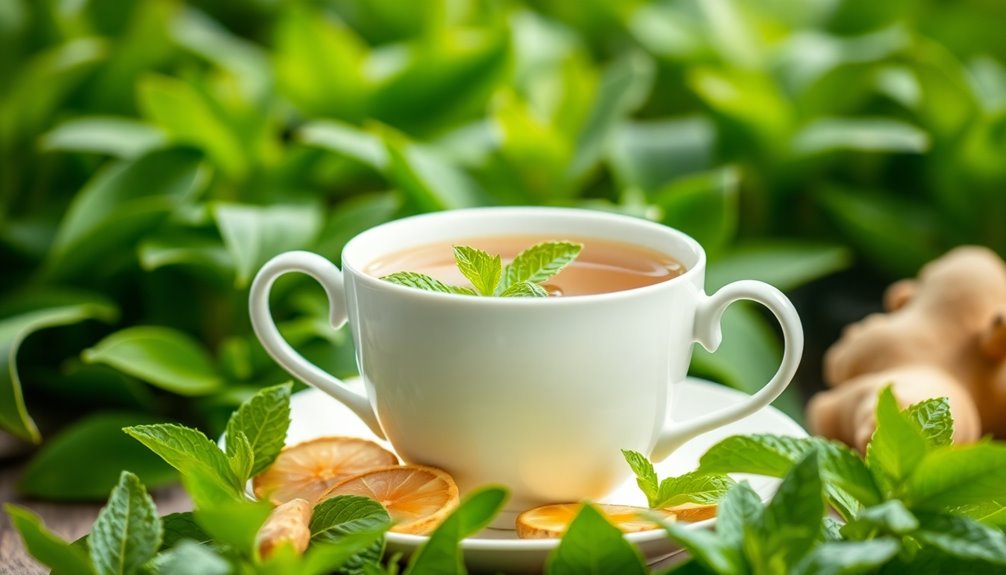
When using tea for digestive health, be aware of herbal ingredients that can have strong laxative or stimulant effects, which may cause dehydration or imbalance if overdone. Pay attention to caffeine content, as too much can lead to acid reflux or dehydration, and always check labels for additives. It’s best to choose gentle, caffeine-free options and consult a healthcare professional if you have health conditions or are on medication. Continue exploring to learn how to enjoy teas safely.
Key Takeaways
- Always read ingredient labels to identify herbal components and caffeine levels, avoiding potent laxatives or stimulants unless advised by a healthcare professional.
- Limit intake of teas with strong laxatives or high caffeine to prevent dehydration, electrolyte imbalance, or gastrointestinal discomfort.
- Consult healthcare providers before adding herbal or caffeinated teas to your routine, especially if on medication or with existing health conditions.
- Consume herbal, caffeine-free teas for gentle digestion support and avoid drinking on an empty stomach to prevent discomfort.
- Monitor your body’s response to different teas and adjust consumption accordingly to ensure safe and effective digestive health support.

Tea has long been valued for its potential to support digestive health, but it’s important to consume it safely. While many teas can soothe your stomach and promote regularity, you should be aware of herbal interactions that might affect how your body responds. Some herbs in tea blends, like peppermint or ginger, are generally safe and beneficial for digestion. However, others, such as senna or cascara, can have potent laxative effects if consumed excessively, leading to dehydration or electrolyte imbalance. It’s *essential* to read labels carefully and understand the ingredients in your tea, especially if you’re taking medications or have underlying health conditions. Certain herbs may interact with pharmaceuticals, reducing their effectiveness or causing side effects, so consulting with a healthcare professional before adding new herbal teas to your routine is a wise step.
Caffeine effects also play a significant role in the safety of tea consumption. Many popular teas, like black and green varieties, contain caffeine, which can influence your digestive system. A moderate amount of caffeine can stimulate bowel movements and improve digestion, but too much can lead to issues like acid reflux, stomach upset, or increased heart rate. If you’re sensitive to caffeine or prone to gastrointestinal problems, you might want to limit your intake or opt for caffeine-free herbal teas. Keep in mind that even decaffeinated teas often contain trace amounts of caffeine, so reading labels is essential. Additionally, caffeine is a diuretic, which can contribute to dehydration if consumed in excess, especially if your digestive health benefits are linked to proper hydration. Being mindful of caffeine content helps you manage your intake effectively.
Another consideration is timing. Drinking caffeinated tea on an empty stomach might cause discomfort or jitters, while consuming it after meals could interfere with nutrient absorption or exacerbate acid reflux. Herbal teas without caffeine tend to be gentler and can often be enjoyed throughout the day without worry. Always listen to your body and observe how different teas affect your digestion and overall well-being. If you notice adverse effects like stomach pain, increased heartburn, or irregular bowel movements, it’s a sign to cut back or switch to milder options.

Traditional Medicinals Tea, Organic Belly Comfort Peppermint, Promotes Healthy Digestion, 16 Tea Bags
Herbal Power: Gently invigorates, while alleviating digestive discomfort
As an affiliate, we earn on qualifying purchases.
As an affiliate, we earn on qualifying purchases.
Frequently Asked Questions
Can Tea Cause Allergic Reactions or Sensitivities?
Yes, tea can cause allergic reactions or sensitivities. You might experience allergic symptoms like itching, swelling, or difficulty breathing if you’re sensitive to certain herbs or ingredients. Herbal sensitivities vary from person to person, so it’s important to watch for any adverse reactions after trying a new tea. If you notice symptoms, stop drinking the tea and consult a healthcare professional to determine if you have an allergy or sensitivity.
Are There Specific Teas to Avoid During Pregnancy?
Did you know that about 50% of pregnant women experience digestive discomfort? During pregnancy, avoid teas with herbal ingredients like licorice, ginger, or parsley, as they can cause contractions or other complications. Always check pregnancy warnings before consuming herbal teas, and consult your healthcare provider. Some teas might seem harmless but can pose risks, so it’s best to be cautious and prioritize safety for you and your baby.
How Much Tea Is Safe to Consume Daily?
You should limit your tea caffeine intake to 200-300 mg daily, which is about 3-4 cups of herbal infusion or regular tea. Too much caffeine can cause health issues, so moderation is key. Opt for herbal infusions like ginger or chamomile, which are gentle on digestion. Always listen to your body and consult your healthcare provider if you’re unsure about the right amount for your personal needs.
Can Tea Interfere With Prescription Medications?
Think of tea as a lively dance partner—sometimes it’s harmonious, other times it steps on your toes. Tea can interfere with prescription medications through drug interactions or herbal contraindications, altering how your meds work. Caffeine or certain herbs in tea may amplify or diminish effects, so always check with your healthcare provider. Staying informed helps you avoid unintentional missteps and keeps your health in perfect rhythm.
Are There Age Restrictions for Drinking Certain Teas?
Yes, there are age restrictions for drinking certain teas, especially herbal ones. Young children and infants should steer clear of some herbal teas due to potential herbal safety concerns, like allergic reactions or toxic ingredients. Always check labels and consult with a healthcare professional before giving herbal teas to children or seniors. It’s important to follow age guidelines to ensure safe consumption and prevent adverse effects from herbal ingredients.

Traditional Medicinals Tea, Organic Triple Mint – Supports Healthy Digestion – Kosher, Non-GMO, Caffeine-Free – 16 Tea Bags
HERBAL POWER: Supports healthy digestion
As an affiliate, we earn on qualifying purchases.
As an affiliate, we earn on qualifying purchases.
Conclusion
While tea can boost your digestive health, don’t overlook the potential risks. A simple cup might seem harmless, but some ingredients could cause unexpected reactions or interactions. Are you aware of the teas that might do more harm than good? Stay informed, listen to your body, and consider consulting a healthcare professional before making tea your go-to remedy. The surprising truth about your digestive health might just be hiding in that next sip.

Traditional Medicinals Organic Smooth Move Laxative Tea, 16 Tea Bags (Pack of 1)
Relieves occasional constipation generally within 6-12 hours.*
As an affiliate, we earn on qualifying purchases.
As an affiliate, we earn on qualifying purchases.

Yogi Tea Lemon Ginger Tea Bags, 16 ct
FLAVOR: Yogi Lemon Ginger tea combines lively Ginger, tart Lemon Peel, and Peppermint Leaf for a perfectly spiced…
As an affiliate, we earn on qualifying purchases.
As an affiliate, we earn on qualifying purchases.