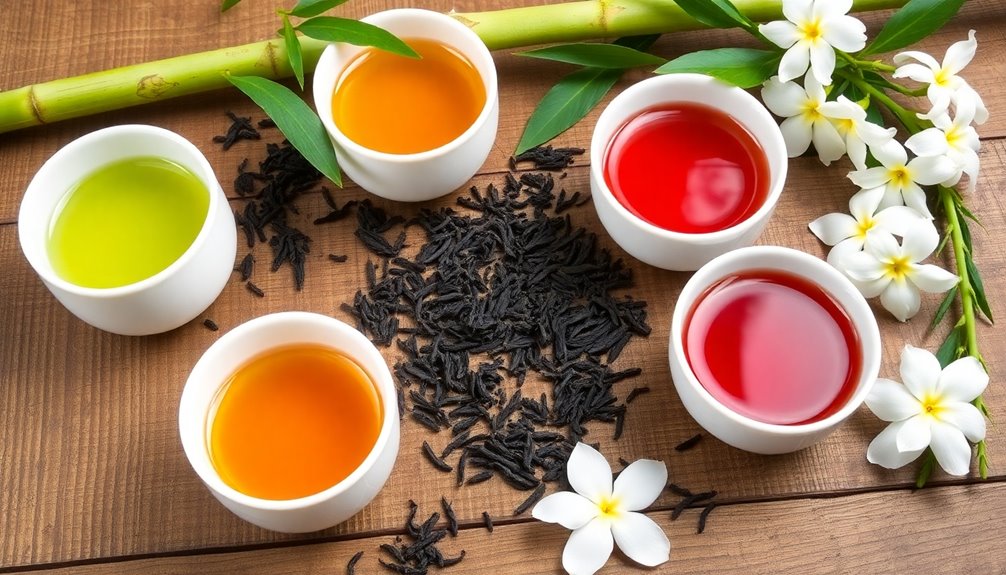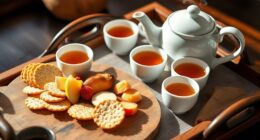
To pair Chinese teas with food and desserts, match light green teas like Longjing with fresh, delicate dishes, and use slightly cooler water for subtle flavors. Rich black teas such as Keemun go well with hearty, savory foods, while floral teas like jasmine enhance fruity or floral desserts. Stronger teas like Pu-erh balance rich chocolates and caramel treats. Paying attention to brewing temperature and steeping time helps bring out each tea’s best qualities for a balanced, enjoyable experience. Keep exploring to discover more perfect pairings.
Key Takeaways
- Match delicate green teas like Longjing with light, fresh dishes to enhance their subtle flavors.
- Pair floral or fruity teas such as jasmine or oolong with floral or fruity desserts for harmonious taste.
- Use stronger teas like Pu-erh or dark roasted varieties to balance rich, chocolatey, or caramel desserts.
- Brew teas at appropriate temperatures and steeping times to prevent bitterness and preserve aroma when pairing.
- Consider flavor balance to ensure the tea complements rather than overpowers the food or dessert’s taste.
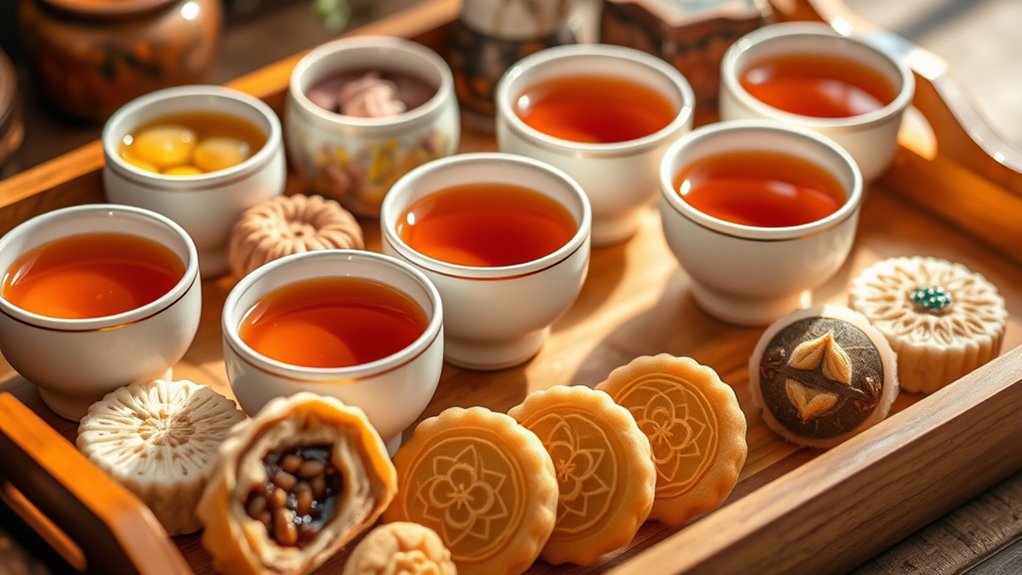
Have you ever wondered how to enhance your dining experience with the perfect tea? The key lies in understanding how to pair Chinese tea with food and desserts, but equally important is knowing how to keep your tea at its best. Proper tea storage guarantees that the flavors remain fresh and vibrant, preventing them from becoming stale or losing their delicate aroma. Store your tea in airtight containers away from direct sunlight, heat, and moisture. This way, the subtle nuances of each variety are preserved, making every sip as flavorful as the first. When it comes to brewing techniques, mastering the right methods will elevate your tea-drinking experience and allow you to better appreciate how each tea complements different dishes.
Proper tea storage keeps flavors fresh and vibrant, enhancing your tea-drinking experience.
For example, delicate green teas like Longjing or Biluochun work beautifully with light, fresh dishes such as salads, seafood, or steamed vegetables. To bring out their subtle flavors, use water that’s around 75-80°C and steep for just a couple of minutes. This gentle brewing technique prevents bitterness and highlights the tea’s natural sweetness. On the other hand, robust black teas like Keemun or Yunnan are excellent with richer, savory foods such as roasted meats or spicy cuisines. These teas benefit from slightly higher temperatures, about 90-100°C, and a longer steeping time to extract their full-bodied flavor.
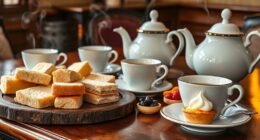
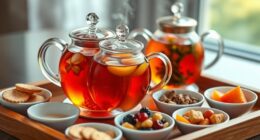
When pairing with desserts, consider the sweetness level and texture of what you’re serving. Light jasmine or oolong teas pair beautifully with floral or fruity desserts, as their fragrant notes complement the sweetness without overpowering it. For richer desserts like chocolate or caramel, stronger teas such as Pu-erh or dark roasted teas can cut through the richness, cleansing your palate with each sip. The key to successful pairing is balancing the flavors—neither should overshadow the other.
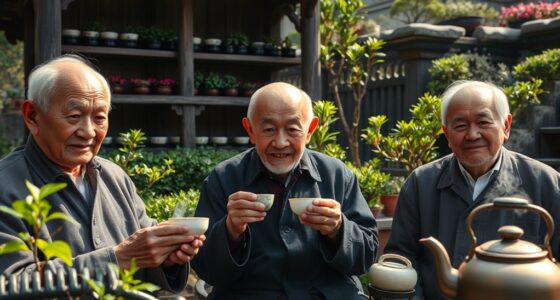
Additionally, knowing how to brew your tea properly allows you to tailor each cup to match your meal. For instance, using multiple infusions of the same leaves can reveal different flavor profiles, enhancing the overall dining experience. Pay attention to water temperature, steeping time, and tea quantity—these factors make a significant difference in taste and aroma. When you combine thoughtful tea storage, precise brewing techniques, and an understanding of flavor pairings, you turn a simple meal into a memorable cultural experience. So next time you plan a meal or dessert, think about how your choice of Chinese tea can elevate the entire occasion.
Frequently Asked Questions
How Does Tea Temperature Affect Pairing Choices?
Tea temperature critically impacts your pairing choices because it influences the tea’s flavor profile during steeping. When you control the temperature, you can bring out different notes—higher temperatures enhance robustness, while lower ones highlight delicate flavors. If you steep your tea at the right temperature, it complements your food better. Proper temperature control ensures you get the best taste experience, making your tea and food pairing more harmonious and enjoyable.
Can Herbal Teas Be Paired With Traditional Chinese Dishes?
You can definitely pair herbal teas with traditional Chinese dishes, and it’s a great idea because herbal tea benefits include aiding digestion and balancing flavors. Studies show that 80% of tea drinkers enjoy these pairings for enhanced taste. To do this well, use proper tea brewing techniques—steeping herbal teas at the right temperature and time. This guarantees the flavors complement your dishes and enhance your dining experience.
What Are the Best Teas for Spicy Food Pairings?
For spicy food, you should opt for cooling teas like jasmine green or oolong, which balance heat and enhance flavors. Use gentle tea brewing techniques to avoid bitterness and preserve delicate aromas. During cultural tea ceremonies, you’ll appreciate the mindful preparation that heightens your tasting experience. These teas help calm your palate, making every bite more enjoyable while respecting traditional methods that connect you to Chinese tea culture.
How Do Regional Chinese Teas Influence Pairing Options?
You’ll find that regional Chinese teas greatly influence pairing options because regional flavor profiles and tea cultivation regions shape their taste and aroma. For example, teas from Fujian tend to be lighter and floral, perfect for delicate dishes, while Sichuan teas are more robust, pairing well with spicy or hearty foods. Understanding these regional nuances helps you choose the ideal tea to complement your meal and enhance your dining experience.
Are There Specific Teas Recommended for Dessert Pairings?
Ever wonder which teas best complement your sweet treats? You should try floral or fruity flavored teas for dessert pairings—they add a delicate balance without overpowering the sweetness. When following tea pairing etiquette, opt for lighter teas like jasmine or green tea, which refresh the palate. These choices enhance your dessert experience, making each sip and bite more memorable. Don’t be afraid to experiment and discover your perfect pairing!
Conclusion
As you explore pairing Chinese teas with food and desserts, you might find that the perfect match happens when you least expect it—like discovering a favorite flavor in an unexpected sip. Sometimes, a simple cup can unseal new layers of taste in your meal, turning an ordinary moment into something memorable. So, keep experimenting; the best pairings often come from those delightful coincidences that surprise your palate and elevate your dining experience.