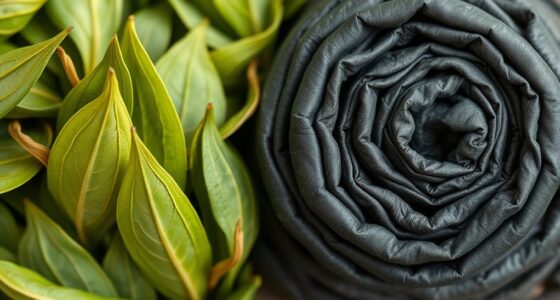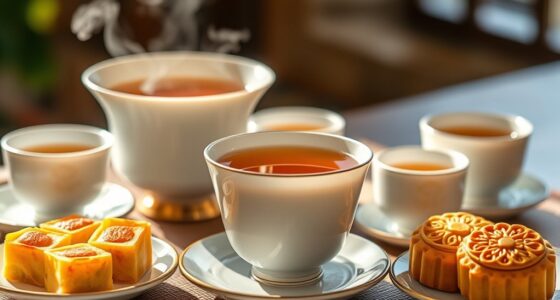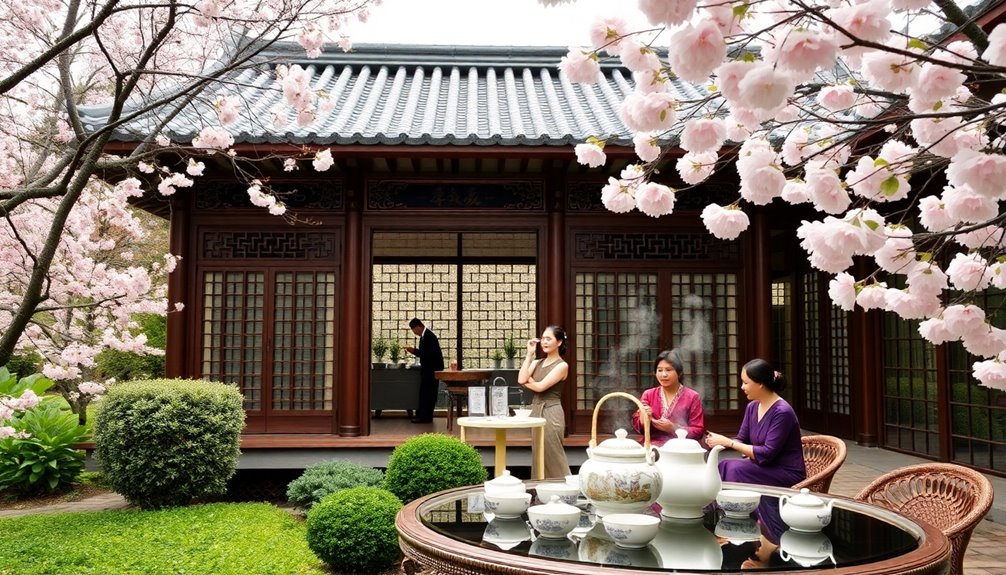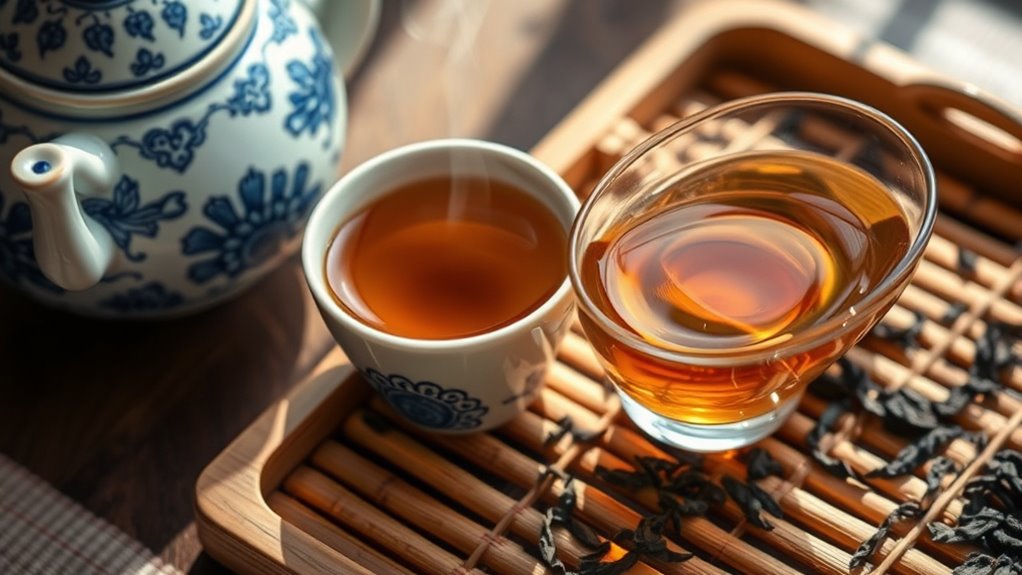
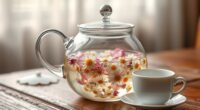
To brew the perfect Chinese tea, start by storing it properly in an airtight container away from light and odors. Choose the right accessories like a gaiwan or yixing teapot, and measure about one teaspoon of tea per cup. Use water at the correct temperature—around 175°F for green tea or near boiling for black. Infuse the leaves multiple times, adjusting steeping times to extract full flavor. Keep these tips in mind and you’ll uncover rich, authentic flavors every time.
Key Takeaways
- Select the appropriate Chinese tea type and use a suitable brewing vessel like a gaiwan or Yixing teapot.
- Store tea in an airtight container away from light, moisture, and odors to maintain freshness.
- Measure about one teaspoon of tea per cup, and use water at the correct temperature for the tea type.
- Use multiple infusions, adjusting steeping times to extract layered flavors and aroma.
- Manage loose leaves with strainers or infusers for clarity and maintain consistent water temperature with specialized kettles.
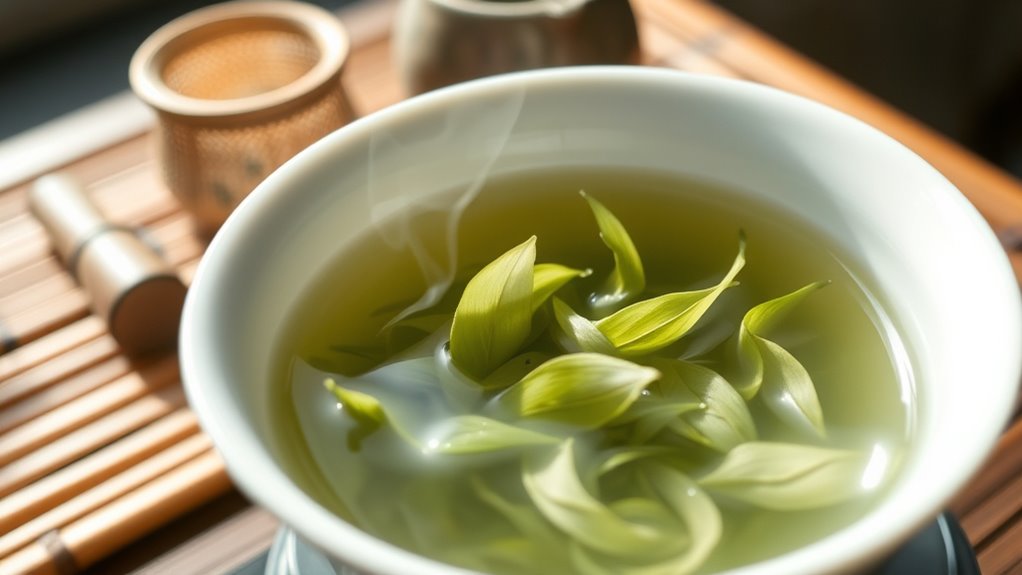
Brewing Chinese tea is a delicate process that requires attention to detail to bring out its full flavor. To start, you need to understand how proper tea storage plays a vital role. Keeping your tea in an airtight container, away from light, moisture, and strong odors, guarantees it stays fresh and retains its aromatic qualities. Investing in the right tea accessories, like a quality tea jar or a specialized tea caddy, can make a significant difference in preserving the tea’s integrity. When you’re ready to brew, take a moment to select the appropriate tea accessories—such as a gaiwan, yixing teapot, or a glass teapot—that suit the type of Chinese tea you’re preparing. These tools are designed to optimize flavor extraction and provide an authentic experience.
Once you’ve chosen your tea, measure the right amount—usually about one teaspoon per cup—and place it into your brewing vessel. The quality of your tea accessories influences how evenly the leaves unfurl and steep. For delicate green or white teas, you’ll want to use cooler water, around 175°F (80°C), whereas darker oolongs and black teas benefit from near-boiling water. As you pour the hot water over the leaves, focus on pouring gently to avoid disturbing the leaves too much, allowing them to expand fully and release their flavors gradually. Remember, multiple infusions are common with Chinese teas, especially oolongs and pu-erh, so don’t discard the leaves after the first brew. Instead, add more hot water for subsequent infusions, adjusting steeping times accordingly.
Using the right accessories not only makes brewing more precise but also enhances the aesthetic and ritualistic experience. For example, a small tea strainer or infuser can help manage loose leaves and prevent them from floating in your cup, while a temperature-controlled kettle can provide the perfect water temperature consistently. Paying attention to these details ensures that each step—from storage to brewing—is aligned with traditional practices, allowing you to fully enjoy the complex aroma and taste of authentic Chinese tea. Additionally, understanding the importance of proper tea storage can significantly impact the quality of your brew and the longevity of your tea leaves. With practice and care, your tea will reveal its layered flavors, offering a truly satisfying and authentic experience every time.
Frequently Asked Questions
What Is the Best Type of Water for Brewing Chinese Tea?
You should use high-quality, soft water with balanced mineral content for brewing Chinese tea. Avoid tap water with chlorine or heavy minerals, as they can interfere with flavor. Opt for filtered or spring water to guarantee purity and better taste. The right water quality enhances the tea’s aroma and brings out its delicate nuances, making your brewing experience more enjoyable and authentic.
How Long Should I Steep Different Varieties of Chinese Tea?
You should steep Chinese teas based on their leaf oxidation level. For green teas, steep for 1-3 minutes to preserve delicate flavors. Oolong teas need 3-5 minutes, while black teas benefit from 3-4 minutes for full-bodied taste. Adjust steeping time according to your preference, considering water mineral content—hard water can intensify tannins, so use softer water for lighter teas. Always taste and refine for your perfect cup.
Can I Reuse Tea Leaves for Multiple Infusions?
Did you know that reusing tea leaves actually boosts their longevity and enhances infusion strength? You can absolutely reuse leaves for multiple infusions, especially with high-quality Chinese teas like oolong or pu-erh. Each subsequent steeping releases subtler flavors, allowing you to savor the nuances. Just remember, as you continue, the tea’s aroma and potency might diminish, but with careful timing, your tea experience stays rich and satisfying.
What Are Common Mistakes to Avoid When Brewing Chinese Tea?
You should avoid using low-quality tea leaves, as they won’t deliver the authentic flavor. Always pay attention to water temperature; too hot or too cold can ruin your brew. Don’t rush the steeping process or over-infuse, which makes the tea bitter. Also, avoid using tap water with impurities, as it can affect the taste. Focus on these details to guarantee a flavorful, authentic Chinese tea experience.
How Do I Store Chinese Tea to Preserve Freshness?
Ever wonder how to keep that fresh, fragrant aroma? You should store Chinese tea in an airtight container, like a ceramic or vacuum-sealed tin, to prevent tea leaf oxidation. Avoid sunlight, humidity, and strong odors that can spoil its flavor. Proper storage maintains the tea’s quality and preserves its unique taste, ensuring your next brew is just as vibrant and delightful as the first. Wouldn’t you want your tea to stay as fresh as possible?
Conclusion
Remember, brewing Chinese tea is about patience and attention to detail. Some might think it’s complicated or time-consuming, but once you get the hang of it, it becomes a relaxing ritual. Don’t rush the process—trust the tradition, and let the flavors unfold slowly. With a little practice, you’ll find it’s worth the effort. Enjoy each sip, knowing you’ve crafted a perfect cup that honors centuries of tea-making artistry.