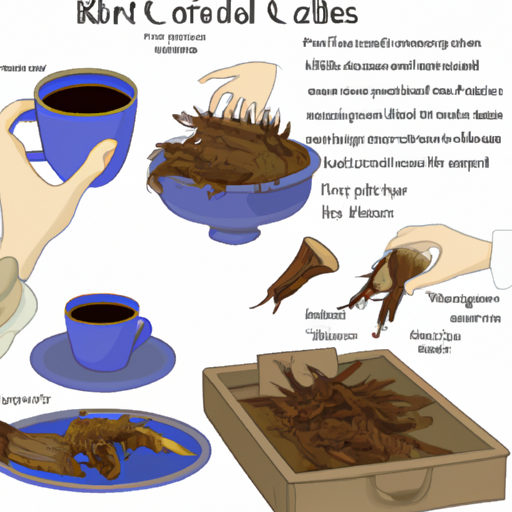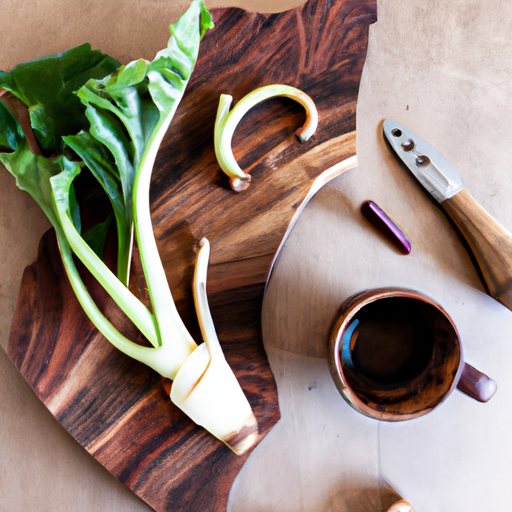

Chicory root has a long history as both a medicinal plant and culinary ingredient, dating back centuries in Europe. It was valued for its health benefits and used to enhance flavors in various dishes and drinks. Traditionally, people harvest, roast, and incorporate it into coffee blends and baked goods. Its versatile nature and rich cultural significance make it an interesting plant to explore further, revealing more about its fascinating origins and uses.
Key Takeaways
- Chicory root has been used for centuries for its medicinal and culinary properties across various cultures.
- It is native to Europe, North Africa, and parts of Asia, with a long history of traditional use.
- Historically, roasted chicory roots served as a coffee substitute during times of scarcity.
- The plant is valued for its health benefits, including digestive support and nutrient content.
- Its harvesting and processing methods have evolved from manual techniques to modern equipment over time.
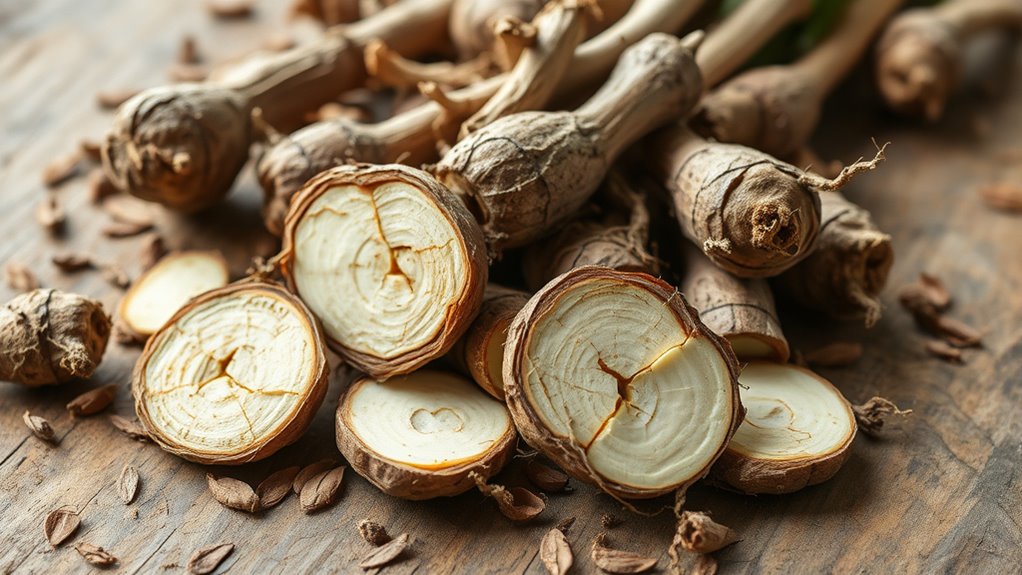
Chicory root is a versatile plant part that has been valued for centuries for its health benefits and culinary uses. If you’re exploring this unique root, understanding how it’s harvested and used in cooking can deepen your appreciation. Harvesting methods for chicory root typically involve carefully digging around the plant to avoid damaging the root system. Once extracted, the roots are cleaned thoroughly to remove dirt and debris. Depending on their intended use, they may be sliced, chopped, or left whole. For culinary purposes, many prefer to roast the roots, which enhances their flavor and makes them easier to incorporate into various dishes. Roasting also helps to mellow the slightly bitter taste of raw chicory, making it more appealing for culinary uses. Proper harvesting techniques help ensure the root’s quality and maximize its flavor and nutritional value. When it comes to culinary uses, chicory root offers a surprising array of options. You can use it as a coffee substitute or additive, especially when roasted, which imparts a rich, slightly sweet, and nutty flavor. Many coffee blends include roasted chicory for its ability to add depth and body without caffeine. Beyond beverages, roasted chicory root can be ground into a powder and added to baked goods, smoothies, or even used as a thickener in soups. Its earthy flavor pairs well with both sweet and savory ingredients, making it a versatile addition to your kitchen. Some people also enjoy boiling or steaming fresh chicory roots and serving them as a side dish, similar to parsnips or carrots. Historically, indigenous cultures and Europeans alike have appreciated chicory root for its medicinal and culinary qualities. In fact, in regions like France and Italy, chicory has long been integrated into traditional dishes and drinks. Modern harvesting methods have become more efficient with the advent of specialized equipment, but many small-scale growers still prefer manual digging to ensure the root’s quality isn’t compromised. This careful approach helps preserve the root’s integrity for culinary uses, whether for roasting, brewing, or preparing fresh.
Top picks for "introduction chicory root"
Open Amazon search results for this keyword.
As an affiliate, we earn on qualifying purchases.
Frequently Asked Questions
How Is Chicory Root Traditionally Prepared in Different Cultures?
You’ll find that in many cultures, chicory root is prepared through traditional brewing methods, like roasting and grinding it into a coffee substitute or additive. In some regions, it’s part of cultural rituals, such as brewing a special tea or infusion during festivals. You might also see it used in bread or as a seasoning, reflecting its deep-rooted significance in local culinary traditions and rituals around the world.
What Are the Health Benefits of Chicory Root?
You might think chicory root benefits are limited, but research shows its high dietary fiber content supports digestion and promotes gut health. It’s also linked to reducing inflammation and controlling blood sugar levels. While some claim it boosts liver function, evidence is limited. Incorporate chicory root into your diet for these benefits, but remember, it’s best to balance it with other healthy habits for ideal health.
Are There Any Side Effects Associated With Consuming Chicory Root?
You might experience side effects from consuming chicory root, especially if you have chicory root allergies or gastrointestinal issues. Allergic reactions can include skin rashes or swelling, while gastrointestinal problems like bloating, gas, or diarrhea are common if your stomach isn’t tolerant. It’s best to start with small amounts and consult a healthcare provider if you notice adverse effects, ensuring safe consumption.
How Does Chicory Root Impact Gut Health?
Chicory root positively impacts your gut health by promoting fermentation benefits, which support the growth of beneficial gut microbiome. When you consume chicory root, its inulin fiber acts as a prebiotic, feeding good bacteria and enhancing digestion. This process helps balance your gut flora, reduces inflammation, and improves overall gastrointestinal function, making chicory root a valuable addition to your diet for maintaining a healthy gut microbiome.
Can Chicory Root Be Used as a Coffee Substitute?
Yes, you can definitely use chicory root as a coffee substitute. Chicory coffee offers a rich, roasted flavor that closely mimics traditional coffee, making it a popular caffeine alternative. If you’re looking to cut back on caffeine but still enjoy a warm, energizing beverage, chicory coffee is an excellent choice. It’s naturally caffeine-free and provides a smooth, robust taste without the jitters or crashes.
Conclusion
Now that you know the rich history and origins of chicory root, it’s clear why it’s become so valued worldwide. Did you know that in parts of Europe, chicory has been a staple for over 2,000 years? Its versatility in coffee substitutes and health benefits keeps it relevant today. So next time you enjoy a cup of chicory coffee, remember you’re sipping on a tradition that’s stood the test of time, blending history with modern wellness.