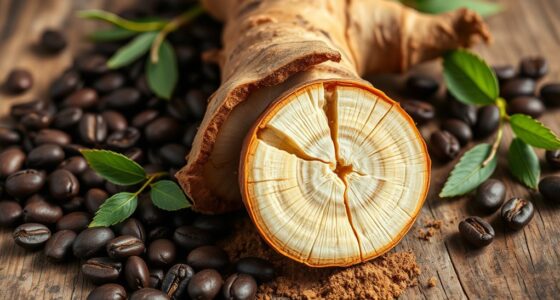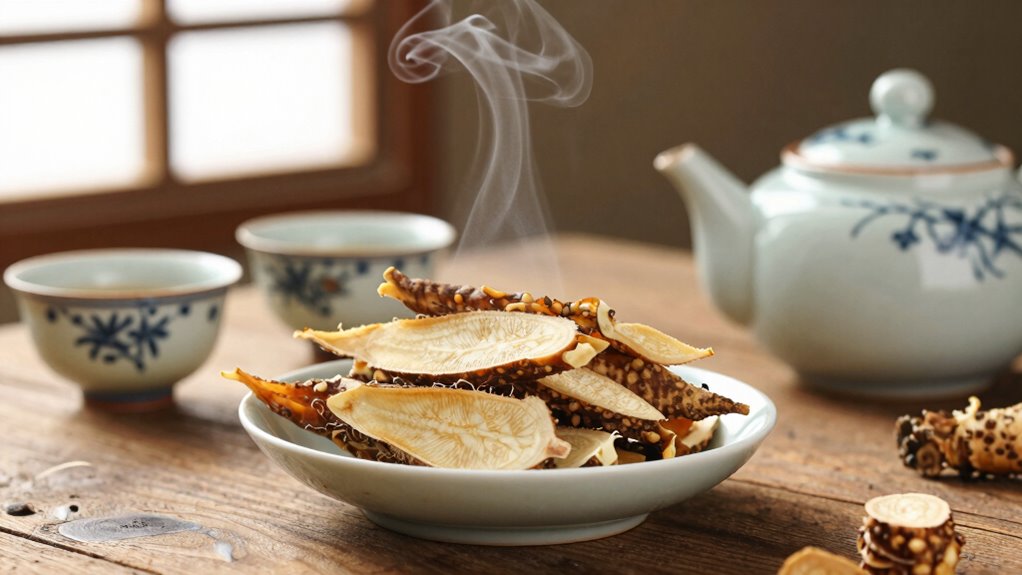

Chicory root is changing how you experience tea by offering a rich, earthy flavor that mimics coffee without caffeine. Its versatility allows you to explore herbal blends that support wellness goals like digestion or relaxation. This plant promotes a shift toward health-conscious drinks, inspiring you to craft personalized, flavorful infusions. By incorporating chicory root, you join a growing trend focused on mindful, sustainable choices—your journey into these innovative tea options continues to unfold.

Get coffee and tea gear delivered free with Prime
- Fast, free delivery on millions of items
- Prime Video, Amazon Music and more included
- Member-only deals all year
Key Takeaways
- Chicory root introduces a caffeine-free, coffee-like flavor, expanding the variety of herbal infusions in modern tea culture.
- It promotes health-conscious trends by offering prebiotic benefits and customizable, wellness-focused beverage options.
- Its versatility encourages innovative flavor pairings with herbs and sweeteners, inspiring new tea blending practices.
- Chicory root supports the shift toward sustainable, natural ingredients in contemporary tea and herbal infusion practices.
- It influences the cultural perception of tea as a functional, comforting, and health-promoting beverage choice.
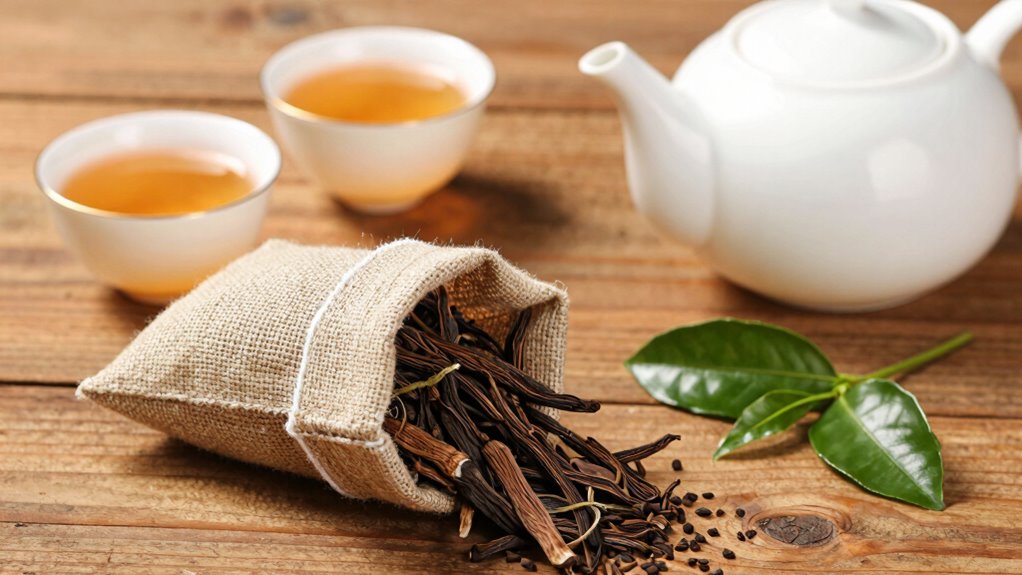
Many modern tea enthusiasts are turning to chicory root as a versatile and healthful alternative to traditional coffee and tea. This shift is reshaping how you experience herbal infusions and expanding your options beyond conventional beverages. Chicory root’s rich, earthy flavor makes it a popular choice for those seeking a satisfying, caffeine-free drink that still offers depth and complexity. As you explore new ways to enjoy herbal infusions, chicory root stands out because it provides a robust taste profile without the jitters or crashes associated with caffeine. Its natural bitterness complements other herbs and spices, allowing you to craft personalized blends that suit your taste and wellness goals.
Chicory root offers a rich, caffeine-free flavor perfect for personalized herbal blends supporting wellness.
The appeal of chicory root as a caffeine alternative has fueled its integration into modern tea culture. More people are seeking drinks that deliver comfort and alertness without the dependency or side effects of caffeine. Chicory’s ability to mimic the roasted, coffee-like flavor makes it an excellent base for creating beverages that satisfy your cravings for warmth and richness. You might find yourself gravitating toward chicory-based teas in the mornings or afternoons, enjoying their ability to energize without overstimulating. Its versatility means you can combine it with various herbs like peppermint, ginger, or chamomile, enhancing both flavor and health benefits. These herbal infusions can be tailored to boost digestion, relaxation, or immune support, aligning perfectly with the health-conscious trends in today’s tea culture.
Chicory root’s growing popularity also influences how you approach brewing and flavoring your drinks. You might experiment with steeping it alone or blending it with other herbs to discover new taste combinations. Its natural earthiness pairs well with sweeter elements like honey or stevia, allowing you to enjoy a comforting cup without added sugars. Additionally, chicory’s prebiotic properties support your gut health, making it not just a flavorful choice but a functional one as well. This growing interest in functional ingredients underscores the importance of gut health in modern wellness routines. Incorporating chicory root into your routine can also inspire you to explore other prebiotic foods, broadening your understanding of gut-friendly nutrition. Moreover, understanding the science behind prebiotics can help you make more informed dietary choices that promote overall well-being. Furthermore, the increasing awareness of prebiotic benefits is encouraging more people to include chicory in their daily diets. Recognizing the significance of biodiversity and sustainable practices in sourcing ingredients further enhances your appreciation for responsibly produced chicory. As you incorporate chicory root into your routine, you’re embracing a shift toward more mindful, health-oriented beverage choices that prioritize well-being without sacrificing flavor.
Ultimately, chicory root’s impact on modern tea culture is profound because it challenges the traditional notions of what a tea or herbal infusion can be. It invites you to explore new flavors, reduce your caffeine intake, and enjoy a beverage that aligns with your health goals. Whether you’re seeking a soothing nightcap or an energizing morning brew, chicory root offers a compelling, natural alternative that broadens your horizons and deepens your appreciation for herbal infusions.
As an affiliate, we earn on qualifying purchases.
Frequently Asked Questions
How Does Chicory Root Affect Tea Flavor Profiles?
Chicory root adds a rich, roasted flavor that enhances your tea’s profile. It introduces deep, earthy botanical notes, making your brew feel fuller and more complex. When you add chicory root, it subtly balances sweetness and bitterness, enriching the overall flavor. Its natural bitterness also accentuates other ingredients, creating a more nuanced, satisfying tea experience. So, chicory root truly amplifies flavor enhancement while lending distinctive botanical notes.
Are There Health Benefits of Adding Chicory Root to Tea?
Adding chicory root to your tea offers health benefits, especially as an herbal infusion and a caffeine alternative. It helps improve digestion, supports liver health, and may reduce inflammation. Chicory root also contains prebiotics, promoting gut health. By choosing chicory-infused teas, you enjoy a natural, flavorful way to boost wellness without relying on caffeine, making it a popular choice for those seeking healthier beverage options.
Can Chicory Root Be Used in Iced Tea Recipes?
Yes, you can definitely use chicory root in iced tea recipes, and it’s like adding a splash of boldness to your summer brew. To do this, you’ll want to use proper tea infusion methods, steeping roasted chicory root alongside your favorite tea leaves. Chicory root cultivation makes it easy to find quality roots, which lend a rich, earthy flavor perfect for chilled drinks. Just steep, chill, and enjoy!
What Are Traditional Cultures That Incorporate Chicory Root in Tea?
You’ll find chicory root in traditional herbal infusions across cultures like New Orleans, where it’s used in coffee blends, and parts of Europe, especially France, in herbal teas. In these cultural traditions, chicory root adds a rich, roasted flavor, often replacing or supplementing coffee. Its inclusion reflects deep-rooted herbal infusions practices, emphasizing the importance of local ingredients and flavor profiles in traditional tea and coffee rituals worldwide.
How Does Chicory Root Influence Tea Brewing Techniques?
Chicory root profoundly shapes tea brewing techniques by encouraging herbal infusion and root extraction. You steep chopped chicory roots slowly, allowing their rich, earthy flavors to infuse fully into your brew. This process emphasizes gentle simmering, extracting deep, robust notes that enhance the tea’s complexity. Mastering these techniques helps you craft a hearty, aromatic beverage that celebrates the root’s unique qualities, transforming simple tea into a soothing, flavorful experience.
Conclusion
You might be surprised to learn that over 30% of coffee drinkers are now exploring chicory root as a caffeine alternative. Its rich, earthy flavor not only enhances modern tea blends but also offers health benefits like improved digestion. As you embrace chicory root’s growing popularity, you’re part of a movement that’s redefining tea culture—blending tradition with innovation. So next time you sip your tea, remember, you’re experiencing a centuries-old ingredient that’s shaping the future of your favorite beverage.
Fall Picks
fall essentials
As an affiliate, we earn on qualifying purchases.