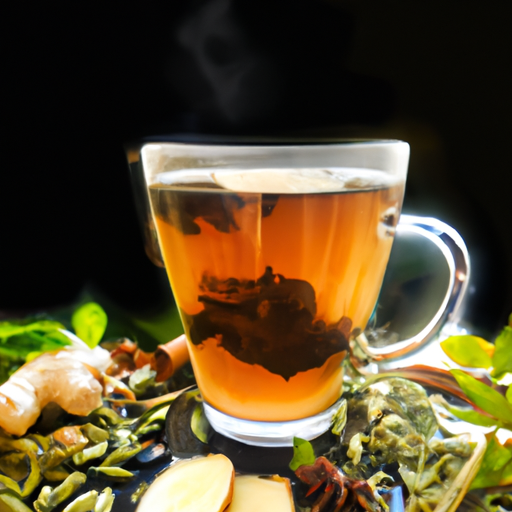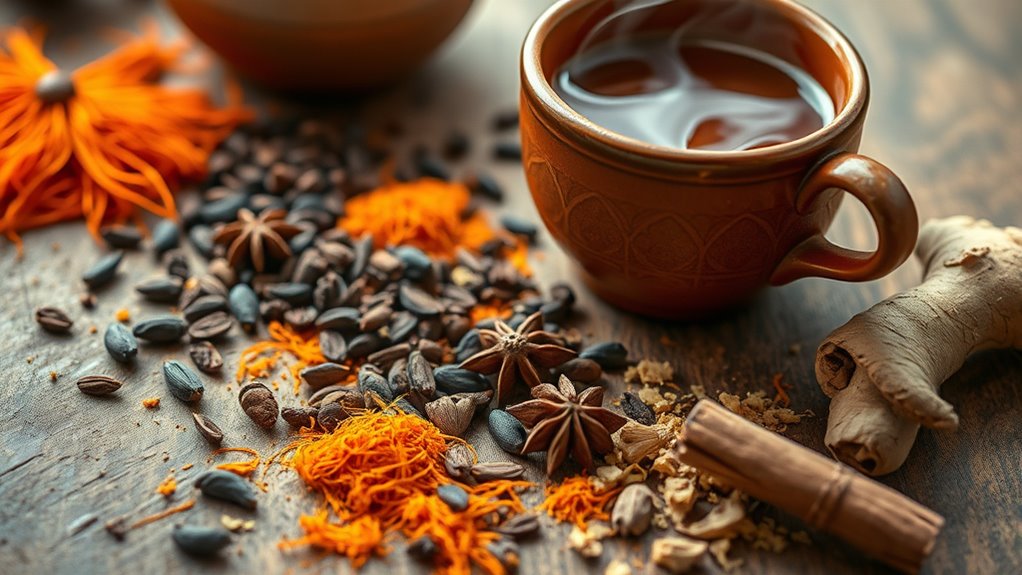
You’ll notice that regional varieties and terroir give each chai tea its unique flavor. In India, you might find spicy blends from Assam or floral notes from Darjeeling, shaped by local climate and soil. Different spices and brewing methods also influence taste, reflecting cultural traditions. The quality of ingredients from specific regions further deepens the flavor profile. If you explore further, you’ll discover how these place-based factors create the rich diversity in chai’s character worldwide.
Key Takeaways
- Different regions develop unique chai styles based on local spices, ingredients, and brewing methods.
- Indian chai varies widely, with specific spice blends and techniques reflecting regional traditions.
- Terroir factors like climate, soil, and altitude influence tea flavor and quality in chai production.
- Darjeeling’s high-altitude tea offers floral notes, while Assam’s tea provides a bold, malty flavor.
- Local spices sourced from nearby regions embed regional character and terroir into chai.
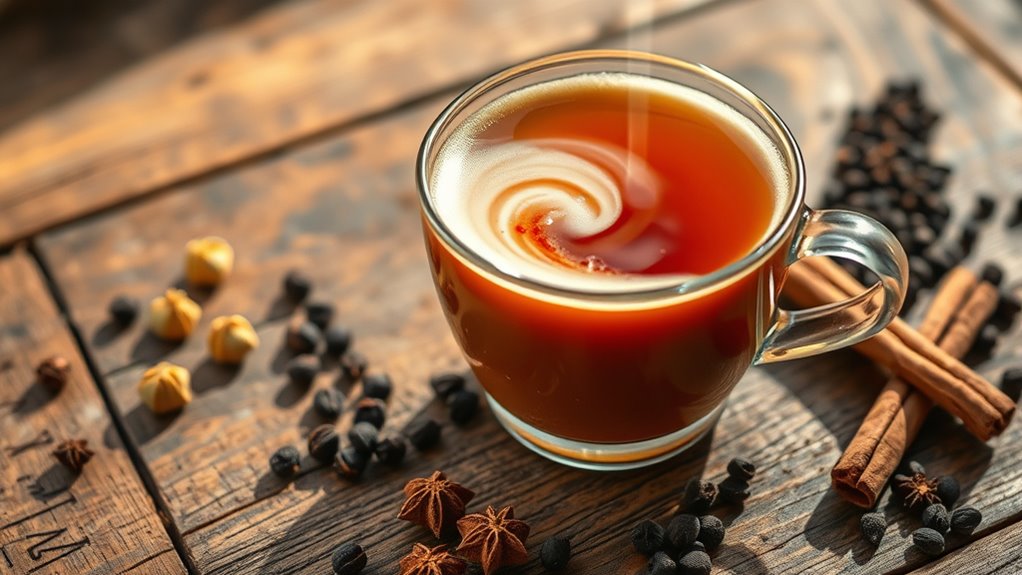
Chai tea, a beloved beverage worldwide, showcases a remarkable diversity of regional varieties that reflect local flavors and traditions. When you explore different styles of chai, you’ll notice how spice blending plays a essential role in shaping each region’s unique character. In India, for instance, chai often features a harmonious mix of black tea, cardamom, cinnamon, cloves, and ginger. The precise balance of these spices varies from place to place, influenced by local tastes and available ingredients. This careful spice blending creates a distinctive aroma and flavor profile that’s instantly recognizable. You might find some versions with a stronger cinnamon note or a more pungent ginger kick, depending on regional preferences. Beyond ingredients, brewing techniques also greatly impact the final taste. In traditional Indian chai, boiling the tea with milk and spices allows the flavors to meld thoroughly, resulting in a rich, creamy cup. On the other hand, some regions prefer steeping the tea and spices separately before combining them, which can produce a cleaner, more delicate flavor. You can experiment with brewing techniques to discover your ideal chai profile—whether it’s simmering for a long time to extract maximum spice depth or steeping briefly for a lighter brew. Additionally, the freshness and quality of ingredients sourced from particular terroirs greatly influence the flavor, making each regional chai unique.
Regional terroir influences the quality and character of chai just as it does with wine or coffee. The climate, soil, and altitude affect the tea leaves’ strength and aroma, which in turn impact the overall flavor of the chai. For example, Darjeeling’s high-altitude tea leaves lend a floral, muscat-like aroma to chai, while Assam’s robust, malty leaves contribute a bold, hearty base. When you choose ingredients from different terroirs, you notice how the subtle variations in flavor can transform your chai experience. Furthermore, local spices are often sourced from nearby regions, further embedding the terroir into the drink. The freshness and quality of these ingredients, combined with specific brewing techniques, create a sense of place in every cup. As you explore regional chai varieties, paying attention to how spices are blended and how they’re brewed helps you appreciate the deep cultural roots and natural influences that shape each version. Whether you prefer a spiced-up masala chai from northern India or a milder, aromatic brew from southern regions, understanding these nuances allows you to craft or enjoy chai that truly reflects its terroir.
Frequently Asked Questions
How Do Climate Changes Affect Chai Tea Flavor Profiles?
Climate impact profoundly influences chai tea flavor profiles by causing flavor shifts. As temperatures rise and rainfall patterns change, tea plants may develop differently, altering their aromatic compounds. You might notice a loss of some traditional flavors or new, unexpected notes in your chai. These climate-driven changes affect the tea’s aroma and taste, making it essential for growers to adapt their cultivation practices to preserve the rich, balanced flavor you enjoy.
Are There Specific Soil Types Preferred for Chai Tea Cultivation?
Think of soil as the foundation of a great story—without it, the tale falls flat. For chai tea cultivation, you prefer well-drained, loamy soil with rich organic matter. Soil composition matters; it influences flavor and plant health. Using proper planting techniques, like ensuring good aeration and balanced nutrients, helps your tea plants thrive. The right soil type, combined with skilled practices, creates a robust base for flavorful chai leaves.
What Traditional Methods Influence Chai Tea’s Regional Taste Differences?
You influence chai tea’s regional taste differences through traditional brewing and spice blending techniques. By following traditional methods, you vary the intensity of spices like cardamom, cinnamon, and cloves, which reflect local preferences. You might use specific brewing times or methods, such as simmering or steeping, to enhance certain flavors. These techniques shape each region’s unique chai profile, making every cup a reflection of local customs and ingredients.
How Does Elevation Impact Chai Tea Leaf Characteristics?
Imagine high-altitude chai leaves strutting their stuff like supermodels. Elevation effects mean thinner air forces leaves to adapt, resulting in a unique leaf composition—more essential oils, brighter flavors, and a touch of resilience. As you sip, you’ll notice the crispness and complexity that altitude effects bring, making each cup a demonstration of how elevation influences chai tea’s character, turning a simple brew into a flavorful adventure.
Do Different Regions Use Unique Spices in Their Chai Blends?
Yes, different regions do use unique spices in their chai blends. You’ll find that spice variations vary based on local tastes and available ingredients, making regional blends distinct. For example, some areas emphasize cardamom and cloves, while others incorporate cinnamon or star anise. These regional spice differences give each chai blend a unique flavor profile, reflecting local culinary traditions and preferences.
Conclusion
As you savor each sip, remember chai’s journey across lands—its spices like whispers of tradition and aroma like echoes of home. Each regional twist weaves a story, a thread in the tapestry of terroir. Like a compass guiding your senses, chai’s diversity invites you to explore its depths. Embrace this symphony of flavors, knowing that every cup holds a symbol of culture, warmth, and the timeless dance between nature and craft.