
In Bhutanese culture, traditional tea blessings are sacred rituals that symbolize respect, gratitude, and spiritual connection. As you share tea, gestures and prayers convey good wishes for health, prosperity, and peace. These blessings mark important milestones like births and weddings, reinforcing bonds within the community. Every step is deliberate, reflecting deep cultural values and reverence. If you continue exploring, you’ll discover more about how these meaningful traditions strengthen spiritual and social ties.
Key Takeaways
- Tea blessings in Bhutanese culture symbolize respect, gratitude, and spiritual connection through deliberate, meaningful rituals.
- They are used during life milestones like births and marriages to add spiritual significance and reinforce community bonds.
- The rituals involve reciting prayers and blessings to invoke protection, health, and prosperity.
- Each gesture and presentation in the ceremony carries symbolic meaning, emphasizing cultural preservation and reverence.
- These blessings promote mindfulness, peace, and spiritual well-being, strengthening cultural and spiritual values.
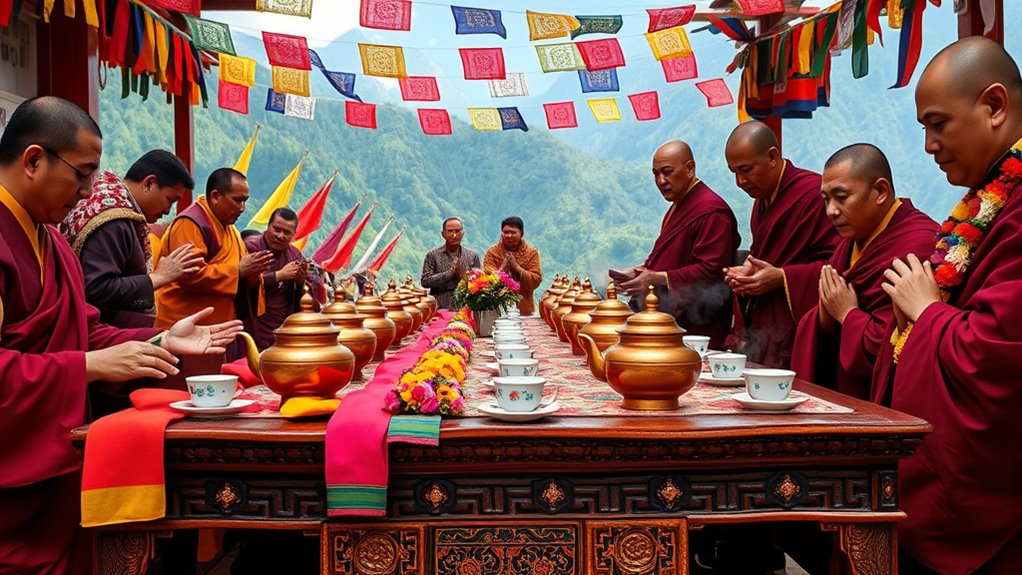
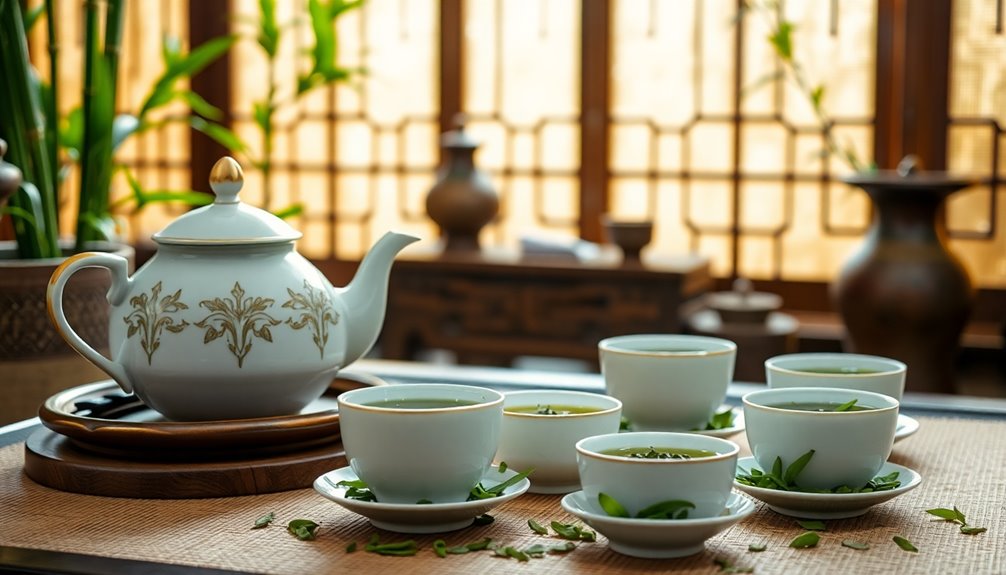
In Bhutanese culture, traditional tea blessings hold a special significance that goes beyond simply serving a warm beverage. When you participate in a tea ceremony, you’re engaging in a meaningful ritual that embodies respect, gratitude, and spiritual connection. These ceremonies are more than just about drinking tea; they serve as a conduit for conveying good wishes, blessings, and positive energy to those gathered. The act of offering tea during special occasions or gatherings is deeply rooted in Bhutanese values, emphasizing harmony and community bonding. As you observe or take part in a tea benediction, you’ll notice that every step is deliberate, each gesture carrying symbolic meaning that reinforces the spiritual significance of the ritual.
Participating in Bhutanese tea blessings embodies respect, gratitude, and spiritual connection through meaningful, symbolic rituals.
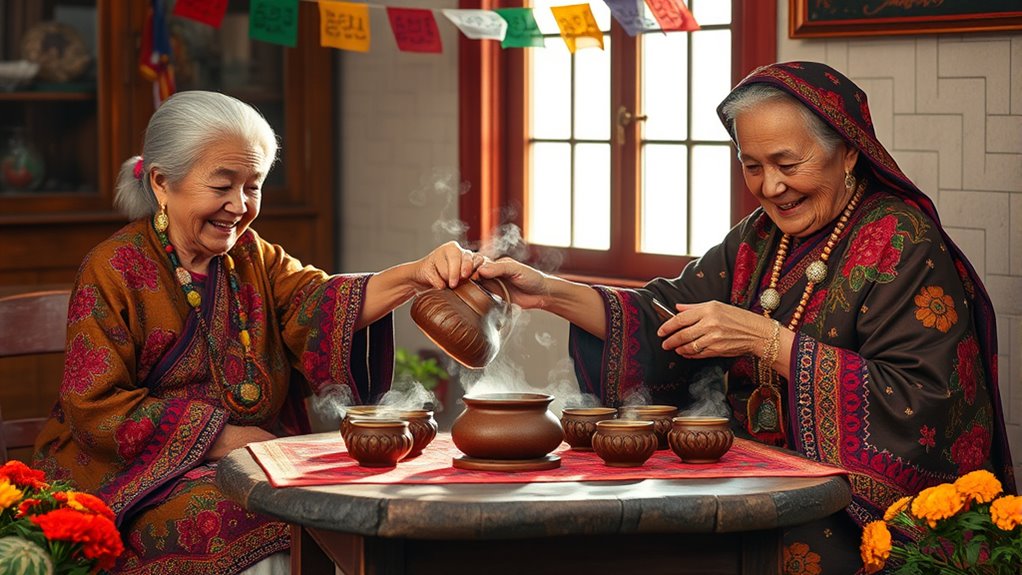
The tea ceremony in Bhutan isn’t merely a social custom; it’s a spiritual act that honors tradition and the divine. When you pour and share tea, you’re participating in a sacred exchange that signifies trust and well-wishing. The host often recites prayers or blessings before serving, invoking protection, health, and prosperity for everyone present. This spiritual significance elevates the simple act of sharing tea into a profound moment of connection with both the divine and the community. The blessings expressed during these ceremonies are believed to purify the mind and soul, fostering a sense of peace and well-being that can extend beyond the immediate gathering. Additionally, the careful handling and presentation of tea reflect the importance of cultural preservation and respect for tradition in Bhutanese society.
In Bhutanese culture, tea blessings are also a way to mark important life events—births, marriages, or religious festivals—adding a layer of spiritual meaning to these milestones. When you participate in a tea benediction, you’re not only enjoying a warm drink but also engaging in a sacred act that reinforces your bonds with others and your spiritual beliefs. The reverence shown during these rituals is a testament to their importance in daily life and spiritual practice. The significance of the tea ceremony is that it transforms an ordinary act into a meaningful tradition, reminding everyone involved of their connection to each other and the divine forces that influence their lives.
Ultimately, in Bhutanese culture, the spiritual significance of tea blessings makes every sip a moment of mindfulness and reverence. Whether shared during a festival or a personal milestone, these blessings serve as a reminder of the deep-rooted values of respect, harmony, and spiritual well-being. By embracing this tradition, you participate in a centuries-old practice that nurtures both body and soul, reinforcing the rich cultural tapestry of Bhutan.
Frequently Asked Questions
How Are Tea Blessings Performed During Bhutanese Festivals?
During Bhutanese festivals, you’ll witness tea blessings performed through a special tea ceremony that holds deep symbolism. You’ll see offerings of butter tea and prayers, which symbolize harmony and well-being. These rituals are part of festival culinary customs, blending spiritual significance with shared food traditions. As you participate, you’ll feel the warmth of community and respect, experiencing how tea blessings enrich the cultural fabric of Bhutanese celebrations.
What Are the Traditional Ingredients Used in Bhutanese Tea Blessings?
Like a sacred recipe, Bhutanese tea blessings use herbal infusions that symbolize purity and harmony. You’ll find ingredients such as butter, salt, and sometimes medicinal herbs, each holding ritual significance. These traditional ingredients are carefully chosen to honor spiritual harmony and well-being, turning everyday tea into a meaningful act of blessing. You participate in a ritual that connects you to Bhutanese culture’s deep reverence for nature and spiritual balance.
Who Typically Officiates the Tea Blessing Ceremonies?
In Bhutanese culture, monastic rituals often officiate tea blessing ceremonies, with monks or spiritual leaders leading the rites. You’ll find that they perform these ceremonies to bestow spiritual blessings, invoking protection and prosperity. These officiants use sacred chants and gestures, making the ritual deeply meaningful. When participating, you respect their role, understanding that their spiritual authority enhances the significance of these blessings, connecting you to Bhutan’s rich spiritual traditions.
Are There Specific Prayers or Chants Associated With Tea Blessings?
You might wonder if specific prayers or chants accompany tea blessings. In Bhutanese culture, these rituals often include traditional prayers and chants that emphasize tea’s spiritual significance and its role in fostering harmony. The tea ritual symbolism reflects respect for nature and community, transforming a simple act into a meaningful spiritual practice. These prayers deepen the spiritual significance, reinforcing the cultural importance of sharing tea with mindfulness and reverence.
How Do Tea Blessings Influence Community Relationships in Bhutan?
You notice that tea blessings strengthen community bonding and social cohesion in Bhutan. When you participate in these rituals, you help foster trust and unity among neighbors and friends. Sharing tea and blessings creates a sense of collective identity and mutual respect, encouraging people to support each other. By engaging in these traditions, you contribute to a harmonious society where social ties are reinforced through meaningful cultural practices.
Conclusion
In Bhutanese culture, traditional tea blessings embody respect, harmony, and gratitude. They connect you to centuries of tradition, to community, and to nature. They remind you to cherish moments of togetherness, to honor your roots, and to carry blessings forward. Embrace these rituals not just as customs, but as symbols of unity, peace, and hope. Let each blessing inspire you to nurture kindness, to share joy, and to honor the sacred bond between tradition and life.