Choosing the right teapot for blooming tea affects how beautiful and flavorful your brew will be. Glass teapots showcase the flowers unfolding, making the visual experience vibrant, while porcelain or ceramic enhance heat retention and aesthetic appeal. Metal teapots are durable but can alter delicate flavors, and clay adds rustic charm but influences taste. Each material and shape offers unique benefits—like how well you can enjoy the bloom or preserve flavors. Keep exploring to discover more about these hidden differences.
Open a free Amazon Business account
Business pricing, bulk buying and tax-exempt orders.
As an affiliate, we earn on qualifying purchases.
Key Takeaways
- Glass teapots vividly display blooming tea, enhancing visual appreciation of the unfolding blossoms.
- Porcelain and ceramic retain heat well and provide an elegant presentation, ideal for savoring delicate flavors.
- Metal teapots can alter tea taste due to reactivity but are durable for everyday use.
- Clay or Yixing teapots influence flavor development through porosity, adding complexity over time.
- Shape and material choice impact infusion dynamics, affecting both bloom display and flavor extraction.
When it comes to brewing blooming tea, selecting the right teapot can enhance both the visual spectacle and flavor experience. The type of teapot you choose directly impacts how the tea’s delicate flavors develop and how beautifully the blooming process unfolds in front of you. To get the most out of your experience, you need to contemplate two key factors: tea leaf quality and teapot material choices. High-quality tea leaves are essential because they produce the vibrant, fragrant blossoms you want to see and taste. Lower-quality leaves may produce a duller bloom and less nuanced flavor, which detracts from the visual and sensory delight of blooming tea.
Choosing the right teapot and quality tea leaves elevates your blooming tea experience, blending visual beauty with delicate flavor.
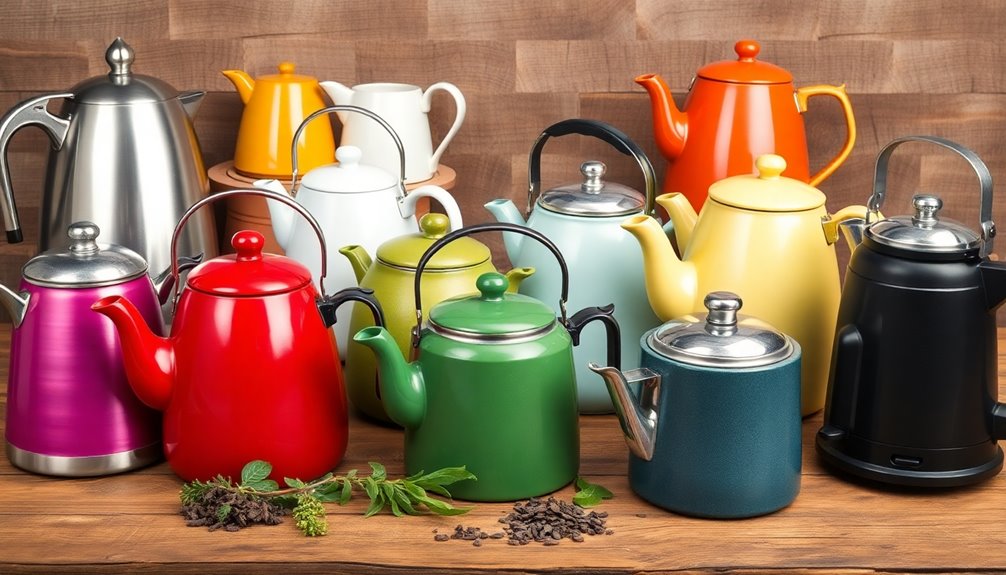
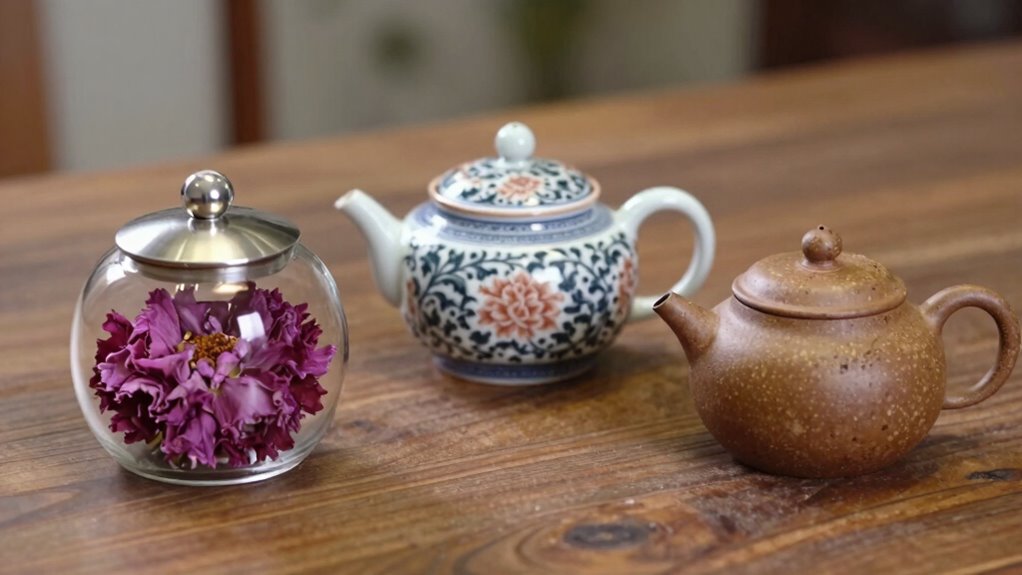
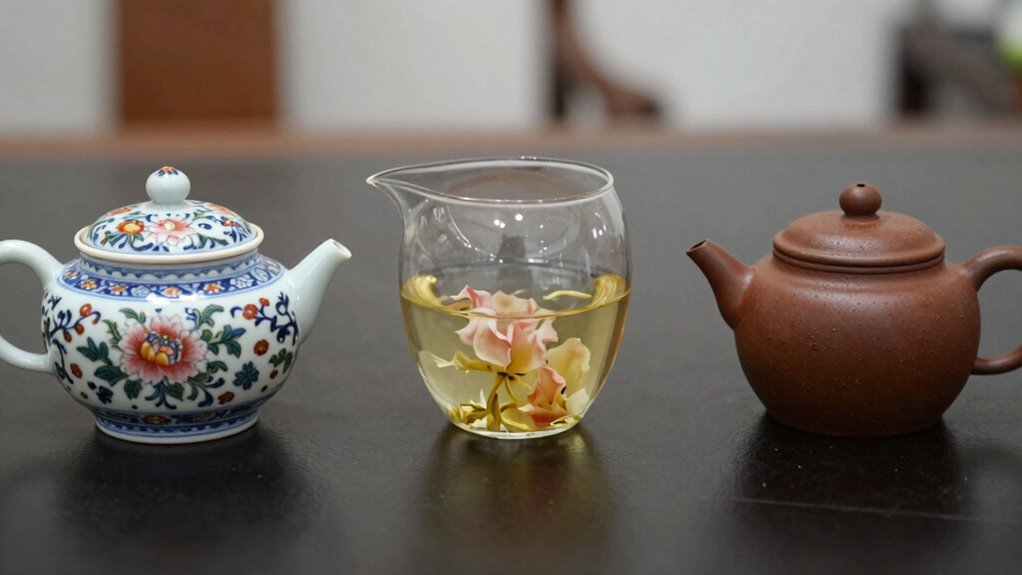
Your choice of teapot material greatly influences how the tea infuses and how the bloom appears. For instance, glass teapots are popular because they showcase the blooming process vividly. They allow you to watch the leaves unfurl and the flower open fully, creating a mesmerizing display. Glass is also non-reactive, so it doesn’t interfere with the delicate flavors of the tea. On the other hand, porcelain or ceramic teapots offer excellent heat retention, helping the tea steep evenly and maintain its temperature. These materials can also add an elegant aesthetic, elevating the presentation, though they don’t showcase the bloom as transparently as glass.
Metal teapots, such as those made from stainless steel or cast iron, are durable and retain heat well, but they can sometimes alter the tea’s flavor due to their reactive nature, especially if the teapot isn’t well-lined. This can interfere with the subtle taste of the blooming tea, undermining the purpose of selecting high-quality leaves. If you prefer a traditional or rustic look, clay or yixing teapots might appeal, but they often aren’t transparent, so you miss out on observing the bloom in its full glory. Additionally, teapot material influences how the tea’s delicate flavors develop and how vividly the bloom can be appreciated. It’s also worth noting that material properties such as porosity or reflectivity can impact the overall brewing process and visual effect. Furthermore, understanding tea brewing techniques can help you optimize your blooming tea ritual regardless of the teapot type. To enhance your experience, consider how the teapot shape can affect infusion and presentation, as different shapes can influence how the tea moves within the vessel.
Ultimately, your choice hinges on what you value most: the visual spectacle, flavor purity, or aesthetic appeal. If you want to fully enjoy watching the blossom’s graceful unfolding, a glass teapot is ideal. If you prioritize heat retention and a traditional feel, ceramic or porcelain might suit you better. Whichever you choose, remember that the quality of your tea leaves remains paramount—no teapot material can compensate for inferior tea. When you pick the right combination, you’ll elevate your blooming tea experience to a memorable ritual, full of color, aroma, and delicate beauty.

Teabloom Stovetop & Microwave Safe Glass Teapot with Removable Loose Tea Glass Infuser – Includes 2 Blooming Teas – 2-in-1 Tea Kettle and Tea Maker – Tea Purist's Choice
- Elegant Classic Design: Blends with any décor with clean lines
- High-Quality Borosilicate Glass: Stovetop, microwave, dishwasher safe
- Comfortable and Convenient: Wide handle and non-drip spout for easy pouring
As an affiliate, we earn on qualifying purchases.
As an affiliate, we earn on qualifying purchases.
Frequently Asked Questions
How Do Teapot Materials Affect Blooming Tea Flavor?
Your teapot material influences blooming tea flavor by affecting heat retention and how the tea interacts with the vessel. For example, clay pots retain heat longer, enhancing steeping and flavor extraction, while glass lets you watch the bloom unfold without altering taste. Proper tea storage in your teapot prevents flavor loss, ensuring a fresh, vibrant brew. Choosing the right material helps you enjoy a richer, more balanced blooming tea experience.
Can Different Teapots Influence the Blooming Process’s Visual Display?
Different teapots can turn the blooming process into a mesmerizing dance, influencing the visual display you see. The teapot’s aesthetics and cultural significance shape how the flower unfurls, making each presentation unique. A delicate, traditional teapot can enhance the elegance, while a modern piece adds a contemporary flair. Your choice impacts the drama of the bloom, transforming your tea time into an artful performance that reflects cultural richness.
Are There Specific Teapot Sizes Ideal for Blooming Tea Brewing?
Yes, there are ideal teapot sizes for blooming tea brewing. You should choose a teapot with a capacity of about 200-300ml to allow the tea to fully expand and showcase its visual beauty. A lightweight teapot, around 300-400 grams, makes handling easier, especially when pouring. Smaller teapots help concentrate flavors and enhance the blooming effect, creating a more enjoyable visual and sensory experience.
How Does Teapot Shape Impact Infusion Time for Blooming Tea?
The shape of your teapot substantially impacts infusion time for blooming tea. A rounder, wider shape allows the leaves to expand fully, speeding up infusion, while a taller, narrower design may slow it down. Pay attention to the teapot’s handle design to guarantee comfortable pouring, and confirm the lid fitting precision is tight to maintain ideal temperature. These factors influence how quickly and evenly the tea blooms and infuses.
Is Cleaning Method Different for Various Teapot Materials Used for Blooming Tea?
Yes, teapot cleaning varies based on material. For glass or ceramic teapots, you can use gentle dish soap and warm water, avoiding abrasive scrubbers to prevent scratches. For clay or unglazed teapots, avoid soap altogether to preserve their porous surface; instead, rinse with hot water and let them air dry. Material maintenance is essential to keep your blooming tea teapot in top condition, ensuring maximum flavor and longevity.
Conclusion
Choosing the right teapot for blooming tea enhances your experience and brings out the full beauty and flavor of each bloom. Whether you opt for glass, porcelain, or clay, understanding their differences helps you make a better choice. So, next time you prepare blooming tea, ask yourself: are you truly appreciating every delicate detail of this mesmerizing ritual? After all, the right teapot isn’t just about aesthetics—it’s about elevating your tea journey to something extraordinary.
Fall Picks
fall essentials
As an affiliate, we earn on qualifying purchases.