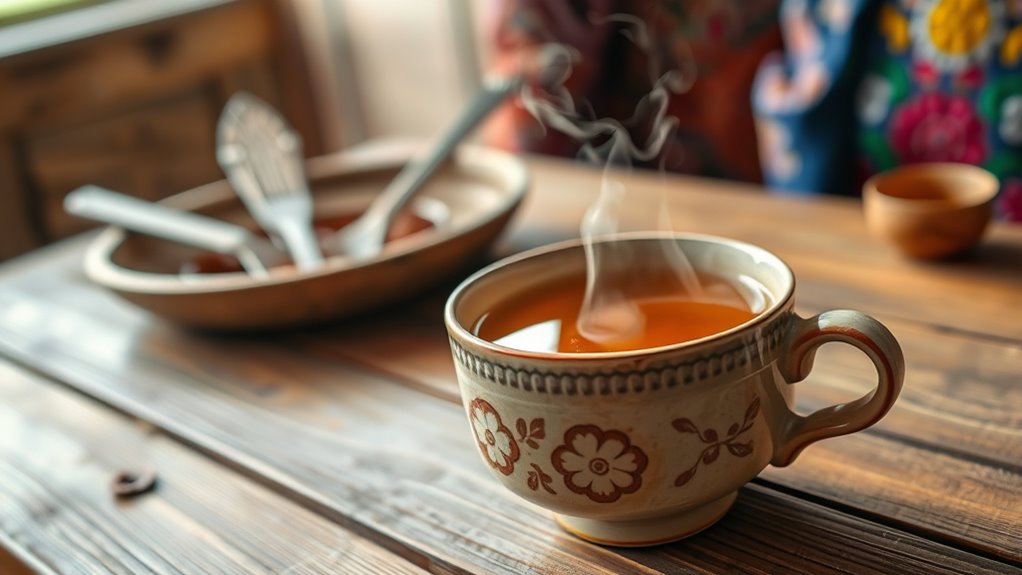

Barley tea plays a meaningful role in many local traditions, symbolizing hospitality, respect, and social bonding. When you serve or share it, you’re engaging in rituals that honor cultural values passed down through generations. It’s often used in ceremonies to promote harmony and community connection. Beyond its invigorating taste, barley tea’s cultural significance underscores its importance in maintaining traditions and celebrating social bonds—discover more by exploring its deep-rooted history and customs further.

Get coffee and tea gear delivered free with Prime
- Fast, free delivery on millions of items
- Prime Video, Amazon Music and more included
- Member-only deals all year
Key Takeaways
- Barley tea symbolizes hospitality, respect, and warmth in cultural rituals across East Asian societies.
- Serving barley tea during ceremonies fosters harmony, social bonding, and cultural continuity.
- Its role in traditional gatherings highlights health benefits, longevity, and community well-being.
- Barley tea rituals connect past traditions with present social practices, reinforcing cultural identity.
- Participating in barley tea customs reflects reverence for heritage and promotes social cohesion.
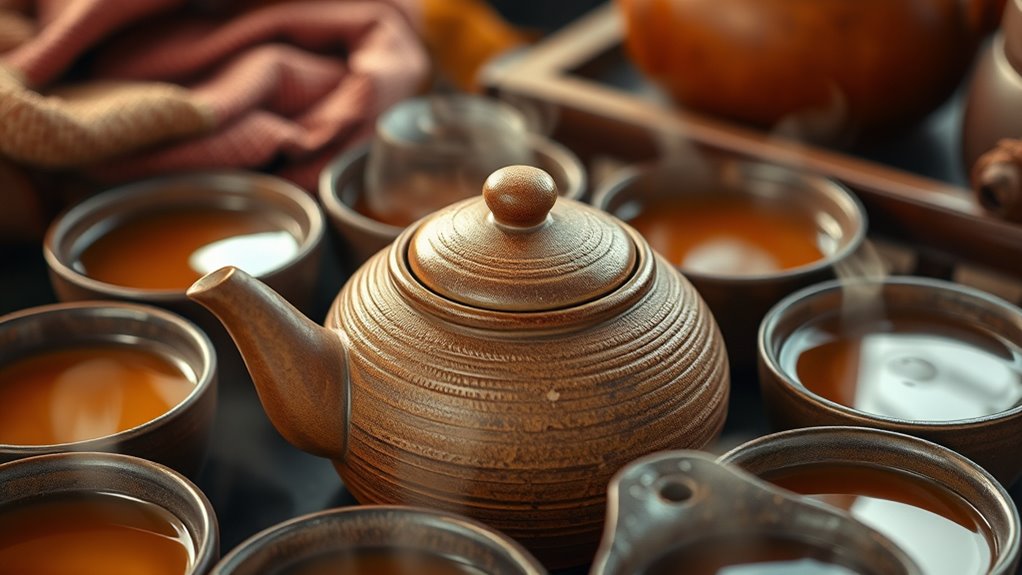
Barley tea holds a special place in many cultures, symbolizing hospitality, tradition, and well-being. In various societies, serving barley tea isn’t just about quenching thirst; it’s a meaningful gesture that reflects respect and warmth toward guests. During tea ceremonies, especially in East Asian traditions, pouring and sharing barley tea signifies harmony and social connection. These rituals aren’t just about drinking; they’re about honoring customs that have been passed down through generations. As you participate in these ceremonies, you’ll notice how the act of offering barley tea fosters a sense of community and reverence. People believe that these rituals help strengthen relationships and maintain cultural identity, making barley tea an essential element of social life.
Beyond its cultural significance, barley tea has gained recognition for its health benefits, which further embed it into daily routines. Rich in antioxidants and free from caffeine, it’s a popular choice for those seeking a healthy beverage option. Many cultures have long valued barley tea for its potential to aid digestion, reduce inflammation, and improve hydration. Its natural properties make it suitable for people of all ages, especially when they want to enjoy a soothing drink without the jitters associated with caffeinated teas or coffee. Additionally, traditional preparation methods often emphasize its calming effects and enhance its cultural importance. When you regularly include barley tea in your diet, you might notice improvements in your overall well-being, such as enhanced digestion and better hydration, especially during colder months when warm beverages are comforting.
In traditional settings, the health benefits of barley tea are often highlighted during gatherings or communal meals, reinforcing its role in promoting health and longevity. People believe that drinking barley tea can detoxify the body and boost energy levels, which are reasons why it’s a staple in many households. As you sip on barley tea during special occasions or daily routines, you’re participating in a practice that has stood the test of time, blending health with cultural reverence. Its calming aroma and subtle flavor serve as a reminder of the deep roots it has in social rituals and health practices alike.
Top picks for "cultural significance barley"
As an affiliate, we earn on qualifying purchases.
Frequently Asked Questions
How Is Barley Tea Traditionally Prepared in Different Regions?
You prepare barley tea differently across regions by using various techniques. In some areas, you roast barley first for a richer flavor, then boil it in water, while others prefer to steep roasted grains directly. Regional variations also include serving it hot or cold, depending on the climate and tradition. You might add a pinch of salt or enjoy it plain, reflecting local tastes and cultural preferences.
Are There Specific Festivals Where Barley Tea Is Prominently Featured?
During festive occasions, barley tea takes center stage, symbolizing health and prosperity through its cultural symbolism. You’ll find it prominently featured at celebrations like New Year’s and harvest festivals, where it’s shared among family and community. Its warm, soothing qualities help create a sense of togetherness, making it an integral part of these traditions. You can actively participate by brewing and serving barley tea, embracing its deep cultural roots.
What Are the Health Benefits Associated With Drinking Barley Tea?
Imagine sipping a warm cup of barley tea, and you’re giving your health a gentle hug. It’s packed with antioxidant properties that fight off free radicals, helping you stay vibrant. Plus, it acts as a digestion aid, soothing your stomach after a hearty meal. Regularly drinking barley tea can boost your overall well-being, making each sip a small act of self-care that keeps you feeling refreshed and balanced.
How Has Modern Commercialization Affected Traditional Barley Tea Practices?
Modern commercialization has transformed traditional barley tea practices through mass production and branding strategies. You might notice more uniform flavors and packaging designed to appeal widely, which can dilute the cultural authenticity. While these strategies make barley tea more accessible, they often prioritize profit over tradition, potentially overshadowing local brewing methods and cultural rituals. As a result, the rich heritage behind barley tea risks being overshadowed by commercial interests.
Are There Any Symbolic Meanings Attached to Barley Tea in Local Rituals?
Barley tea carries symbolic symbolism and ritual significance, representing health, longevity, and harmony in local traditions. You might see it used in ceremonies to symbolize well-being, unity, and respect for nature. Its warm, calming presence embodies comfort and continuity, serving as a reminder of cultural roots. When shared during rituals, it highlights community bonds and reverence for tradition, making it more than just a beverage—it’s a meaningful emblem of cultural identity.
Conclusion
You see, barley tea isn’t just a simple drink; it’s like a bridge connecting generations and traditions. Its warm, earthy flavor carries stories and memories, making each sip a moment of cultural connection. When you enjoy barley tea, you’re part of a rich tapestry woven with history and community. Just as a tree’s roots keep it grounded, this tea keeps local customs alive, reminding you of the enduring power of tradition in everyday life.
Halloween Picks
halloween
As an affiliate, we earn on qualifying purchases.