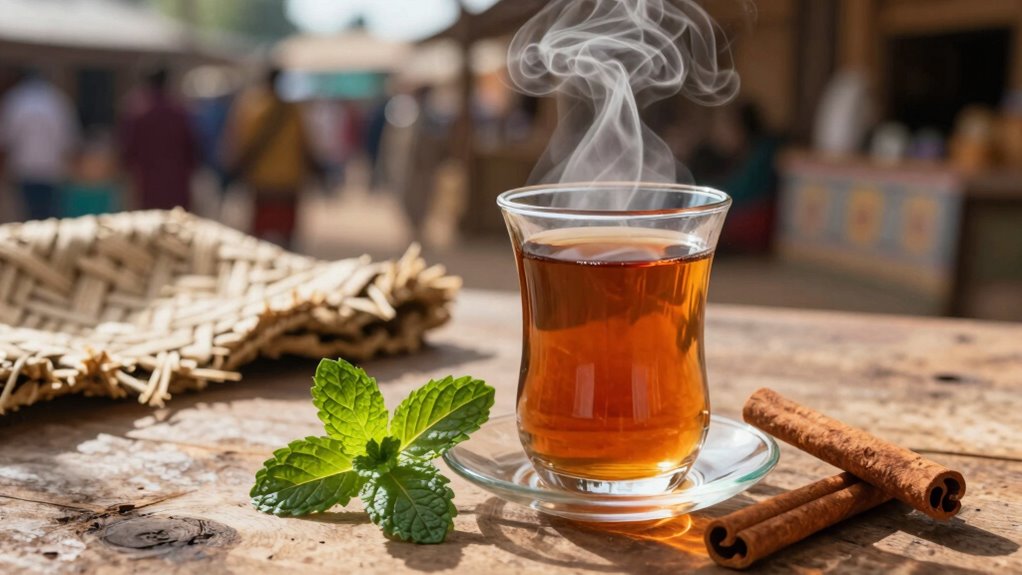

Most tea lovers miss how African tea reflects more than just flavor—it’s a symbol of community, resilience, and cultural pride passed down through generations. You might not realize that traditional harvesting methods involve rhythmic plucking that preserves authenticity and connects to cultural identity. The vibrant harvest celebrations and environmental influences like climate and terrain shape each cup’s unique character. To truly appreciate African tea’s depth, you’ll want to explore what makes it a rich cultural heritage, waiting to be uncovered.

Get coffee and tea gear delivered free with Prime
- Fast, free delivery on millions of items
- Prime Video, Amazon Music and more included
- Member-only deals all year
Key Takeaways
- The cultural stories and traditions embedded in African tea harvesting and preparation.
- The community and family connections that accompany the tea-making process.
- How climate and terrain uniquely influence the flavor and character of African teas.
- The deep-rooted pride and resilience reflected in every sip of African tea.
- The experience of drinking tea as a connection to land, history, and cultural heritage.

Many tea enthusiasts have noticed a decline in the availability of authentic African teas, and it’s leaving a noticeable gap in the global market. You might not realize it, but part of what makes African teas special isn’t just their flavor—it’s the story behind how they’re grown and the deep cultural roots they carry. When you think about tea harvesting in Africa, you’re thinking of more than just picking leaves; it’s a tradition passed down through generations, rooted in community and heritage. The rhythmic plucking of tender leaves, often done by skilled hands, reflects centuries of agricultural expertise. It’s a labor of love, blending tradition with skill, where each harvest tells a story of patience, precision, and cultural pride.
What you miss most about African tea isn’t just its unique flavor profile but the cultural significance woven into every cup. These teas are more than commodities; they embody the history and identity of entire communities. For many, tea harvesting is an act of cultural expression, symbolizing unity and resilience. In countries like Kenya, Malawi, and Rwanda, the harvest seasons are vibrant with communal activities—families working together, elders passing down techniques, and the community celebrating the bounty. This sense of shared purpose and cultural continuity is something you don’t find in mass-produced teas from elsewhere. Cultural heritage plays a central role in shaping the tradition and pride associated with African tea. Recognizing the traditional harvesting methods adds depth to our understanding of its cultural significance. These methods are often passed down through generations, ensuring the preservation of cultural identity. Additionally, understanding the impact of climate and terrain helps us appreciate the unique qualities of African teas, which are integral to their character and cultural importance.
When you sip African tea, you’re tasting a product born from a rich cultural tapestry. The traditions surrounding tea harvesting influence not just the flavor but also the way the tea is processed and enjoyed. This cultural significance elevates the experience from mere drinking to appreciating a cultural heritage. It’s a connection to land, history, and the people who dedicate their lives to cultivating these leaves. As the world moves toward mainstream, commercial teas, it’s easy to forget that each cup of authentic African tea carries centuries of tradition, community effort, and cultural pride. Recognizing cultural roots in tea helps us appreciate its true value beyond just taste.
As an affiliate, we earn on qualifying purchases.
Frequently Asked Questions
How Does African Tea Cultivation Differ From Other Regions?
You’ll notice that African tea cultivation differs due to unique tea plant varieties and cultivation techniques. African farmers often grow specific varieties suited to local climates, like Camellia sinensis var. assamica, which thrive in higher altitudes and warm weather. They also use traditional methods, such as shade drying and hand-picking, which preserve flavor and quality. These practices give African teas a distinct taste profile, often overlooked by tea lovers unfamiliar with regional nuances.
What Unique Flavors Are Found in African Teas?
You’ll notice African teas boast unique flavors like floral infusions, capturing delicate jasmine or hibiscus notes, and spiced blends, rich with cinnamon or clove. These flavors evoke vibrant markets, lush landscapes, and warm traditions. African teas often combine these elements, creating a sensory journey that’s floral and spicy, soothing and invigorating. You’ll find yourself drawn into a rich tapestry of taste, where floral infusions and spiced blends beautifully complement each other.
Are There Traditional African Tea Brewing Methods?
Yes, there are traditional African tea brewing methods. You might participate in a tea ceremony that emphasizes hospitality and respect, often involving specific brewing techniques like boiling leaves with spices or herbs. These methods highlight the cultural significance of tea, focusing on patience and community. You’ll find that these traditional techniques create a rich, flavorful experience, connecting you deeply with African customs and the unique taste profiles of their teas.
Which African Countries Are the Top Tea Producers?
You might be surprised to learn Kenya and Ethiopia lead Africa’s top tea producers, thriving on expansive tea estates during harvest season. While Kenya’s vast plantations dominate global markets, Ethiopia’s unique highland climate creates distinct flavors. These countries’ lush landscapes and dedicated farmers guarantee high-quality tea. Despite the small size of some nations, their rich soils and ideal climates make them key players in the continent’s thriving tea industry.
How Does African Tea Influence Local Cultures?
You notice that African tea deeply influences local cultures through traditional tea ceremonies and their cultural significance. These rituals foster community bonds, respect, and heritage, often serving as social gatherings or celebrations. By participating, you gain insight into local customs and values. African tea isn’t just a beverage; it’s an essential part of cultural identity, helping preserve traditions and creating a sense of belonging within communities.
Conclusion
So, next time you sip your favorite brew, remember there’s more than just the familiar taste. African teas offer a rich story steeped in tradition and bold flavors that can truly awaken your senses. Don’t let comfort keep you from exploring new horizons—sometimes, stepping out of your usual cup can lead to the most memorable experiences. After all, the early bird catches the worm, and in tea, the adventurous palate finds its treasure.
Halloween Picks
halloween
As an affiliate, we earn on qualifying purchases.