Across continents, interpreting tea leaves varies but often shares a common goal: uncover insights hidden within shapes and symbols. In Turkey, it’s linked to Sufi mysticism, while Eastern Europe mixes it with other divination traditions. Western practices tend to be more playful and intuitive. Despite differences in symbols and styles, cultures see these patterns as reflections of the subconscious or divine will. If you keep exploring, you’ll discover how these traditions reveal universal human hopes for guidance and understanding.

Get coffee and tea gear delivered free — and shop member deals
- Fast, free delivery on millions of items
- Access to Prime Big Deal Days deals on October 6–7
- Prime Video, Amazon Music and more included
Key Takeaways
- Cultural symbols in tea leaf readings vary widely, reflecting regional beliefs, mythologies, and spiritual traditions.
- In Turkey, tasseography is linked with Sufi mysticism and spiritual insight, influencing symbol interpretation.
- Eastern European practices often combine tea leaf reading with other divination methods, creating unique regional techniques.
- Western tea leaf reading tends to be more intuitive and light-hearted, emphasizing personal insights and symbolism.
- Despite regional differences, the core belief across continents is that patterns reveal guidance and hidden truths.
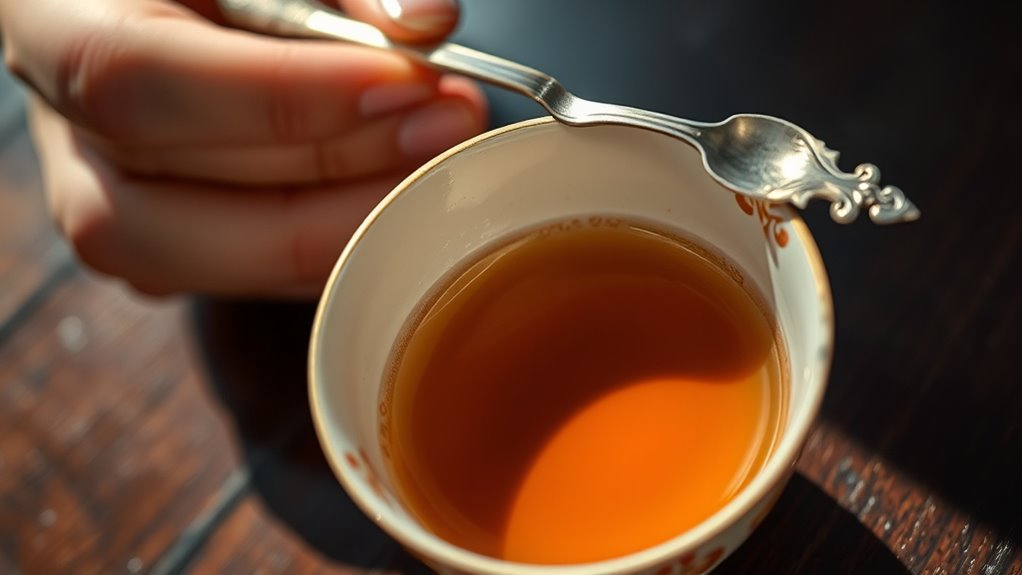
Reading tea leaves, also known as tasseography, is an ancient practice of divination that interprets the patterns formed by tea residues in a cup. Its origins trace back thousands of years, with roots that stretch across different cultures and civilizations. In history, the practice is believed to have begun in China around 1000 AD, where tea drinking was already a refined art. From there, it spread to the Middle East, Europe, and beyond, evolving with each new culture that embraced it. The historical origins reveal a deep human desire to seek guidance from the unseen, using simple tools like tea cups to glimpse future events or understand personal dilemmas. Over centuries, tasseography became intertwined with spiritual and mystical traditions, often practiced by fortune-tellers, mystics, or even common folk seeking reassurance. Today, modern practices of reading tea leaves have adapted these ancient techniques for contemporary audiences. While some still follow traditional methods closely, others incorporate intuitive insights or combine them with tarot or astrology. Modern practitioners often use standard teacups—preferably wide-mouthed and white—to clearly observe residue patterns. They may ask specific questions or simply offer open-ended readings, allowing intuition to guide interpretation. In contemporary settings, tea leaf reading has gained popularity at festivals, workshops, and even online, making it accessible to many. The core idea remains the same: patterns formed by the leaves carry symbolic meanings that can reveal insights about your life, relationships, or future. Although the approach varies, the essence of modern practices continues to honor the mysticism of the past, blending tradition with personal intuition. Modern practices often incorporate cultural variations, which influence the symbols and interpretations used. The symbols seen in the cup—whether they resemble animals, letters, or abstract shapes—are open to interpretation, often influenced by cultural backgrounds and personal experiences. Across different continents, tasseography has developed unique nuances. In Turkey, for example, it’s often linked with Sufi mysticism, emphasizing spiritual insight. In Eastern Europe, it might be combined with other forms of divination. In the West, tea leaf reading is frequently seen as a light-hearted, intuitive exercise. Despite these differences, they all share a common thread: the belief that the patterns in tea leaves can serve as a mirror to your subconscious mind or divine will. As you explore this ancient art, you tap into a rich cultural tapestry that spans time and geography, connecting you with centuries of seekers who looked to tea for answers.
Frequently Asked Questions
How Did Tea Leaf Reading Originate Historically?
You might wonder how tea leaf reading started. Its historical origins trace back to ancient China, where practitioners believed leaves held mystical insights. Over time, this practice spread through cultural transmission across Asia and into Europe. You can see how different cultures adapted and interpreted the symbols, turning a simple tea ritual into a form of divination. This evolution highlights how cultural exchange shapes unique spiritual practices worldwide.
Are There Modern Scientific Explanations for Tea Leaf Reading?
Think of tea leaf reading as a colorful tapestry woven from symbolism and intuition. While modern science hasn’t proven it as a literal predictive tool, some explore quantum symbolism and psychological interpretations to find meaning. You might see it as a mirror reflecting your subconscious rather than a crystal ball. Though intriguing, these approaches blend subjective insights with cultural stories, making it more of an art than a science.
How Do Different Cultures Interpret Tea Leaf Symbols?
You’re curious about how different cultures interpret tea leaf symbols. Regional variations shape these symbolic meanings, so what one culture sees as a sign of luck might mean something entirely different elsewhere. In some regions, symbols like stars or animals carry specific messages, while others focus on shape or pattern. Your understanding deepens when you see how cultural contexts influence these interpretations, making each tea reading uniquely meaningful.
Is Tea Leaf Reading Still Practiced Professionally Today?
You might wonder if tea leaf reading is still practiced professionally today. Contemporary practitioners often follow specific tea reading etiquette, ensuring respectful and accurate interpretations. While it’s less common than in the past, some still offer professional readings, blending traditional techniques with modern practices. These practitioners typically emphasize intuition and cultural symbolism, making tea leaf reading a unique, spiritual experience for those seeking guidance or insight.
What Are Common Misconceptions About Tea Leaf Divination?
Did you know that over 60% of people believe tea leaf reading is just superstition? Many think it’s a mere historical myth, but modern skepticism often overlooks its cultural significance. Common misconceptions include the idea that divination guarantees specific outcomes, yet it’s more about interpretation and symbolism. You might see it as entertainment, but for some, it’s a meaningful tradition rooted in centuries of cultural storytelling.
Conclusion
As you close the pages of this journey, remember that reading tea leaves isn’t just an ancient art; it’s a mirror of our shared human curiosity. Across continents, people still seek meaning in the mysterious shapes, much like Sherlock Holmes deciphering clues. Whether in a bustling Mumbai café or a cozy London tearoom, this practice connects you to centuries of tradition. So, next time you sip tea, keep an eye out—destiny might just be written in the leaves.
Halloween Picks
halloween
As an affiliate, we earn on qualifying purchases.