TL;DR

Get coffee and tea gear delivered free with Prime
- Fast, free delivery on millions of items
- Prime Video, Amazon Music and more included
- Member-only deals all year
A Good Housekeeping report lists five freezer items professional cleaners recommend removing: messy open packages, old ice, expired or unwanted food, nearly empty containers and unidentified items. Their advice is practical household guidance, not a food-safety determination; the report does not set universal storage limits or establish that freezer burn alone means food is unsafe.
A Good Housekeeping report has outlined five kinds of freezer contents that professional cleaners recommend clearing out: messy open packages, old ice, expired or unwanted food, nearly empty containers and mystery items. The advice is aimed at making freezers cleaner and easier to use, while the report leaves individual food-safety decisions dependent on the item and its condition.
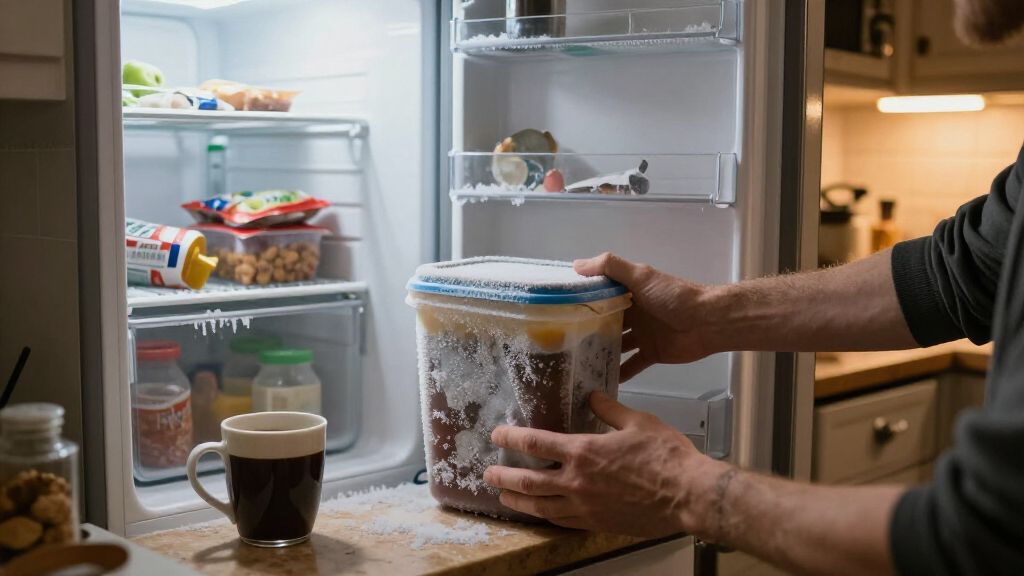
Rochelle Wilkinson, a professional cleaner and owner of Dirt Detective Cleaning, says open packages that spill or leak should be dealt with rather than left to make a mess. If the food is still usable, she recommends cleaning the area and moving it into a freezer-safe, spill-proof container. The report says food showing mold, freezer burn or a passed date can be discarded; it also notes that unwanted food that is still within date may be donated or composted where appropriate.
The second category is old ice. Logan Taylor, a cleaning professional and founder of The Dazzle Cleaning Company, says ice can absorb odors from other freezer contents. He recommends replacing it and washing ice bins, trays and storage containers. The report does not give a time limit for keeping ice or say that odor alone presents a safety risk.
Wilkinson also advises removing food that is past its date or unlikely to be used. When a date is unavailable, she suggests checking condition, including freezer burn, food frozen into a single block or substantial ice buildup inside its packaging. The report additionally recommends consolidating nearly empty bags and cartons unless their contents will be used soon, and discarding food whose identity or history is unknown.
Clear Space and Find Food
A freezer cleanout can make it easier to identify what is available and reduce the chance that new groceries get buried behind old or forgotten packages. Removing leaking items can also limit spills and make shelves and drawers easier to clean. The guidance offers a short checklist for households that have accumulated leftovers, partial packages or food without labels.
These are recommendations from cleaning professionals, not a formal inspection of food safety. The report combines practical housekeeping advice with cues people can use when reviewing stored food, but a messy package or an old-looking item does not by itself establish whether a specific food is safe or unsafe. Readers should avoid treating the list as a substitute for reliable food-handling guidance when they are uncertain about an item.
spill-proof freezer storage containers
As an affiliate, we earn on qualifying purchases.
As an affiliate, we earn on qualifying purchases.
The Five Freezer Categories
The report focuses on items that take up space, create mess or are difficult to identify. Its five categories are leaking or open packages, old ice, expired or unused foods, nearly empty containers and mystery items. The recommendations include both discarding and organizing: consolidating food can be more appropriate than throwing it out when it remains usable and is likely to be eaten.
Wilkinson suggests using small portions of leftover vegetables, proteins and other ingredients together in soup rather than letting them sit unused. The article also describes donating or composting unwanted, in-date food as possible options. Those choices depend on the food’s condition and local donation or composting rules; the report does not provide a detailed process for either.
“If you’re not quite sure what it is or how long it’s been there—or even possibly where they came from—then toss them.”
— Logan Taylor
Food Safety Depends on the Item
The report does not specify how long particular foods can be stored, provide freezer-temperature instructions or establish a universal rule for deciding whether an item is safe. It also does not distinguish in detail between quality changes, such as freezer burn, and food-safety risks. The article’s references to dates and visible condition are presented as cleaning advice, not a complete food-safety assessment.
It is also unclear from the source whether the five recommendations reflect a formal survey or research study; the material presents them as advice from two cleaning professionals. Donation and composting availability can vary by location, and the report does not give local guidance.
A Practical Cleanout Checklist
The report does not announce a follow-up study or a scheduled next development. For readers applying the advice, the suggested next step is to review the freezer category by category: contain any usable food that is leaking, replace stale ice and wash its bin, check dates and condition, consolidate small quantities that will be used soon, and remove items that cannot be identified.
Before discarding food based on appearance alone, readers may need to consult food-safety guidance relevant to that item. Any food kept after the cleanout should be labeled clearly so its contents and storage date are easier to track. The source does not specify a particular labeling system or inspection schedule.
Key Questions
What five things do cleaning professionals recommend removing from a freezer?
The report lists messy open packages, old ice, expired or unwanted food, nearly empty containers and unidentified items. Some food may be better consolidated or stored in a spill-proof container rather than discarded.
Does freezer burn automatically mean food is unsafe?
The report names freezer burn as a reason to review or discard an item, but it does not establish that freezer burn alone proves food is unsafe. It provides no detailed food-safety assessment, so readers should consult reliable guidance for the specific food.
What should I do with an open package that is still usable?
Wilkinson recommends cleaning up the spill and transferring usable contents to a freezer-safe, spill-proof container. Labeling the container can also help identify the food later.
Why replace old ice?
Taylor says ice can absorb odors from other items in the freezer. He recommends replacing it and washing the ice trays, bins and other storage containers; the report does not set a specific replacement schedule.
Source: rss
Fall Picks
fall essentials
As an affiliate, we earn on qualifying purchases.