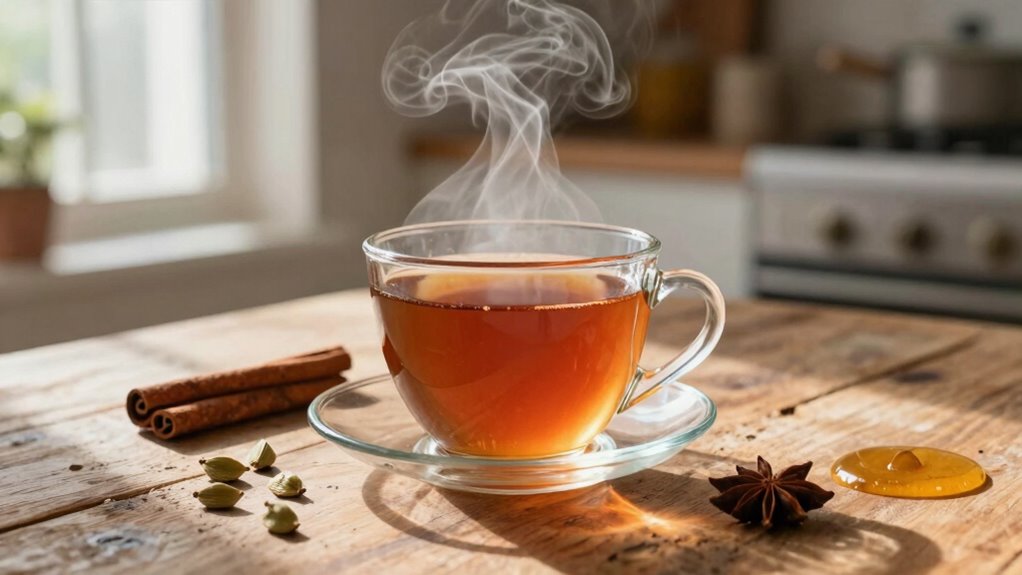
Chai tea has a rich history rooted in India, where tea cultivation and spice blending have been perfected over centuries. It’s more than just a warm drink — it reflects cultural exchange, regional traditions, and agricultural mastery. Skilled farmers harvest the best leaves, and spice artisans craft unique blends using locally sourced ingredients. Every cup tells a story of tradition, innovation, and sensory artistry. If you explore further, you’ll discover even more fascinating details behind this beloved beverage.
Open a free Amazon Business account
Business pricing, bulk buying and tax-exempt orders.
As an affiliate, we earn on qualifying purchases.
Key Takeaways
- Chai originated in India over thousands of years, evolving through cultural exchange and regional traditions.
- Its flavor depends on carefully cultivated tea leaves and skillful spice blending.
- Sustainable farming practices maintain soil health and influence tea quality and flavor.
- Regional variations feature unique spice combinations, reflecting local culture and history.
- Every cup of chai embodies centuries of agricultural mastery, aromatic artistry, and cultural significance.
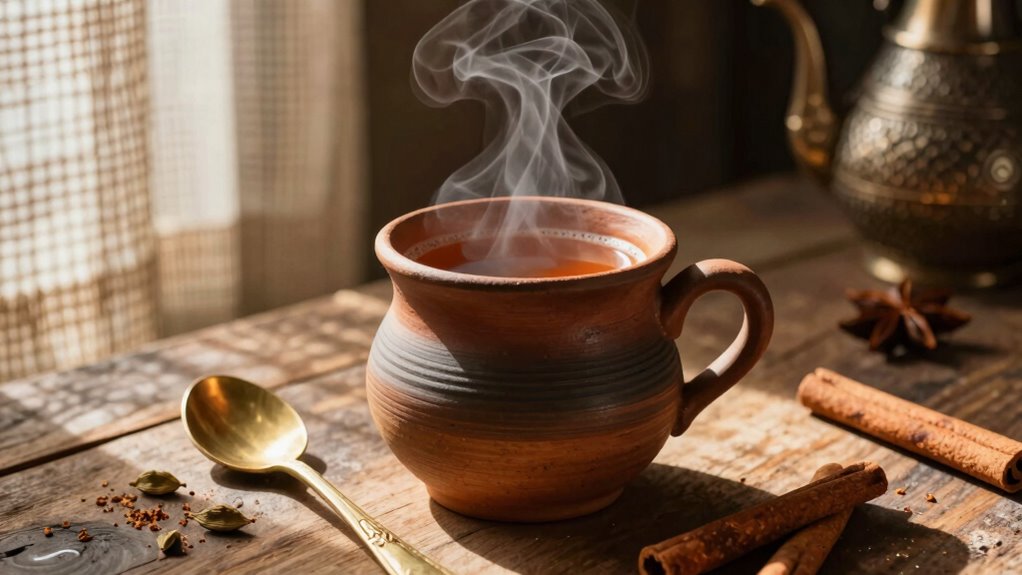
Chai tea, often associated with cozy cafes and bustling markets, has a rich history that many people overlook. At its core, chai isn’t just a simple beverage; it’s a complex blend shaped by centuries of tradition. The story begins with tea cultivation, a process that dates back thousands of years. In India, where chai originated, tea leaves are carefully cultivated on plantations that thrive in specific climates. You might not realize it, but the quality of the tea leaves plays a vital role in the final flavor of your chai. Experienced farmers harvest young, tender leaves and process them meticulously, ensuring they develop the robust taste that’s essential for traditional chai. The cultivation process involves more than just planting and picking; it’s about understanding the land, the weather, and the timing to get the best leaves. tea cultivation has been refined over centuries, emphasizing the importance of climate and soil quality in producing high-grade leaves. Additionally, the methods used in processing the tea leaves, such as oxidization and drying, further influence the flavor profile of the final product. Proper sustainable farming practices are crucial for maintaining biodiversity and soil health, which in turn supports the quality of the tea. A deeper understanding of agricultural techniques helps ensure the production of consistently high-quality leaves for traditional chai. As tea is a crop that thrives in specific environments, climate conditions directly impact the flavor and aroma of the finished product. Once the tea leaves are harvested, the next step is spice blending, which truly sets chai apart from other teas. This is where tradition and creativity come together. You might be surprised to learn that the spices used in chai—cinnamon, cardamom, cloves, ginger, and black pepper—are often locally sourced, roasted, and ground to enhance their aroma and flavor. Each family or region might have its own unique spice blend, passed down through generations. This spice blending isn’t just about flavor; it’s about creating a warming, comforting experience. The spices are combined in precise proportions to balance the bitterness of the tea with sweet, spicy notes, making every sip a rich, sensory journey.
The art of blending spices into tea isn’t accidental; it’s a craft that requires skill and intuition. Vendors and home cooks alike carefully measure and mix their spices to produce a signature taste. As you sip your chai, you’re tasting centuries of tradition, cultural exchange, and regional variation. The process of tea cultivation and spice blending has been refined over generations, shaping a beverage that’s both deeply rooted in history and adaptable to modern tastes. So, the next time you enjoy a cup of chai, remember that it’s more than just a drink—it’s a story brewed through centuries of agricultural mastery and aromatic artistry. The regional variations in spice blends contribute to the diverse flavors found across different areas, showcasing the rich cultural diversity behind this beloved beverage.
As an affiliate, we earn on qualifying purchases.
Frequently Asked Questions
When Did Chai Tea First Originate in History?
Chai tea first originated in ancient India around 5000 years ago, making it a truly historic beverage. You’re sipping on a drink that’s been cherished as a royal beverage for centuries, blending an ancient spice mix with black tea. This flavorful brew was initially used for medicinal purposes and later became a symbol of Indian culture. Its rich history highlights its importance across generations, blending tradition and flavor seamlessly.
Are There Regional Variations of Traditional Chai Recipes?
Yes, there are regional variations of traditional chai recipes. In India, tea ceremonies often feature rich spice blends like cardamom, cinnamon, and ginger, while in Nepal, they might include local herbs. In the Western world, chai tends to be sweeter and less spicy, with variations in milk and sweetener choices. Each region adapts the spice blends and preparation methods, creating unique flavors rooted in local traditions and preferences.
How Has Chai Tea Influenced Global Coffee Culture?
Chai tea has profoundly influenced global coffee culture by blending rich flavor profiles with traditional tea ceremonies. You’ll notice cafes experimenting with chai-inspired drinks, merging spices with coffee, creating new sensory experiences. This fusion encourages a deeper appreciation of diverse flavor profiles and cultural rituals, inspiring baristas and enthusiasts alike. As a result, chai’s warm, aromatic essence shapes modern beverage trends, connecting people through shared appreciation of both tea and coffee traditions worldwide.
What Are Common Health Benefits Associated With Drinking Chai?
Drinking chai offers numerous health benefits, like herbal properties that boost your immune system and digestive benefits that soothe your stomach. Imagine chai as a gentle gardener, nurturing your well-being with each sip. The spices, such as ginger and cinnamon, are like tiny healers working together to fight inflammation and improve digestion. Incorporating chai into your routine can help you feel more balanced, energized, and healthier overall.
Is There a Difference Between Chai and Masala Chai?
Yes, there’s a difference between chai and masala chai. Chai generally refers to black tea infused with spices, while masala chai specifically includes a blend of various spices like cardamom, cinnamon, and ginger, creating a richer flavor profile. You’ll notice ingredient variations depending on recipes, which influence the overall taste and aroma. So, when you choose, consider whether you want a simple spiced tea or a more complex blend.
Conclusion
Now that you know the rich history behind chai tea, it’s clear this isn’t just a cozy drink — it’s a warm embrace from centuries past. Every sip connects you to a tapestry of culture, tradition, and passion that’s stood the test of time. So next time you brew a cup, remember you’re tasting more than spices; you’re savoring a story that’s as timeless as the stars. Let chai’s magic continue to inspire your journey.
Back to school Picks
back to school
As an affiliate, we earn on qualifying purchases.