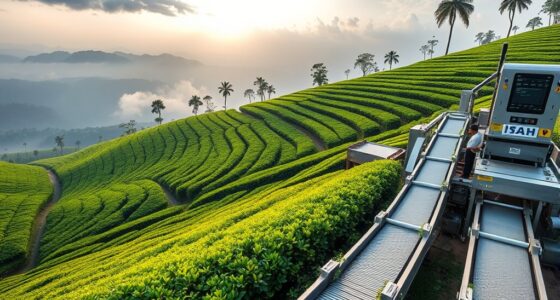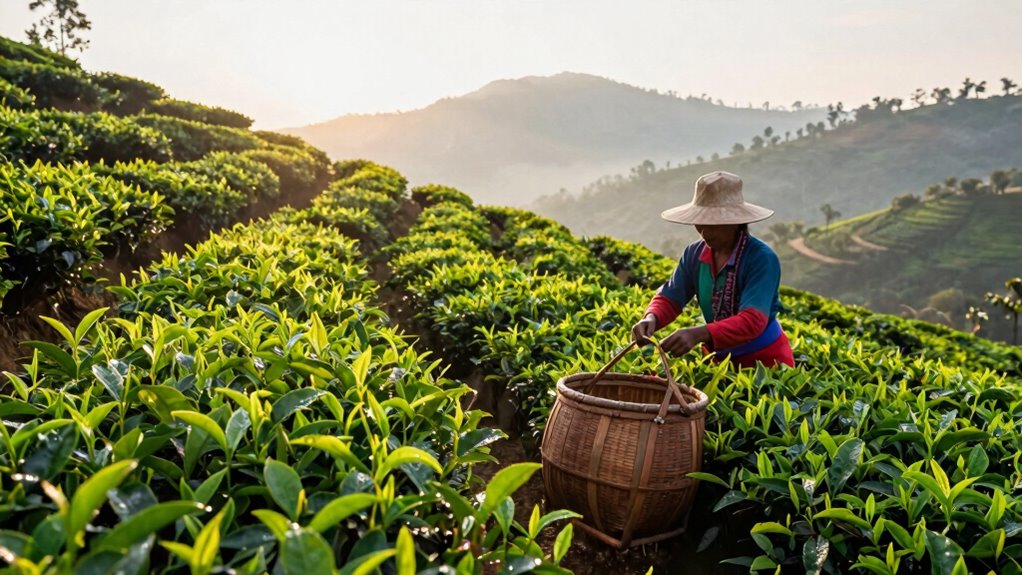

You might think Sri Lankan tea is just about high-quality leaves, but it’s so much more. Its rich flavors and aromas come from the unique climate, soil, and lush landscapes where it’s grown. Skilled craftsmanship at every stage guarantees top-tier quality, while challenges like logistics and global competition require constant innovation. If you stay curious, you’ll discover how Sri Lankan tea’s heritage and resilience keep it among the world’s finest.
Key Takeaways
- Sri Lankan tea is globally renowned for its high quality, unique flavors, and lush hillside landscapes.
- The industry faces export challenges like logistical issues, customs procedures, and fluctuating global demand.
- External factors such as currency fluctuations and international tariffs impact competitiveness.
- Strategies include modernizing supply chains, market diversification, and emphasizing tea’s unique qualities.
- Maintaining strict quality control and innovation sustains Sri Lanka’s reputation as a top tea exporter.
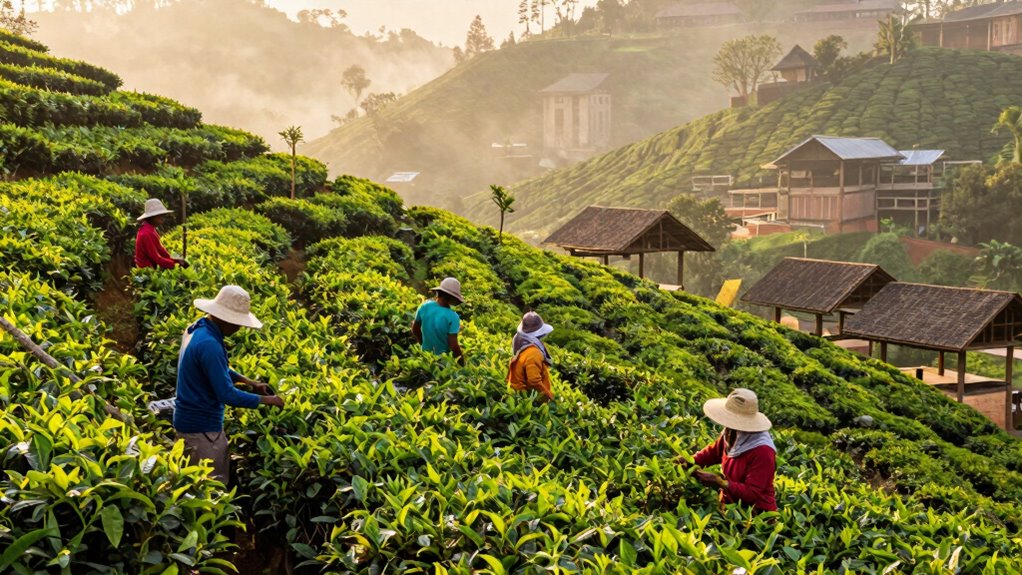
Have you ever wondered what makes Sri Lankan tea so renowned worldwide? It’s not just the reputation or the picturesque landscapes that draw attention; it’s the meticulous process behind tea cultivation that truly sets it apart. Sri Lanka’s tea industry has been built on generations of expertise, where the climate, altitude, and soil combine to produce high-quality leaves. You might imagine lush hillsides covered in vibrant green tea bushes, but the real magic lies in the careful craftsmanship involved at every stage—from plucking the tender leaves to processing them with precision. The country’s diverse terrains allow for a variety of teas, each with distinct flavors, aromas, and qualities, making Sri Lankan tea a sought-after commodity globally.
However, despite its reputation, the industry faces significant export challenges. You may think that producing tea is enough to guarantee its success on the international market, but the reality is more complex. Exporting tea involves steering through a web of logistical hurdles, trade regulations, and fluctuating global demand. You’re likely aware that shipping delays, customs hurdles, and transportation costs can threaten the freshness and quality of the product upon arrival. Additionally, Sri Lanka’s export infrastructure sometimes struggles to keep pace with the volume of tea produced, leading to bottlenecks that can delay shipments or increase costs. This makes it difficult for producers to compete on price and reliability with other major tea-exporting countries.
Furthermore, geopolitical and economic factors play a role. Currency fluctuations, trade agreements, and international tariffs can dramatically affect profit margins. You might also realize that the global market is increasingly competitive, with countries like India and Kenya offering cheaper alternatives that threaten Sri Lanka’s market share. These challenges push producers to innovate and adapt, whether through improving logistics, diversifying markets, or emphasizing the unique qualities of their tea. Still, the core challenge remains: maintaining high standards of quality while facing these external pressures. Additionally, reliance on traditional methods means that modern supply chain management practices are essential for overcoming these hurdles. Incorporating modern logistics can help streamline operations and reduce costs, ultimately benefiting the producers and exporters. Recognizing the importance of sustainable practices in maintaining the reputation and ecological health of tea plantations is also crucial for long-term success. Experts also emphasize that quality control measures are vital for preserving the distinctiveness of Sri Lankan tea in a competitive global market. Moreover, embracing technological advancements can further enhance quality control and operational efficiency.
Despite these hurdles, Sri Lankan tea continues to thrive because of the unwavering dedication of its growers and exporters. They understand that their reputation relies on consistent quality and authenticity. By overcoming export challenges through resilience and strategic planning, Sri Lanka sustains its position as a premier tea exporter. So, the next time you sip your cup of Ceylon tea, remember that behind its rich flavor lies a story of careful cultivation, resilience against global hurdles, and a passion for excellence that has stood the test of time.

Ceylon Tea Collection Gift Box – 2 Pack Premium Bundle,10 Premium Tea Variety Pack, Pure Sri Lankan Black Tea Assortment, Gift Set for Tea Lovers Fresh & Handpicked
DOUBLE VALUE PACK – Get 2 premium Ceylon tea gift boxes in one bundle ✔ Premium Ceylon Tea…
As an affiliate, we earn on qualifying purchases.
As an affiliate, we earn on qualifying purchases.
Frequently Asked Questions
How Did Sri Lanka Become a Leading Tea Exporter?
You might not realize it, but Sri Lanka became a leading tea exporter through strategic plantation development, inspired by colonial plantation architecture that attracted tourists. As you explore tea tourism, you see how the country’s ideal climate and fertile soil support high-quality tea production. This combination of rich history, scenic plantations, and global demand helped Sri Lanka establish itself as a top exporter in the competitive tea industry.
What Unique Flavors Distinguish Sri Lankan Tea From Others?
You’ll instantly notice Sri Lankan tea’s flavor profiles burst with vibrant, bold notes that seem to dance on your palate, unlike any other. These teas are distinguished by their bright, citrusy, and floral nuances, thanks to unique cultivation methods like high-altitude plucking and shade-grown techniques. The combination creates a symphony of flavors that make Sri Lankan tea stand out, offering an unforgettable, almost magical, tasting experience.
How Do Sri Lankan Tea Plantations Impact Local Communities?
You’ll find that Sri Lankan tea plantations considerably impact local communities through tea estate employment, providing jobs and income. This creates opportunities for local community development, such as improved infrastructure, schools, and healthcare facilities. As you explore these plantations, you’ll see how they foster economic growth and social progress, helping uplift families and neighborhoods. The positive influence of tea estates is essential for the sustainable development of the region.
What Sustainable Practices Are Used in Sri Lankan Tea Farming?
Think of Sri Lankan tea farming as a delicate dance with nature. You’ll find sustainable practices like organic certification, ensuring chemicals stay out of the environment, and water conservation efforts that help preserve essential resources. Farmers often adopt eco-friendly methods, protecting biodiversity and reducing their carbon footprint. This balance between tradition and innovation allows you to enjoy your tea, knowing it’s cultivated with care for both people and the planet.
How Has Sri Lankan Tea Influenced Global Tea Culture?
You can’t ignore how Sri Lankan tea has shaped global tea culture through its rich tea aroma and meticulous leaf processing. When you sip a cup, you experience the distinct aroma that reflects the country’s high-quality production standards. Sri Lankan tea’s unique flavor profiles and traditional processing methods have set global benchmarks, inspiring tea enthusiasts worldwide to appreciate finer leaves and foster a deeper appreciation for the art of tea making.

English Breakfast Tea | ORGANIC Ceylon OP grade loose leaf black tea | CRISP, RICH & AROMATIC | 110+ Cups | 100% Idulgashinna SINGLE Estate Tea
DISTINCTIVE TASTE- This loose black tea blend provides a full bodied taste that is both rich and smooth…
As an affiliate, we earn on qualifying purchases.
As an affiliate, we earn on qualifying purchases.
Conclusion
Now that you know the rich history and meticulous process behind Sri Lankan tea, you’ll see it in a new light. Did you know that Sri Lanka produces about 300 million kilograms of tea annually, making it one of the top exporters worldwide? Next time you enjoy a cup, remember the centuries of tradition, effort, and passion behind each sip. It’s more than just tea — it’s a story of resilience and craftsmanship waiting to be savored.
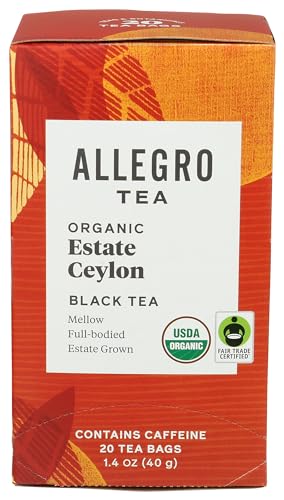
Allegro Tea, Organic Estate Ceylon Tea Bags, 20 ct
20 count Black Tea Bags
As an affiliate, we earn on qualifying purchases.
As an affiliate, we earn on qualifying purchases.

Umbrella Shape Ceramic Tea Strainer – Chinese Blue & White Porcelain Loose Leaf Filter with Rotating Design, Multi-Purpose Tea Infuser for Kung Fu/Coffee/Brewing (Bule)
ARTISTIC UMBRELLA DESIGN: The rotating blue & white porcelain tea filter features traditional Chinese ceramic artistry, combining an…
As an affiliate, we earn on qualifying purchases.
As an affiliate, we earn on qualifying purchases.