
South American tea traditions influence modern tea culture by highlighting community, history, and regional identity. Sharing mate symbolizes social bonds and hospitality, shaping how people experience tea worldwide. Unique local flavors and indigenous practices showcase the region’s rich heritage, challenging the idea of tea as solely Asian or European. As these traditions spread, they enrich global perspectives and inspire new ways to enjoy tea. If you want to explore how these vibrant customs continue to evolve, keep exploring their fascinating story.
Key Takeaways
- South American tea traditions showcase regional flavors and methods, broadening global perceptions of tea as a cultural practice.
- Sharing mate symbolizes community and hospitality, influencing modern social tea rituals worldwide.
- Indigenous herbs and local varieties enrich global tea diversity, highlighting regional cultural identities.
- Sustainable cultivation practices promote ecological awareness and preserve traditional knowledge.
- South American tea practices emphasize storytelling and cultural pride, inspiring modern tea culture’s appreciation of heritage.
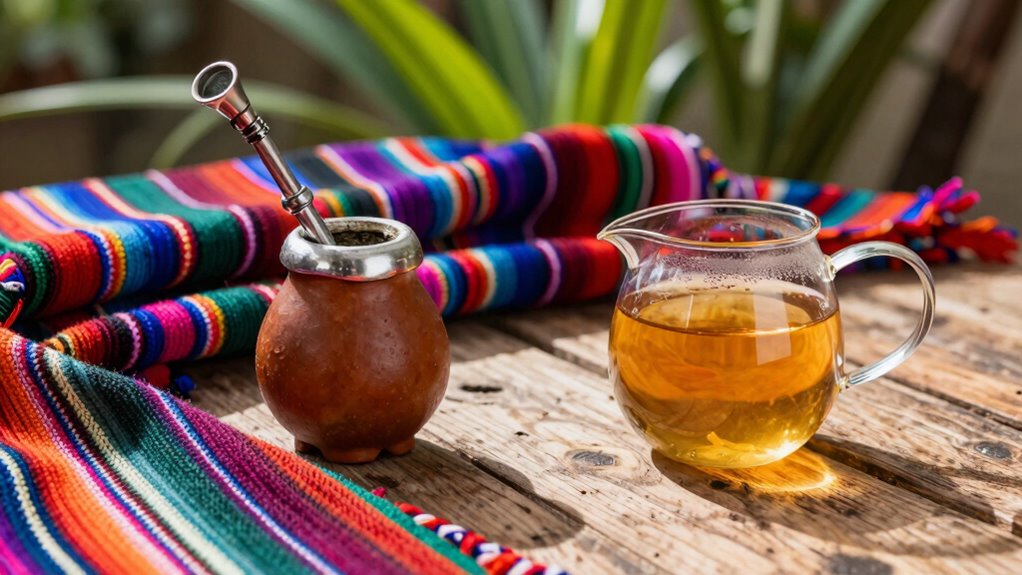
South America’s rich cultural diversity has profoundly shaped its tea traditions, influencing both local consumption and global perceptions. As you explore the continent’s tea landscape, you’ll see that tea cultivation isn’t just about growing leaves; it’s deeply intertwined with the cultural significance of community, history, and identity. In regions like Argentina, Brazil, and Peru, tea cultivation has evolved into a reflection of local customs and traditions, with each country adding its unique flavor to the global tea scene.
South America’s diverse cultures shape its tea traditions, highlighting community, history, and unique regional identity.
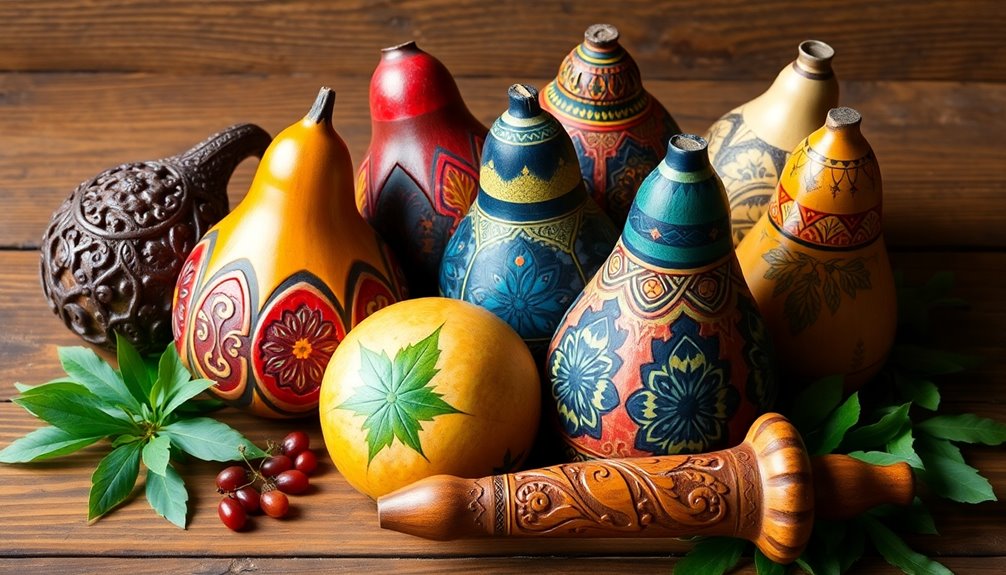
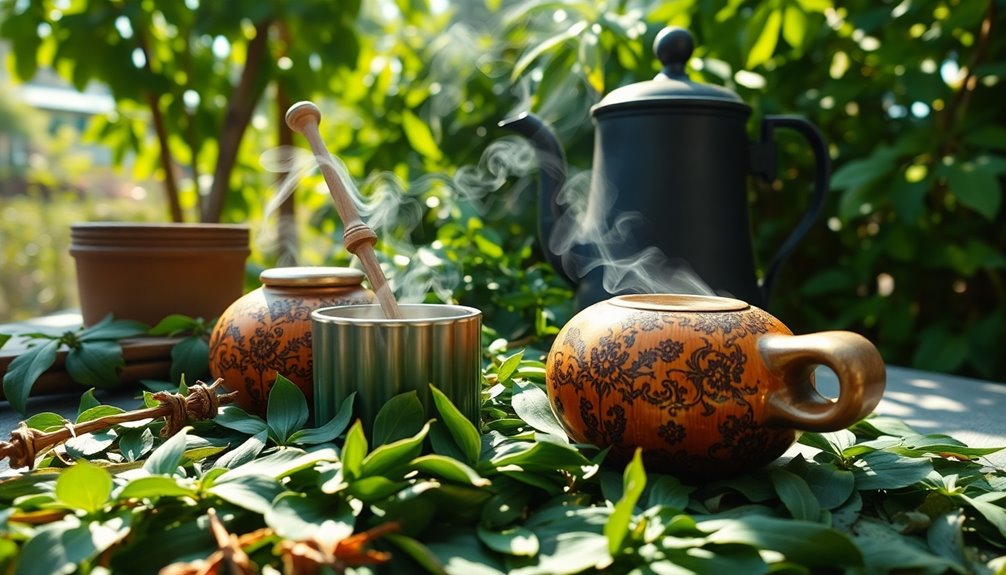
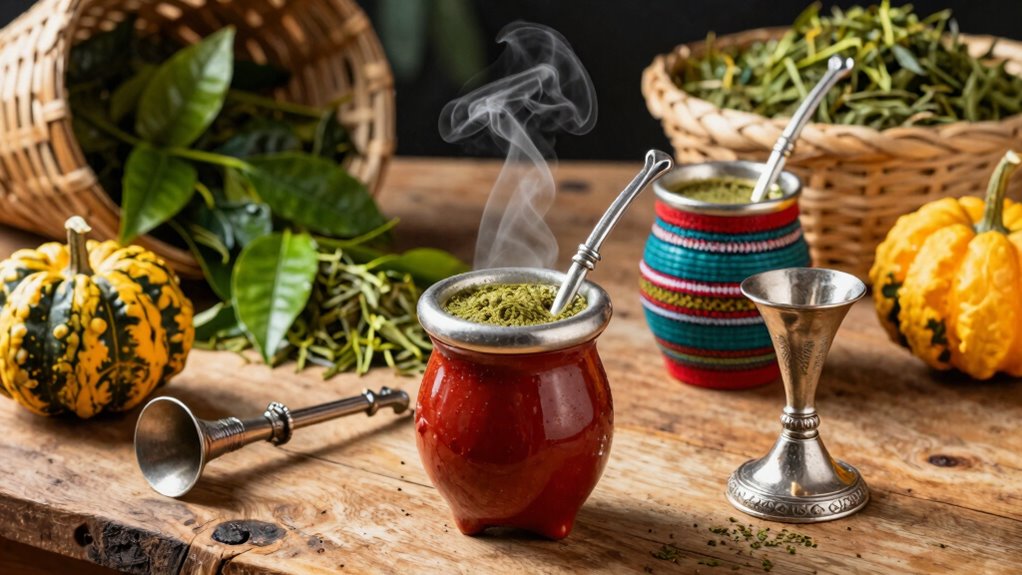
In these areas, tea isn’t simply a beverage—it’s a symbol of social connection. You’ll find that tea ceremonies and shared cups serve as moments of bonding among friends and family, reinforcing cultural values passed down through generations. For example, in parts of Argentina, the tradition of sharing mate—a type of herbal tea—creates a sense of unity and hospitality. This practice is more than just drinking tea; it’s a ritual that embodies friendship, community, and cultural pride. The significance of mate extends beyond social gatherings, representing resilience and regional identity, especially in areas where local customs have thrived despite outside influences.
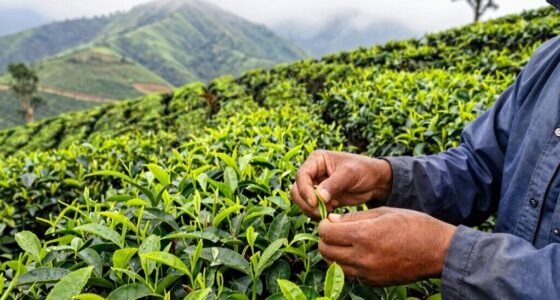
The influence of local traditions on tea cultivation practices is also evident. You might notice that in some South American countries, indigenous herbs and local varieties are integrated into traditional blends, enhancing both flavor and cultural importance. These practices highlight how tea cultivation is tailored to regional climates and cultural preferences, making the local varieties unique and meaningful. This integration of indigenous knowledge and modern cultivation techniques helps preserve cultural significance while adapting to global markets. Additionally, understanding the importance of biodiversity in tea cultivation emphasizes the need to protect native plant species and ecosystems that support diverse regional flavors. Recognizing the role of native plant species in supporting regional flavors underscores how biodiversity is essential for maintaining the uniqueness of South American teas. Furthermore, promoting sustainable cultivation practices can help safeguard these valuable ecosystems for future generations. Incorporating indigenous agricultural knowledge into modern practices ensures that cultural heritage is maintained alongside ecological preservation. Recognizing how local ecosystems influence flavor profiles further demonstrates the deep connection between environment and cultural traditions in tea production.
Your understanding of South American tea influence extends beyond local customs. The global perception of tea is shaped by these rich traditions, adding diversity to the international tea landscape. South American teas, often infused with local herbs or crafted with traditional methods, challenge the idea of tea as solely Asian or European. Instead, these regions showcase how tea can serve as a vessel for cultural expression, storytelling, and regional identity. As you sample teas from South America, you’ll recognize the importance of tea cultivation not just as an agricultural activity but as a cultural practice that preserves history and fosters community bonds.
In the end, the influence of South American tea traditions on modern tea culture is undeniable. It reminds you that tea is more than a drink; it’s a cultural artifact, a symbol of community, and a way to honor history. This vibrant tapestry of traditions continues to shape how the world perceives and enjoys tea today.

Premium Argentina-Uruguay Yerba Mate Cup and Bombilla Set, Organic Gourd Tea Mug with Steel Straw (Bombilla) and Cleaning Brush, Handcrafted for Loose Leaf Yerba Mate Tea – Imperial Version
- Authentic Argentinian and Uruguayan Tradition: Handcrafted organic calabash gourd for genuine flavor
- Sustainable Organic Calabash: Easy curing with included humidity pouch and instructions
- Heat-Resistant for Hot and Cold Drinks: Develops seasoned patina over time for richer flavor
As an affiliate, we earn on qualifying purchases.
As an affiliate, we earn on qualifying purchases.
Frequently Asked Questions
Which South American Countries Are the Main Tea Producers?
You’ll find main tea producers in countries like Argentina, Brazil, and Colombia. These nations focus on tea cultivation, adapting to diverse climates to develop regional flavors. Argentina’s yerba mate is famous, while Brazil’s teas offer unique tastes influenced by local soil and weather conditions. Colombia also contributes with specialty teas, enriching global options. Your exploration of South American teas reveals a rich blend of regional flavors shaped by local cultivation practices.
How Does South American Tea Differ From Asian Teas?
Imagine South American tea as a vibrant rainforest, bursting with botanical diversity, contrasting sharply with the more cultivated, serene Asian tea gardens. You’ll notice South American teas often boast bold, earthy flavor profiles, influenced by native plants and climates, unlike Asian teas, which tend to be more delicate and nuanced. This diversity makes South American teas uniquely robust, offering a distinct experience that reflects their rich natural heritage.
What Traditional South American Tea Rituals Exist Today?
You’ll find that traditional South American tea rituals often involve herbal infusions like mate, prepared through ceremonial methods such as sharing a gourd and bombilla. These rituals emphasize community and respect, with practices passed down through generations. You might participate in the yerba mate ritual, where sipping from a communal gourd fosters connection. These ceremonial preparations highlight the cultural importance and social aspects of tea in South America.
Are There Unique Health Benefits Associated With South American Teas?
You’ll be surprised to know that South American herbal infusions, like yerba mate, are packed with antioxidant properties, offering health benefits like boosting your energy and improving mental clarity. In fact, yerba mate contains more antioxidants than green tea, making it a powerful addition to your routine. These teas can also support digestion and immune health, giving you natural, flavorful ways to enhance your well-being daily.
How Has South American Tea Influenced Global Tea Packaging Trends?
South American tea has considerably influenced global packaging trends through innovative packaging and sustainable design. You’ll notice that brands incorporate eco-friendly materials and creative designs inspired by South American culture, emphasizing environmental consciousness. This shift encourages consumers to choose sustainable options, reducing waste and supporting eco-friendly practices. By blending tradition with modern innovation, South American teas shape a more environmentally responsible and visually appealing tea packaging landscape worldwide.
Conclusion
As you sip your morning tea, imagine the vibrant South American traditions blending seamlessly with modern rituals. Just as yerba mate energizes communities with its rich history, today’s global tea culture thrives on diverse influences. It’s a striking contrast: ancient customs meeting contemporary convenience. By embracing these diverse roots, you’re not just drinking tea—you’re experiencing a global tapestry woven from the lively spirit of South America and beyond. Cheers to that vibrant fusion in every cup!