Many tea lovers overlook South America’s herbal infusions, which are rich in flavor, tradition, and health benefits. You might not realize that herbs like yerba mate, catuaba, or coca leaves are deeply woven into local cultures and ceremonies. These drinks often emphasize healing and social bonding over delicate notes. If you want to uncover the full story behind these unique brews and their cultural significance, there’s more to discover beyond the usual teas.

Get coffee and tea gear delivered free with Prime
- Fast, free delivery on millions of items
- Prime Video, Amazon Music and more included
- Member-only deals all year
Key Takeaways
- South America offers diverse herbal infusions with rich cultural and medicinal significance often overlooked globally.
- Many regional teas are integral to local rituals and social customs, not just beverages.
- Unique herbs like yerba mate, catuaba, and coca leaves provide complex flavors and health benefits.
- These infusions embody traditional healing practices and ceremonial importance beyond everyday drinking.
- Exploring South American herbal teas broadens the understanding of tea’s cultural and botanical diversity.
Tea lovers often overlook South America as a tea-producing region, but this continent offers a rich and diverse array of teas worth exploring. Many people miss the unique herbal infusions that flourish across countries like Argentina, Brazil, and Peru. These infusions aren’t just beverages; they’re woven into the fabric of local cultural traditions, offering a glimpse into the history and identity of each community. While most focus on Asian teas, South American herbal infusions often deliver complex flavors and health benefits that can rival their more famous counterparts.
South America’s herbal infusions reveal rich traditions, unique flavors, and health benefits often overlooked by tea enthusiasts.
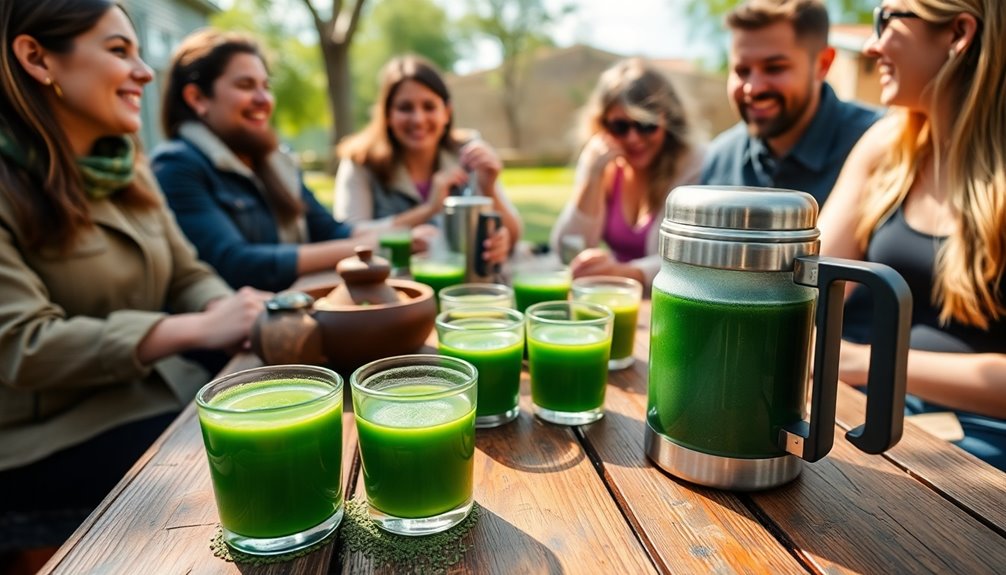
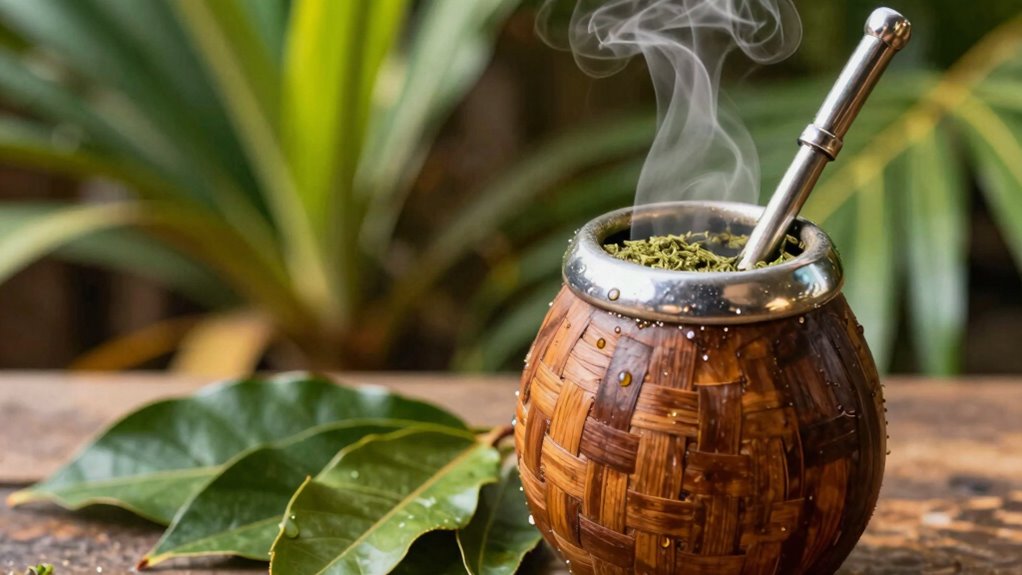
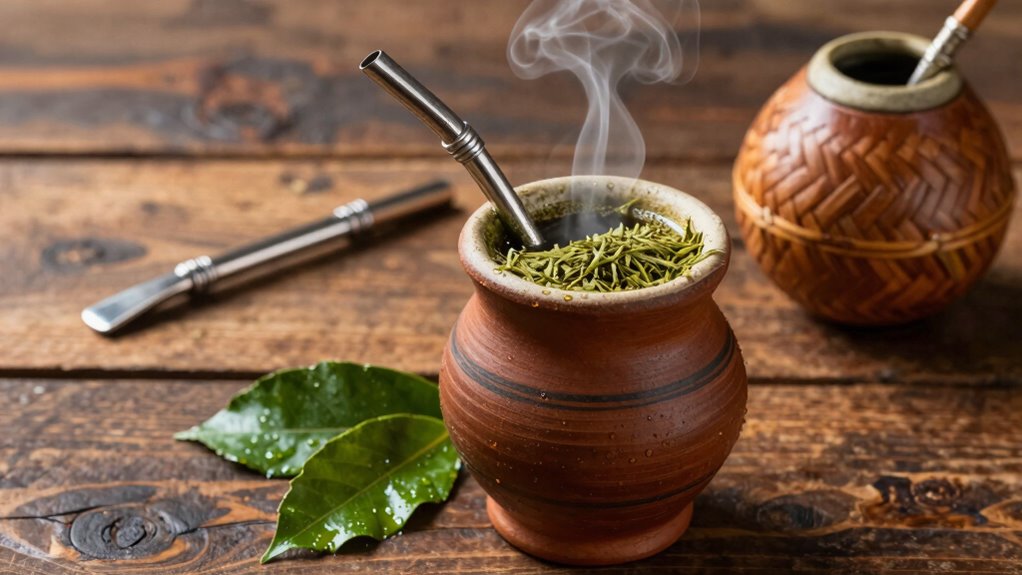
What’s truly fascinating is how these herbal infusions are deeply rooted in the daily lives of locals. In Argentina, for example, yerba mate isn’t just a drink—it’s a social ritual. Sharing it with friends or family is a sign of hospitality and camaraderie, reinforcing bonds over a gourd and bombilla. In Brazil, medicinal herbal teas like chamomile or bold herbal blends are used to address health issues and promote well-being. These traditions, passed down through generations, make each cup a cultural experience, not just a moment of refreshment.
You might also overlook the variety of herbs used in South American infusions. Many of these plants grow wild or are cultivated for their medicinal and aromatic properties. For instance, Peru’s coca leaves have a long history of traditional use, often brewed into teas that help with altitude sickness. Similarly, Brazil’s catuaba bark is brewed into herbal infusions believed to boost energy and vitality. These herbal infusions often carry cultural significance, embodying local beliefs and practices that have endured over centuries. Additionally, understanding the cultural significance of these herbal infusions sheds light on their enduring role in South American communities. Recognizing the diverse range of herbs used in these infusions can deepen appreciation for their medicinal and cultural importance. Moreover, many of these herbs are wild-harvested, highlighting the region’s rich biodiversity and its influence on traditional medicine. This natural abundance also contributes to the unique flavor profiles of South American herbal teas.
You’ll find that the emphasis on herbal infusions in South America offers a different perspective on tea. It’s less about the delicate notes of tea leaves and more about the potent, healing, and ceremonial qualities of herbs. These drinks often serve dual purposes—offering both flavor and medicinal benefits—making them integral to daily life and special occasions alike. Recognizing this enriches your understanding of what tea can be, extending beyond traditional Camellia sinensis to encompass a vast world of herbal healing and cultural expression.
In the end, what most tea lovers miss about South American tea is the depth of tradition and the variety of herbal infusions that define the region. These teas tell stories of history, health, and community, waiting for you to discover their full significance. By exploring these herbal infusions, you open yourself to a broader, more authentic tea experience—one rooted in the culture and natural wealth of South America.
Yerba Mate Traditional Gourd and Bombilla Set
As an affiliate, we earn on qualifying purchases.
As an affiliate, we earn on qualifying purchases.
Frequently Asked Questions
How Does South American Tea Cultivation Impact Local Ecosystems?
South American tea cultivation can impact local ecosystems by disrupting biodiversity and challenging ecosystem preservation. You might not notice that expanding plantations often lead to habitat loss for native species and soil degradation. This biodiversity impact reduces natural resilience, threatening the delicate balance of local environments. When cultivating tea, it’s essential to adopt sustainable practices that prioritize ecosystem preservation, ensuring the land remains healthy and diverse for future generations.
Are There Traditional South American Tea Ceremonies or Rituals?
You’ll find that South American tea traditions often include ritualistic tea preparation, emphasizing mindfulness and community. These ceremonies incorporate rich symbolism, like shared cups representing unity and respect. While not as formalized as Asian tea rituals, local customs highlight the importance of slow, deliberate preparation, fostering connection. Participating in these rituals helps you appreciate the cultural depth and spiritual significance woven into South American tea culture.
What Are the Unique Health Benefits of South American Teas?
A stitch in time saves nine, and drinking South American herbal infusions offers unique health benefits. You’ll benefit from their antioxidant properties, which help combat free radicals and support your immune system. These teas often contain natural compounds that may improve digestion, boost energy, and reduce inflammation. Embracing these traditional brews can enhance your well-being, revealing the true essence of South American tea’s health-boosting magic.
How Do South American Teas Differ in Flavor From Asian Teas?
South American teas differ in flavor profiles from Asian teas due to their unique cultivation methods and climate. You’ll notice South American teas often have earthy, fruity, or herbal notes, whereas Asian teas tend to be more floral, grassy, or smoky. The diverse cultivation methods, like shade-grown or sun-dried, influence these flavors. So, when tasting, you’ll experience a distinct character that reflects the region’s climate and traditional processing techniques.
Can South American Teas Be Used in Culinary Recipes?
Yes, South American teas can be used in culinary recipes. You can create tea infusions to add unique flavors to dishes, desserts, or beverages. Experiment with culinary pairings by incorporating teas like yerba mate or herbal infusions into marinades, baked goods, or sauces. Their distinct flavors can elevate your recipes, offering a new twist that highlights the rich, regional taste profiles of South American teas.
Conclusion
So, next time you sip your favorite brew, remember the vibrant, earthy magic of South American teas that often go unnoticed. Missing out on these flavors is like overlooking a hidden treasure chest bursting with color and history, waiting to transform your tea experience into an unforgettable adventure. Don’t let your palate stay confined; explore beyond the familiar and open a world where each cup tells a story more vivid than a sunset. Your taste buds will thank you!
Halloween Picks
halloween
As an affiliate, we earn on qualifying purchases.