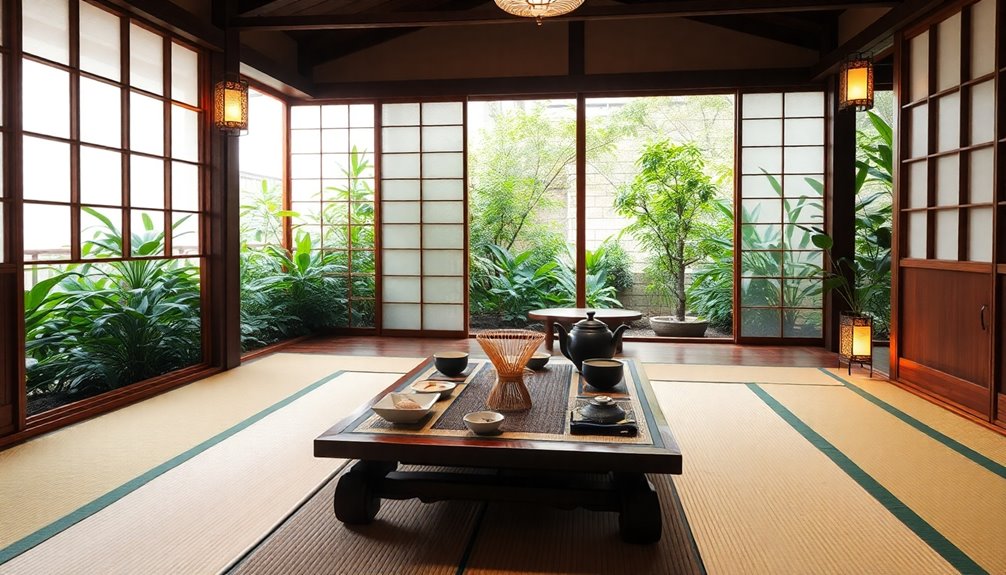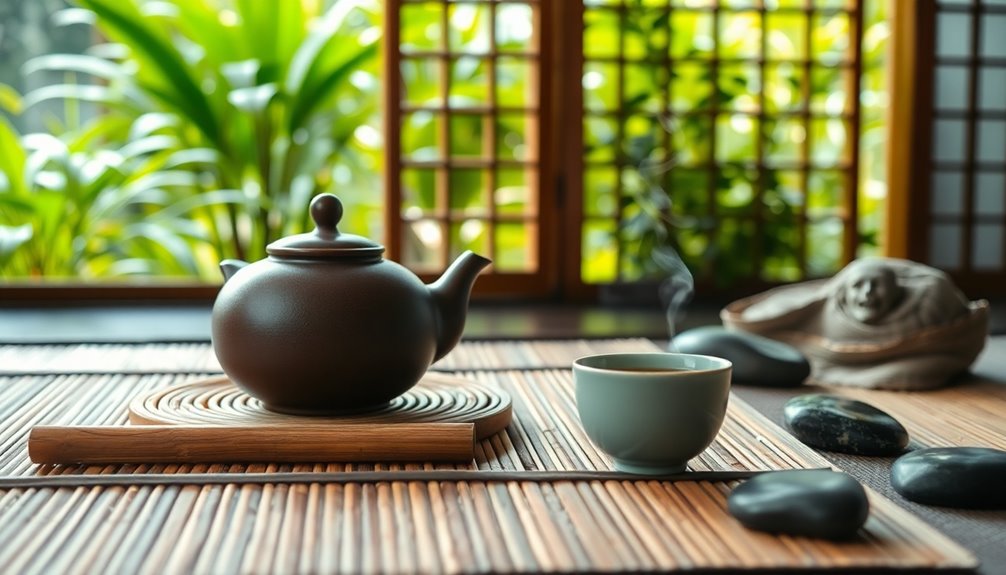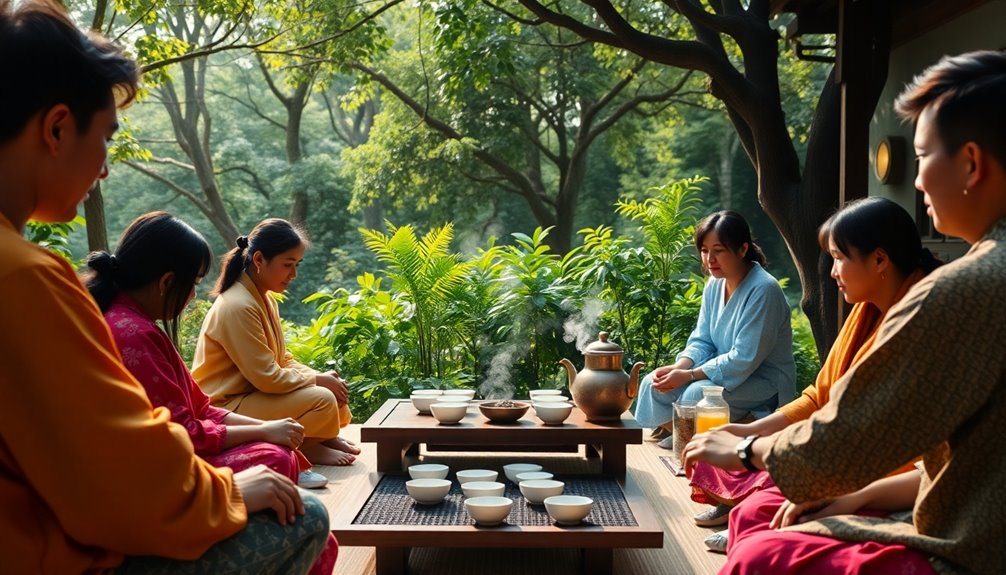
To perform a tea ceremony, start by gathering clean utensils like a teapot, cups, and whisk. Pay attention to water temperature and prepare ingredients carefully. Follow cultural rituals such as cleaning utensils and using deliberate movements to show respect and mindfulness. Focus on each step—heating water, whisking tea, and appreciating aroma—while maintaining a calm demeanor. Continuing with this guide will help you understand the deeper significance and how to create a meaningful, serene experience.
Listen free for 30 days with Audible
Thousands of audiobooks and originals — cancel anytime.
As an affiliate, we earn on qualifying purchases.
Key Takeaways
- Gather and prepare all necessary utensils and ingredients with care, ensuring cleanliness and proper selection.
- Follow specific rituals such as cleaning and warming utensils to symbolize purity and respect.
- Heat water to appropriate temperatures, then carefully brew or whisk tea with deliberate, mindful movements.
- Engage all senses by appreciating aroma, visual presentation, and taste, maintaining a calm, focused mindset.
- Conclude with reflections on the cultural symbolism and significance of each step, fostering mindfulness and connection.
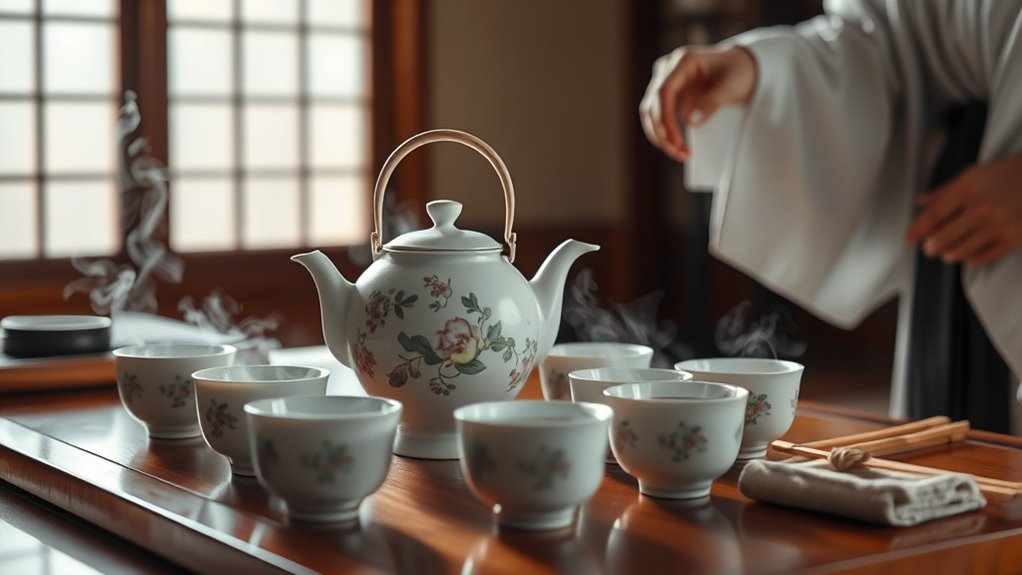
Tea ceremonies are a beautiful way to relax, connect, and appreciate the art of tea preparation. When you step into a traditional tea ceremony, you’re not just making tea—you’re engaging in a mindful practice rich with cultural significance. Understanding the importance of tea preparation helps you appreciate each step and the history behind it. In many cultures, especially in Japan and China, tea ceremonies symbolize respect, harmony, and mindfulness. They’re more than just brewing tea; they’re a ritual that fosters connection with yourself and others, emphasizing patience and presence.
To begin, you’ll want to gather all your tools and ingredients, ensuring everything is clean and ready. The utensils—teapot, cups, whisk, or scoop—are often carefully chosen for their aesthetic and functional qualities. As you prepare the tea, pay attention to the water temperature, quantity, and timing. In a traditional Japanese matcha ceremony, for example, water is heated to a specific temperature, and you whisk the powdered tea vigorously to create a frothy, smooth drink. Each movement should be deliberate, reflecting the importance placed on the process itself.
The cultural significance of tea preparation varies across regions but generally emphasizes harmony and respect. In Chinese tea culture, the focus is on the artful presentation and the aroma of the brewed tea, often involving multiple infusions. In Japan, the tea ceremony emphasizes ritual, tranquility, and a deep connection to nature. As you perform each step, think about the history and symbolism behind it. For instance, in many traditions, the act of cleaning the utensils before and after use signifies purity and respect for the process.
Throughout the ceremony, maintaining a calm and focused mindset is essential. You might find yourself breathing deeply, appreciating the aroma, and savoring the taste of the tea. This mindful approach transforms a simple act into a meaningful experience. Incorporating water temperature control is crucial to achieving the desired flavor and quality of the tea, highlighting the importance of proper technique. Remember, the goal isn’t just to drink tea but to cultivate a sense of serenity and appreciation for the moment. Whether you’re practicing alone or with friends, approaching each step with intention enhances the experience and deepens your understanding of the cultural significance behind tea ceremonies.
As an affiliate, we earn on qualifying purchases.
Frequently Asked Questions
What Types of Tea Are Best for Ceremonies?
For ceremonial tea preparation, you should choose high-quality tea leaf varieties like green tea, matcha, or oolong, as they offer rich flavors and cultural significance. These teas enhance the experience, allowing you to appreciate the nuances during the ceremony. Opt for freshly ground matcha or whole leaves to guarantee ideal flavor. Using the right tea leaf varieties elevates the ritual, making it more meaningful and authentic for participants.
How Long Does a Typical Tea Ceremony Last?
A typical tea ceremony lasts about 30 to 60 minutes, depending on the ceremonial timing and cultural traditions involved. You’ll find that the duration allows for preparation, precise brewing, and mindful sipping. During this time, you’re encouraged to focus on each step, appreciating the ritual’s serenity. The length can vary, but most ceremonies aim to create a calm, immersive experience that helps you relax and connect with tradition.
Can Beginners Easily Participate in Traditional Ceremonies?
Jumping into a traditional tea ceremony is like stepping onto a dance floor—you might feel a bit out of sync at first, but you can definitely participate. As a beginner, understanding the cultural significance and following etiquette guidelines helps you appreciate the ritual’s depth. With gentle guidance, you’ll find it easier to engage and enjoy the experience, making the ceremony a meaningful journey rather than an formidable task.
Are Ceremonial Utensils Culturally Specific?
Yes, ceremonial utensils are culturally specific, reflecting the tea utensil history and traditions unique to each culture. You’ll find variations in materials, shapes, and usage across different regions, from Japan’s chawan and chasen to China’s gaiwan and yixing teapots. Embracing these cultural variations helps deepen your appreciation. By understanding their origins, you can better connect with the rituals and respect each tradition’s unique history.
What Attire Is Appropriate for Attending a Tea Ceremony?
You should wear cultural dress if it’s appropriate, as it shows respect for the tradition. Opt for modest, neat clothing that aligns with the ceremony’s formality. Make sure your footwear is proper—usually clean, closed-toe shoes—since you’ll likely remove your shoes before entering. Keep accessories minimal and avoid bright colors or casual attire. Dressing appropriately demonstrates your appreciation and respect for the cultural significance of the tea ceremony.
Conclusion
Now that you’ve learned the art of tea ceremonies, you’re not just brewing tea—you’re creating a moment of tranquility, a dance of tradition and mindfulness. Imagine each sip as a gentle whisper from the past, inviting serenity into your busy life. Embrace this ritual with open heart and curious spirit. After all, isn’t life just a collection of small, exquisite ceremonies waiting to be savored? Cheers to your journey into tea’s timeless magic.
Fall Picks
fall essentials
As an affiliate, we earn on qualifying purchases.