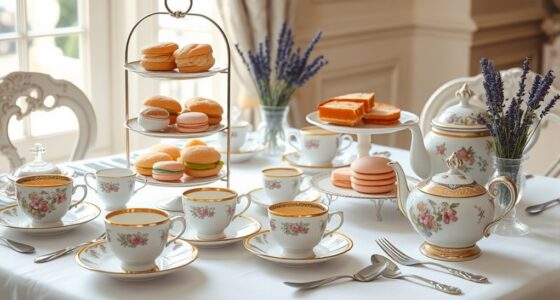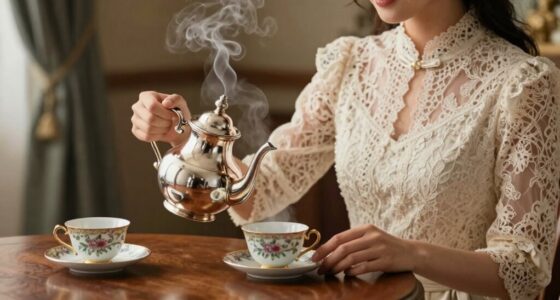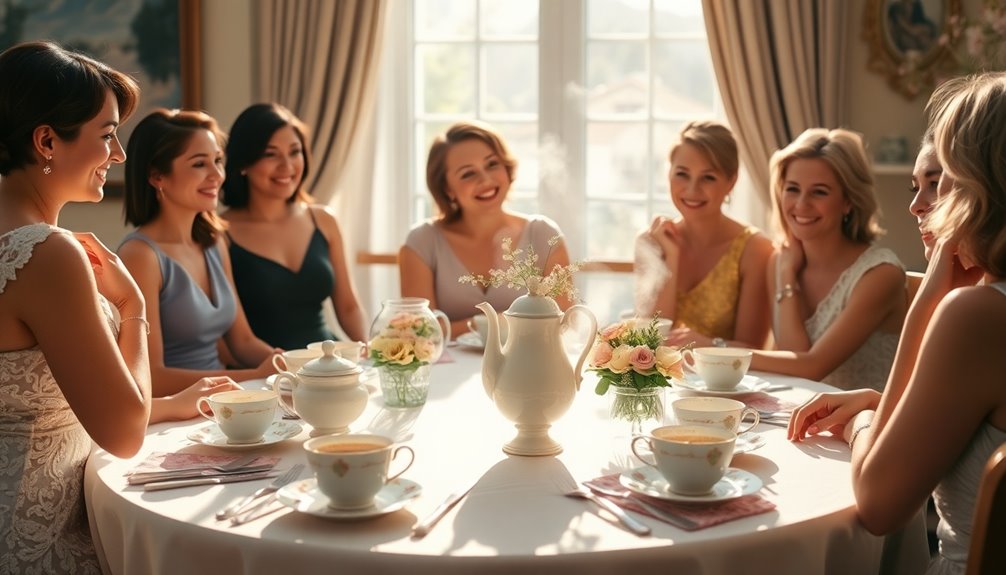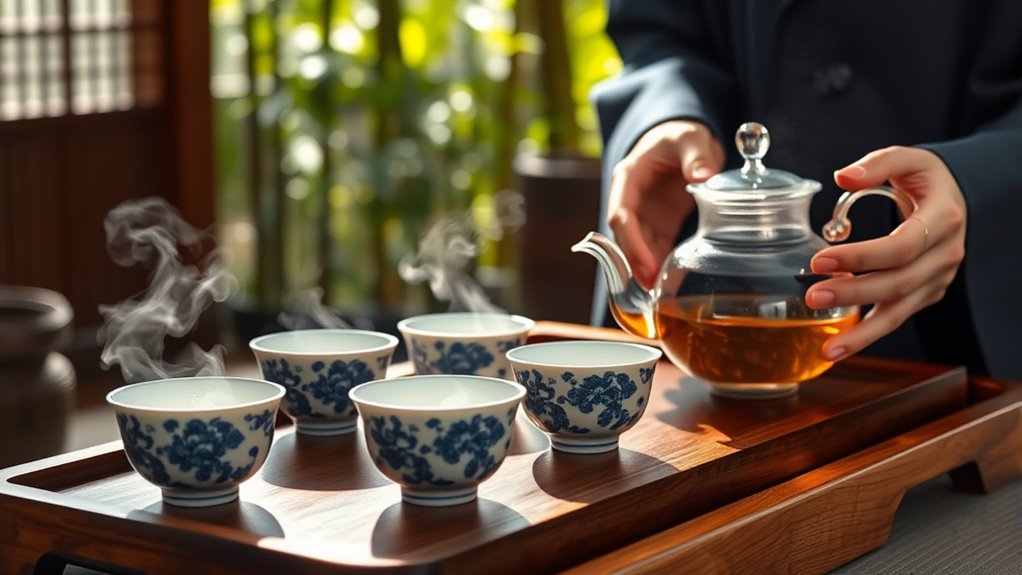

Regional tea serving etiquette varies a lot, reflecting each culture’s values and traditions. In Asia, you’ll notice slow, deliberate pours with both hands, emphasizing respect and harmony. Western practices tend to focus on efficiency and friendliness, pouring directly into cups for social comfort. Middle Eastern customs involve ornate trays and small glasses, symbolizing generosity. If you keep exploring, you’ll discover how these gestures deepen connections and showcase each region’s unique identity.
Key Takeaways
- Asian tea etiquette emphasizes slow pouring with both hands to show respect and mindfulness.
- Western practices prioritize convenience, with less elaborate gestures during tea serving.
- Middle Eastern customs involve ornate trays and small glasses, symbolizing generosity and hospitality.
- Regional gestures often reflect cultural values, social norms, and the importance of tradition in tea service.
- The style and manner of pouring enhance social bonds, showcase cultural identity, and signify respect across regions.
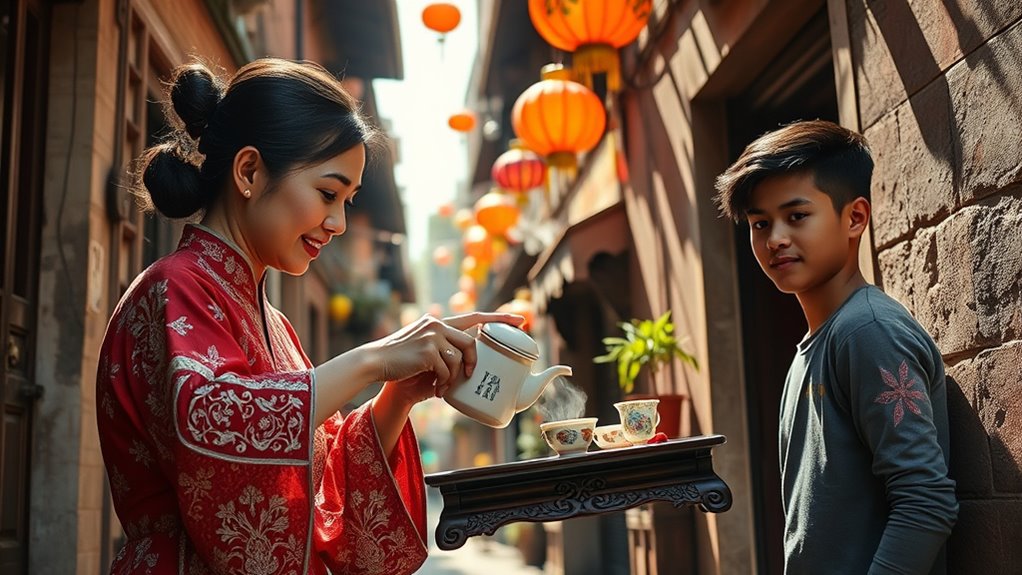
Tea serving etiquette varies widely around the world, reflecting each region’s cultural values and social norms. When you’re participating in a traditional tea ceremony, you quickly realize how much attention is paid to the smallest details, especially tea pouring gestures. In many Asian cultures, such as Japan and China, the way you pour tea isn’t just about serving a beverage — it’s a sign of respect and harmony. During a traditional tea ceremony, every gesture is deliberate, emphasizing mindfulness and reverence. You’ll notice that pouring is often done slowly and with a steady hand, ensuring the tea flows smoothly from pot to cup. The way you hold the teapot, often with both hands, conveys humility and care. In Japan, for example, the tea master’s precise tea pouring gestures help create an atmosphere of tranquility, where each movement is choreographed to reflect tradition. Similarly, in China, the act of pouring is a part of the ritual that promotes social bonding, with hosts often pouring for guests as a gesture of hospitality. You might also see that the pouring position and angle are carefully considered to prevent spills and to symbolize respect. Additionally, the attention to detail in pouring gestures underscores the importance of etiquette and tradition.
In contrast, many Western cultures have a more casual approach to tea serving, where the emphasis is less on ritual and more on convenience. Here, tea is typically poured directly from a teapot into cups, often without elaborate gestures. Still, manners matter, and you’re expected to pour politely, avoiding rushing or splashing. In British tea culture, for example, pouring tea is a simple yet refined act — you hold the teapot with grace, ensuring the tea is served at the right temperature without disturbing the delicate balance of the tea set. The focus is on creating a welcoming atmosphere, especially during social gatherings. While the traditional tea ceremony isn’t common in Western settings, the act of pouring still reflects etiquette, illustrating respect for your guests.
In some Middle Eastern cultures, pouring tea can be a grand gesture, often involving ornate trays and small glasses. Here, the way you pour and serve tea carries deep social meaning, symbolizing generosity and hospitality. Whether pouring with a steady hand or using specific gestures to indicate the flow of hospitality, these rituals underscore the importance of community and respect. No matter where you are, understanding the regional nuances of tea pouring gestures and the customs surrounding the traditional tea ceremony can greatly enhance your experience. It shows that tea isn’t just a drink — it’s a reflection of cultural identity and social connection.

Hushee Japanese Tea Set in Gift Box Asian Porcelain Tea Set with 1 Teapot, 6 Cups, 1 Tray, 1 Stainless Infuser, Black Ceramic Chinese Teapot Valentine Gift for Adult Lover
Package Include: the Japanese tea set includes 1 teapot with 1 stainless steel strainer, 6 pieces of teacups…
As an affiliate, we earn on qualifying purchases.
As an affiliate, we earn on qualifying purchases.
Frequently Asked Questions
How Do Tea Serving Customs Differ Between Urban and Rural Areas?
In urban areas, you often see tea served quickly with modern techniques, emphasizing efficiency and presentation, reflecting urban customs. In contrast, rural traditions focus on a more communal and relaxed approach, where tea is served with personal care and ceremony. You might notice slower service and more traditional practices in rural settings, while cities prioritize convenience. Understanding these differences helps you appreciate the local culture and enjoy tea more authentically.
Are There Specific Etiquette Rules for Serving Herbal Versus Traditional Teas?
Sure, there are specific etiquette rules for serving herbal versus traditional teas, and you’ll want to master the art of tea pouring accordingly. For herbal etiquette, you often pour with a gentle touch, emphasizing freshness and health benefits, while traditional teas might demand more ceremony and precise pouring techniques. Ignoring these nuances could turn your tea service into a comedy of errors—so, sip, pour, and respect each brew’s unique personality.
How Has Globalization Influenced Regional Tea Serving Traditions?
Globalization has profoundly influenced regional tea serving traditions through global branding and cultural exchange. You now see international tea brands popularizing uniform serving styles, blending local customs with global trends. This exchange promotes diversity, allowing you to experience a mix of traditional and modern practices. As a result, regional customs evolve, creating a richer, more interconnected tea culture that reflects both local identity and global influences.
What Role Do Religious Practices Play in Tea Etiquette Variations?
Religious practices shape your tea etiquette through sacred rituals and cultural symbolism, guiding how you serve and share tea. You might find yourself bowing slightly, offering tea with reverence, or observing specific prayer moments. These customs create a harmonious connection between spirituality and daily life, turning a simple cup into a meaningful act. In this way, religious rituals influence your approach, enriching your experience with a deeper sense of respect and tradition.
Are There Regional Differences in Tea Serving Attire or Presentation?
You’ll notice regional differences in tea serving attire and presentation styles that reflect local culture. In some areas, traditional cultural attire is worn to honor customs, while in others, a more formal or casual presentation is preferred. These variations influence how you serve and present tea, showcasing regional identity and respect. Paying attention to these details enhances your experience and demonstrates appreciation for local traditions.
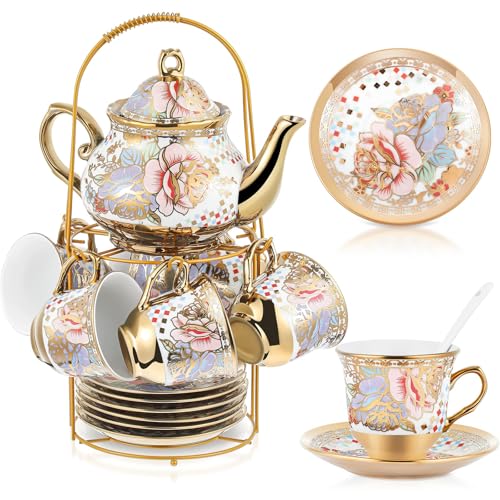
Zhehao 20 Pcs Porcelain Tea Set with Metal Holder and Spoon Adult Ceramic Tea Set European Flower Painting Teapot Cup Saucer Spoon for Women Mom Gift, Large Version (Rustic Style)
Nice Matching Set: the multicolor of the porcelain tea set is a beautiful and charming accent to any…
As an affiliate, we earn on qualifying purchases.
As an affiliate, we earn on qualifying purchases.
Conclusion
As you explore different tea customs worldwide, you’ll notice how etiquette reflects local culture and history. For instance, in China, over 2,000 years of tradition emphasize respect and harmony during tea ceremonies. Understanding these regional nuances enriches your appreciation for tea’s cultural significance. So, next time you sip, remember that the way you serve and receive tea can tell a story about the people and traditions behind it.

Middle Eastern Iranian Persian Turkish Serving Tea Fruit Nuts Tray 2-Piece Set 17"+14" Round Silver Gold Plated Stainless Steel
Middle Eastern, Iranian, Persian, Serving Tea Fruit Nuts Tray
As an affiliate, we earn on qualifying purchases.
As an affiliate, we earn on qualifying purchases.

Tea Art Print, Tea Essential Guide Poster, Kitchen Wall Art, Kitchen Art Home Decor, Coffee Bar Wall Art Decoration,11×14 Inch Unframed
Print Size and Quality: 11×14 inch print uses archival pigment inks on high quality thick shimmer paper, excellent…
As an affiliate, we earn on qualifying purchases.
As an affiliate, we earn on qualifying purchases.