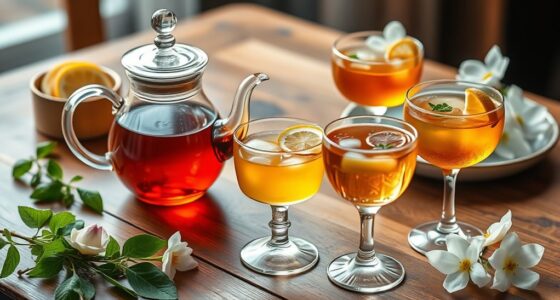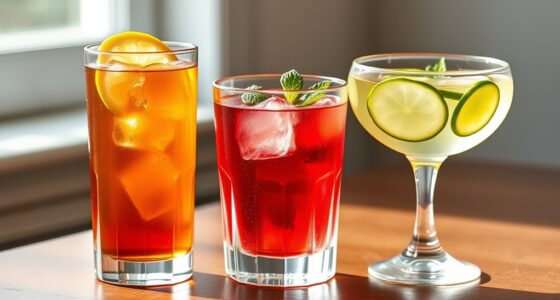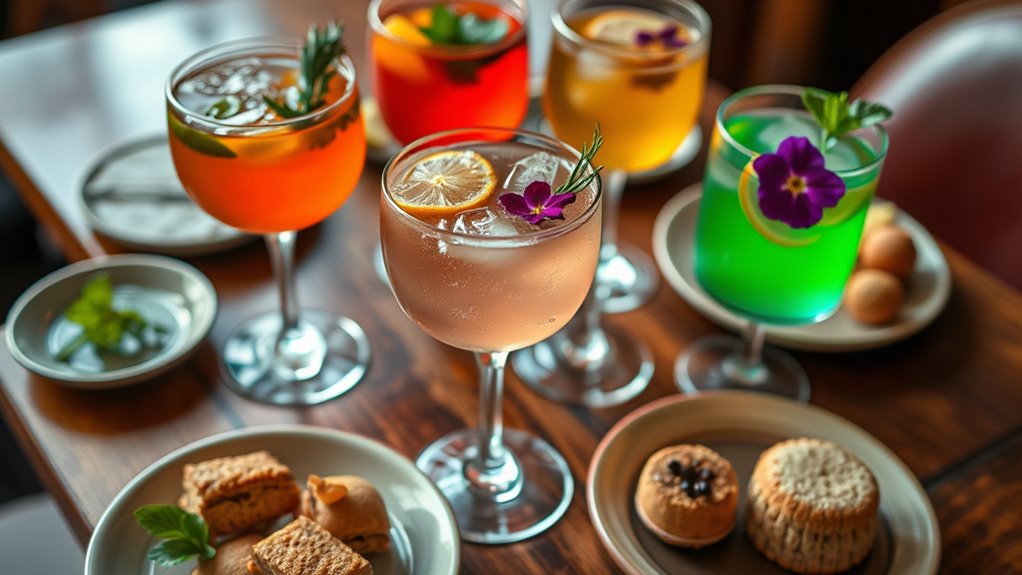

Pairing tea cocktails and mocktails with meals and snacks can elevate your dining by matching flavors thoughtfully. Light green teas or floral infusions work well with seafood, salads, or cheeses, while robust black teas complement hearty meats and spicy dishes. Consider the tea’s strength and flavor notes, and experiment with citrus or herbs to enhance harmony. By exploring different infusions and their interactions, you’ll discover creative pairings that make every bite and sip memorable. Keep exploring to reveal even more delicious combinations.
Key Takeaways
- Match tea infusions’ flavor intensity with the dish’s richness to create balanced cocktails and mocktails.
- Use citrus, herbs, or fruits to enhance and complement tea flavors in beverages and pairings.
- Choose tea types (green, black, floral, smoky) based on the meal’s flavor profile for harmonious pairing.
- Adjust tea strength and temperature to suit the dish’s flavor and whether the drink is hot, cold, alcoholic, or non-alcoholic.
- Experiment with infusing spirits or creating layered mocktails to add complexity and elevate meal pairings.
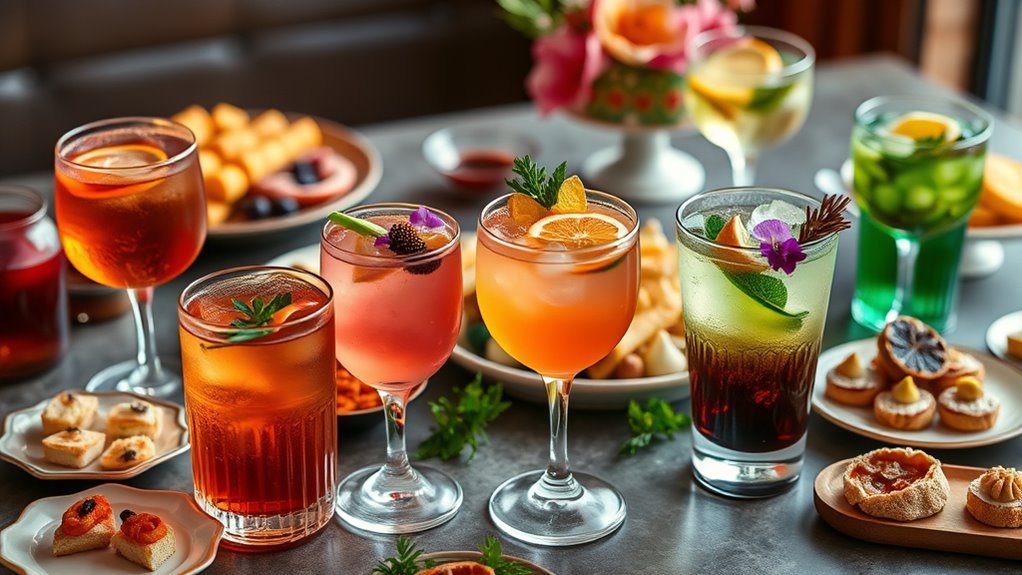
Tea cocktails and mocktails are a versatile way to enhance any meal, offering unique flavors that complement a variety of dishes. When you incorporate a well-crafted tea infusion into your beverages, you unveil a depth of flavor that can elevate your dining experience. The key to successful pairing lies in understanding how different tea infusions interact with the ingredients on your plate. For example, a light green tea infusion pairs beautifully with delicate seafood or salads, while a robust black tea infusion can stand up to hearty meats or spicy dishes. The goal is to match the intensity and flavor profile of your tea with your meal, creating a harmonious balance rather than competing tastes.
To master flavor pairing, consider the natural notes present in the tea infusion. Floral teas, such as jasmine or chamomile, bring a subtle sweetness that can complement light appetizers or creamy cheeses. Spiced chai or smoky lapsang souchang, on the other hand, introduce warm, bold flavors that go well with roasted vegetables or grilled meats. When designing your tea cocktails or mocktails, think about how the tea’s profile interacts with other ingredients, such as citrus, herbs, or fruits. For instance, adding a splash of citrus or a sprig of mint can enhance the tea’s natural flavors while also invigorating your palate.
Consider how floral, spicy, or smoky teas enhance and balance your food pairings.
Another aspect to contemplate is the temperature of your tea infusion, which influences flavor perception. Cold-brewed tea infusions work well in invigorating mocktails for hot days, while hot teas are perfect for cozy, comforting beverages during cooler weather. Adjusting the strength of your tea infusion also impacts flavor pairing; a stronger infusion provides a more pronounced taste that can cut through rich or savory dishes, whereas a lighter infusion complements milder flavors. When creating tea cocktails, you can also experiment with infusing spirits with tea to deepen the flavor profile and introduce new layers of complexity.
Ultimately, successful pairing depends on your palate and creativity. Don’t be afraid to try different tea infusions with various dishes to discover what works best for you. Keep in mind that the goal is to enhance, not overpower, the flavors of your meal. By paying attention to the nuances in tea infusions and contemplating how they interact with your food, you’ll craft beverages that elevate your dining experience and make each meal memorable.

Ninja® 14-in-1 PossibleCooker™ PRO | 8.5qt, Sous Vide, Proof, Bake, & Steam Multicooker | Slow Cooker, Dutch Oven | Glass Lid & Integrated Spoon | Nonstick, Oven Safe Pot 500°F | Sea Salt Gray |MC1001
REPLACE 14 KITCHEN APPLIANCES IN ONE POT: This 8.5 qt multi-cooker handles slow cooking, Dutch oven, searing, sautéing,...
As an affiliate, we earn on qualifying purchases.
Frequently Asked Questions
How Do Tea-Based Drinks Affect Digestion During Meals?
Tea-based drinks can boost digestion during meals by stimulating digestive enzymes, which helps break down food more efficiently. They also support gut health by reducing inflammation and promoting a balanced microbiome. When you sip on tea during your meal, you may experience less bloating and discomfort, making digestion smoother. Just choose teas like ginger or peppermint to enhance these benefits and enjoy a more comfortable, nourishing meal.
Are Certain Tea Flavors Better Suited for Specific Cuisines?
You’ll find that green teas often complement Japanese and Chinese cuisines, while herbal teas like chamomile suit Mediterranean dishes. Studies show flavor harmony enhances dining experiences by 60%, so choosing teas aligned with cultural pairing elevates your meal. For example, jasmine tea pairs beautifully with Asian cuisine, emphasizing the importance of selecting specific tea flavors to match the cuisine’s essence and create a more authentic, enjoyable experience.
Can Tea Cocktails Replace Wine or Beer Pairing Options?
Tea cocktails can sometimes replace wine or beer pairings, especially when you choose herbal infusions or fermented teas that complement your dishes. The tea fermentation process adds complexity, making cocktails versatile for various flavors. While they might not fully replace traditional options in all settings, they offer a unique, flavorful alternative that enhances meals and snacks, perfect for those seeking a creative, health-conscious pairing experience.
What Are the Best Non-Alcoholic Tea Mocktails for Formal Dinners?
Like a refined symphony, your best non-alcoholic tea mocktails for formal dinners feature herbal infusions with a delicate flavor balance. Think jasmine or chamomile blends served in elegant glasses, complemented by subtle citrus or honey accents. These drinks elevate the occasion without overpowering your meal, offering sophistication and refreshment. With thoughtful presentation and harmonious flavors, you create a memorable dining experience that rivals traditional wine pairings.
How Do Temperature and Brewing Strength Influence Pairing Choices?
Temperature impact and brewing strength greatly influence pairing choices because they affect flavor and aroma. You should serve delicate teas at lower temperatures, which preserve subtle notes, making them perfect with light dishes. Stronger brews, with more robust flavors, suit richer meals. Adjust brewing strength based on the dish’s intensity, ensuring the tea complements rather than overpowers your meal or snack. Always taste and fine-tune to find the perfect balance.

Ninja | Grill & Smoker | Outdoor Woodfire Pro XL | 4 in 1 Grill, BBQ Smoker, Air Fryer & Bake | Portable | Includes Built in Thermometer & 2 Woodfire Pellet Packs | Dark Grey | OG850
4-in-1 Functionality: Combines a Woodfire Grill, BBQ Smoker, Outdoor Air Fryer, and Oven in one compact, electric unit....
As an affiliate, we earn on qualifying purchases.
Conclusion
Now that you know how to pair tea cocktails and mocktails with your meals and snacks, you’re all set to impress your guests and elevate your dining experience. Remember, the right drink can make a good meal even better — it’s all about finding that perfect harmony. Don’t be afraid to experiment and trust your palate; after all, variety is the spice of life. Cheers to delicious discoveries and unforgettable gatherings!