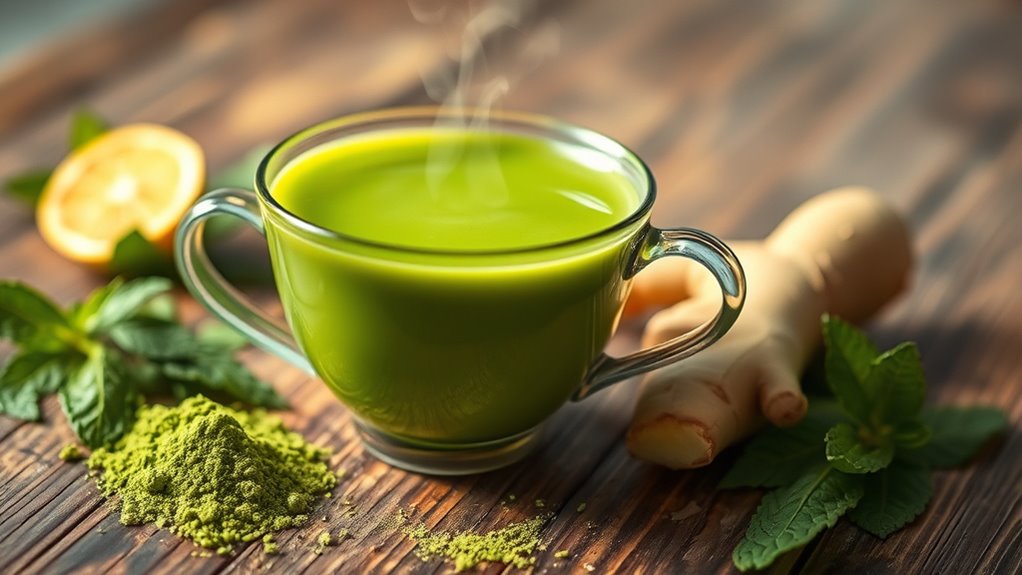

Tea is packed with beneficial compounds like polyphenols, including catechins and flavonoids, which act as powerful antioxidants. These help neutralize free radicals, reducing oxidative stress and supporting your overall health. Tea also contains moderate caffeine levels that boost alertness and focus while working with L-theanine to promote relaxation. Preparation methods influence these nutrients’ levels, so with a little knowledge, you can maximize tea’s health benefits—stay tuned to discover how to get the most out of your brew.
Key Takeaways
- Tea contains polyphenols like catechins and flavonoids, which act as antioxidants to support overall health.
- The antioxidants in tea help reduce oxidative stress and lower the risk of chronic diseases such as heart disease and cancer.
- Tea’s moderate caffeine content provides a gentle energy boost, enhancing alertness and mental focus.
- The synergy between caffeine and polyphenols in tea promotes vascular health and mitigates caffeine-related anxiety.
- Preparation methods, like steeping duration, influence the levels of beneficial compounds in tea, affecting its nutritional benefits.

Tea is a rich source of beneficial compounds that can promote your health, making it more than just a comforting beverage. Among these compounds, tea polyphenols stand out for their potent antioxidant properties. These natural chemicals, such as catechins and flavonoids, help neutralize free radicals in your body, reducing oxidative stress and potentially lowering your risk of chronic diseases like heart disease and certain cancers. When you sip tea regularly, you’re giving your body a boost of these protective antioxidants, which support your overall well-being.
Tea’s antioxidants, like catechins and flavonoids, help fight free radicals and support overall health.
In addition to tea polyphenols, caffeine effects play a significant role in tea’s health benefits. Caffeine, a natural stimulant found in tea, can improve your alertness and concentration. Unlike coffee, tea contains a moderate amount of caffeine, which provides a gentle energy lift without the jittery side effects often associated with high caffeine intake. Consuming tea allows you to enjoy increased focus and mental clarity, especially when you need a quick pick-me-up during your day. Additionally, caffeine in tea interacts with other compounds like the amino acid L-theanine, which promotes relaxation and reduces stress, helping you feel alert yet calm.
The combination of tea polyphenols and caffeine effects creates a unique synergy. For instance, the antioxidants in tea can counteract some of the potential negative effects of caffeine, such as increased heart rate or anxiety, by reducing inflammation and supporting vascular health. This means you can enjoy the mental boost from caffeine while also benefiting from the protective effects of polyphenols. Furthermore, tea’s caffeine content is generally lower than that of coffee, making it a more balanced option if you’re sensitive to caffeine’s stimulant effects.
Moreover, the integration of advanced automation in tea production and distribution can help ensure the consistent quality and preservation of beneficial compounds, maximizing health benefits for consumers.
It’s worth noting that the way you prepare your tea can influence the levels of polyphenols and caffeine. Steeping your tea for longer can increase polyphenol extraction, boosting its antioxidant properties. However, longer steeping may also slightly increase caffeine content. If you’re looking to maximize health benefits, opt for high-quality green or black teas, as they tend to have higher concentrations of these beneficial compounds. Drinking tea regularly, especially in place of sugary beverages, can support your health by providing these powerful nutrients in a natural, soothing form.
Top picks for "nutrition compound health"
Open Amazon search results for this keyword.
As an affiliate, we earn on qualifying purchases.
Frequently Asked Questions
Can Tea Help Improve Mental Alertness Instantly?
Yes, tea can help improve your mental alertness instantly. The caffeine boost from tea increases your alertness and sharpens mental clarity quickly, making it easier to focus and stay attentive. As soon as you take a sip, the caffeine stimulates your nervous system, giving you an immediate energy lift. So, if you need a quick mental boost, a cup of tea is a great choice to enhance your focus and clarity.
Are There Any Risks of Consuming Too Much Tea Daily?
Drinking too much tea is like sailing into dangerous waters—you risk hidden hazards. You could experience a caffeine overdose, leading to jitters or insomnia, and it may block iron absorption, causing deficiencies. To stay safe, enjoy tea in moderation. Keep an eye on your intake, especially if you’re sensitive to caffeine or have iron-related health concerns. Balance is key to reaping tea’s benefits without sailing into trouble.
Which Types of Tea Have the Highest Antioxidant Levels?
Green and white teas have the highest antioxidant levels because they contain the most polyphenols. You’ll notice less antioxidant variation in black and oolong teas, which undergo fermentation that reduces polyphenol content. To maximize health benefits, choose green or white teas, as their higher polyphenol content offers stronger antioxidant effects. Drinking these teas regularly can help you boost your body’s defenses against oxidative stress.
Does Tea Interact With Common Medications?
Tea can interact with common medications, potentially affecting how your drugs work. Tea and medication interactions may alter drug absorption effects, especially with teas containing caffeine or tannins. For example, green and black teas can interfere with the absorption of certain antibiotics and iron supplements. Always talk to your healthcare provider before adding tea to your routine if you’re on medication, to prevent any adverse tea and drug interactions.
How Does Tea Consumption Affect Long-Term Heart Health?
Drinking tea regularly can positively impact your long-term heart health. The tea polyphenols you consume help reduce inflammation and lower LDL cholesterol, which are key factors in cardiovascular benefits. These compounds improve blood vessel function and decrease the risk of heart disease over time. By making tea a part of your daily routine, you support your heart’s health and promote overall well-being through these natural, beneficial compounds.
Conclusion
So, next time you sip your tea, remember you’re not just enjoying a warm beverage—you’re fueling your health with a powerhouse of nutrients and compounds. Who knew that those tiny leaves could pack such a punch? So go ahead, indulge in your favorite brew, and pretend you’re a health guru—because with all these benefits, your tea game just got a whole lot smarter. Cheers to sneaky health perks in every cup!