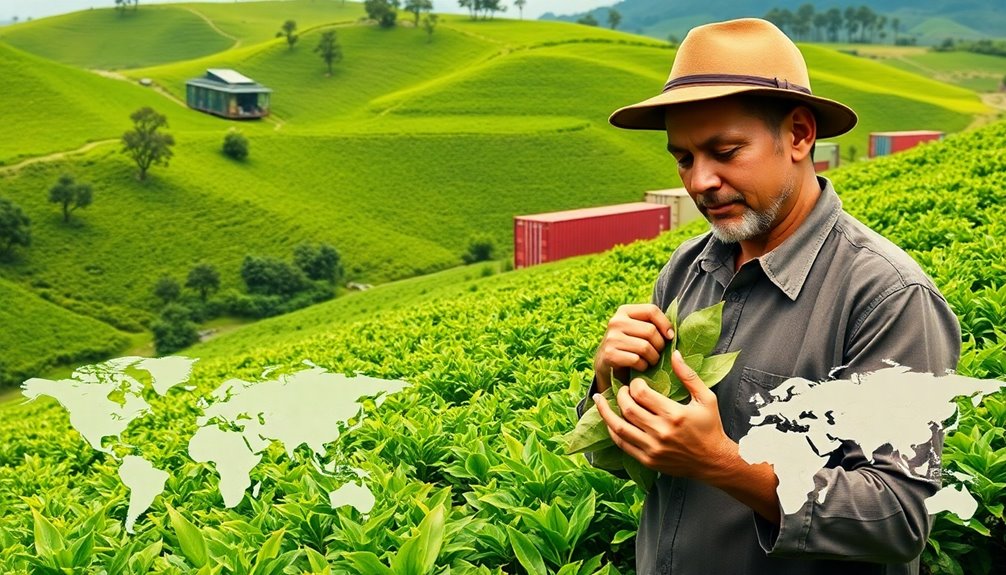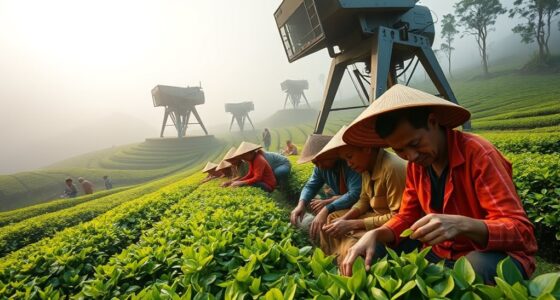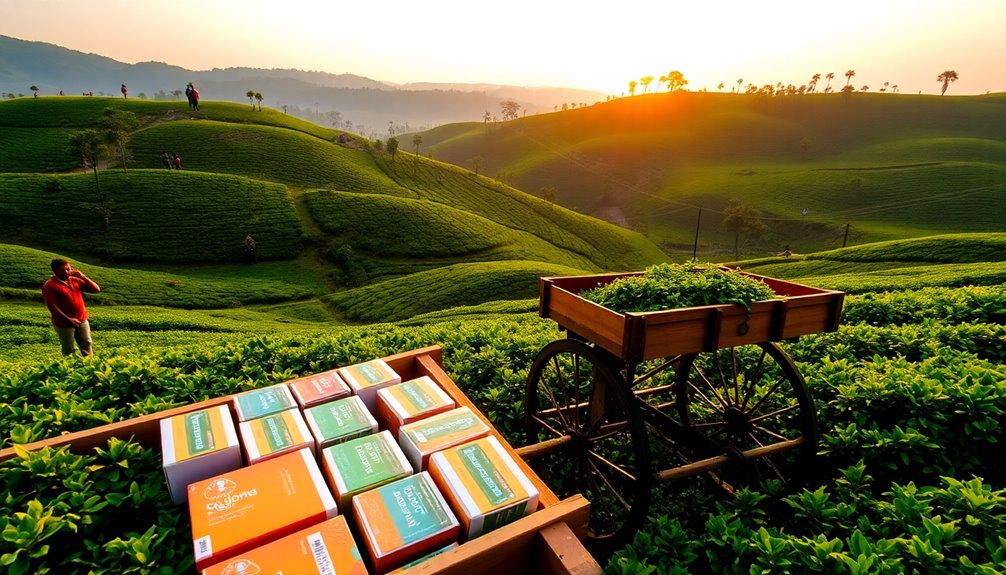

Regulations greatly impact your tea trade and economy by controlling tariffs and trade barriers that influence prices and market access. High tariffs make importing or exporting tea more costly, reducing trade volume, while lower tariffs promote affordability and boost sales. Additional barriers like quotas or standards can increase costs and delays, affecting supply chains. Understanding these rules helps you see how policies shape global markets and livelihoods—continuing will reveal even more about their wider effects.
Key Takeaways
- Tariffs and trade barriers influence tea prices, trade volume, and market stability globally.
- High tariffs discourage imports, reducing market competition and affecting consumer affordability.
- Trade restrictions and standards can delay shipments and increase costs for producers and traders.
- Regulatory policies impact export earnings, employment, and economic stability in tea-producing countries.
- Well-designed regulations promote market predictability, encouraging investment and sustaining rural livelihoods.
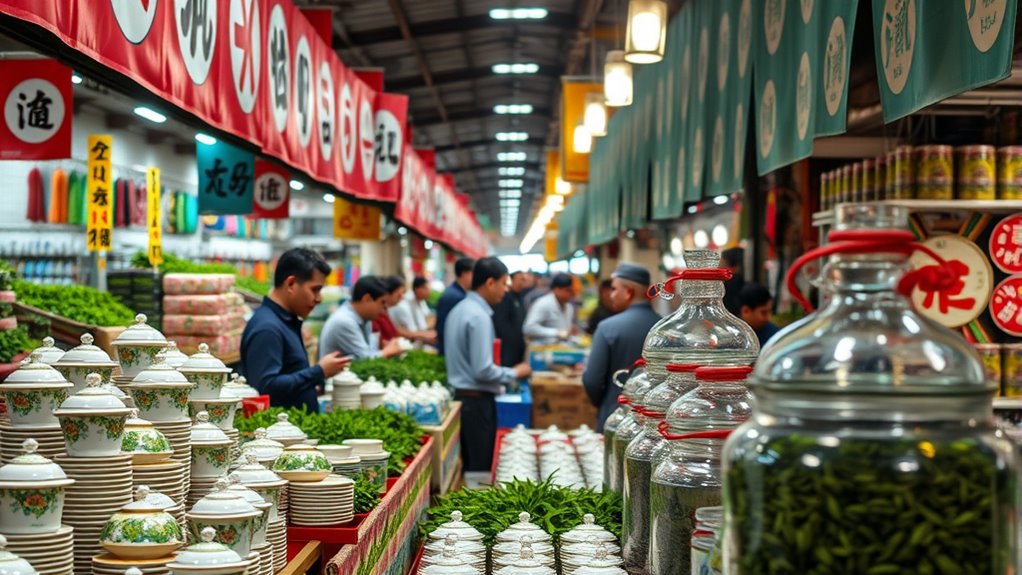
Regulations play a crucial role in shaping the tea trade and its economic impact worldwide. When you look at how tea moves across borders, you’ll see that policies like tariffs and trade barriers directly influence the flow of goods, prices, and market stability. Tariff policies, in particular, act as financial gates that either encourage or hinder imports and exports. If a country imposes high tariffs on imported tea, it becomes more expensive for consumers and businesses to access foreign varieties, which can reduce overall trade volume. Conversely, lower tariffs make importing tea more affordable, boosting sales and encouraging international trade. These policies are often used strategically to protect domestic tea producers from foreign competition or to retaliate against trade disagreements, but they also shape global supply chains.
Trade barriers extend beyond tariffs and include quotas, licensing requirements, and stringent quality standards. When you’re trying to export tea, trade barriers can complicate your efforts, adding bureaucratic hurdles that delay shipments and increase costs. These barriers may be justified by governments for reasons like safeguarding public health or maintaining cultural standards, but they can also act as protectionist tools that restrict market access. For instance, a country might set strict pesticide residue limits or require extensive packaging regulations that increase production costs. Such barriers can influence pricing, making it difficult for producers in developing nations to compete on equal footing with established exporters. As a result, trade barriers often lead to a less competitive market environment, which can stifle innovation and limit consumer choice.
The impact of these regulations isn’t just on trade volumes; they also affect the economic stability of tea-producing countries. When trade policies shift, you might see sudden changes in export earnings, which directly influence employment and rural livelihoods. For example, if a country faces increased tariffs or trade restrictions, its tea sector could experience a downturn, leading to job losses and reduced income for farmers. On the other hand, well-designed regulations can create a more predictable trading environment, encouraging investment and boosting local economies. It’s essential to understand that these policies don’t operate in isolation—they are often part of broader negotiations and geopolitical strategies that affect global tea markets.

Tea Art Print, Tea Essential Guide Poster, Kitchen Wall Art, Kitchen Art Home Decor, Coffee Bar Wall Art Decoration,11×14 Inch Unframed
Print Size and Quality: 11×14 inch print uses archival pigment inks on high quality thick shimmer paper, excellent…
As an affiliate, we earn on qualifying purchases.
As an affiliate, we earn on qualifying purchases.
Frequently Asked Questions
How Do Regulations Affect Small-Scale Tea Farmers Globally?
Regulations can notably impact you as a small-scale tea farmer, especially through fair trade and organic certification standards. These rules often require improvements in farming practices, which can boost your market access and income. However, meeting certification costs and compliance can be challenging. By adhering to fair trade and organic standards, you can access premium markets, ensuring better prices and sustainable growth for your tea business.
What Are the Environmental Impacts of Tea Trade Regulations?
You might think regulations harm the environment, but they can actually promote sustainable farming and biodiversity conservation. By enforcing eco-friendly practices, regulations reduce chemical runoff and habitat destruction, protecting ecosystems. They encourage farmers to adopt sustainable techniques, which preserve biodiversity and ensure long-term land health. Ultimately, these rules help balance tea trade with ecological well-being, making certain that production benefits both the economy and the environment for future generations.
How Do Trade Tariffs Influence International Tea Prices?
You’ll notice that tariff impacts often lead to price fluctuations in international tea markets. When tariffs rise, the cost of importing tea increases, causing prices to go up for consumers. Conversely, lower tariffs can reduce costs, making tea more affordable. These fluctuations can influence trade flows, supply chains, and profitability for producers and traders alike. So, tariffs directly shape the stability and pricing of tea across global markets.
What Role Do Regulations Play in Ensuring Tea Quality Standards?
Regulations are crucial for ensuring tea quality standards through strict certification processes and tea branding practices. You can trust that certified teas meet safety and quality benchmarks, which protect consumers and enhance market reputation. By adhering to these regulations, producers maintain consistency, prevent contamination, and promote transparency. Consequently, regulations boost consumer confidence, support fair trade, and foster a trustworthy global tea industry that benefits everyone involved.
How Might Future Policies Alter the Global Tea Market Dynamics?
Future policies could substantially shift the global tea market by addressing supply chain disruptions and changing consumer preferences. You might see stricter regulations that improve transparency and quality, making it easier for you to trust and choose better products. These policies could also promote sustainable practices, appealing to eco-conscious consumers. As a result, suppliers may adapt quickly, leading to more innovative teas and a more resilient, consumer-focused market.

Stainless Steel Double Mesh Tea Strainer with Long Handle, Silver, for Tea, Coffee and Juice, Pack of 1
DOUBLE MESH DESIGN: Features 2 layers of extra-strong stainless steel mesh for superior durability and long-lasting performance.
As an affiliate, we earn on qualifying purchases.
As an affiliate, we earn on qualifying purchases.
Conclusion
As you navigate the tea trade’s intricate web, regulations act like a double-edged sword—both guarding its integrity and shaping its destiny. They’re the silent orchestrators behind each sip, stirring the economic pot and coloring the global landscape. While they may seem restrictive, they also create pathways for growth and stability, like a gardener tending delicate tea leaves. Embrace these rules, for they’re the unseen currents guiding this aromatic voyage to a prosperous horizon.
tea tariffs and trade barriers book
As an affiliate, we earn on qualifying purchases.
As an affiliate, we earn on qualifying purchases.

YUMHUM 9-Piece Matcha Whisk Set, Complete Japanese Matcha Kit Tools with Ceramic Bowl, Bamboo Whisk & Scoops, Tea Ceremony Set in Elegant Gift Box, Mother’s Day Gift for Women (Matcha Green)
Complete Matcha Ceremony Set:This 9-piece matcha whisk set includes everything needed for authentic matcha preparation: 1 ceramic matcha…
As an affiliate, we earn on qualifying purchases.
As an affiliate, we earn on qualifying purchases.