The history of tea brewing combines centuries-old traditions with modern innovations. Traditional methods, like Japanese and Chinese ceremonies, focus on mindfulness and aesthetics, emphasizing precise steps and rituals. Today, many use faster tools like tea bags, infusers, and electric kettles to brew quickly without losing flavor. Scientific insights help improve consistency and taste. If you keep exploring, you’ll discover how these techniques continue to blend ancient customs with new technology for the perfect cup.
Key Takeaways
- Tea brewing originated thousands of years ago, with distinct cultural practices shaping traditional ceremonies in China, Japan, and other regions.
- Ancient methods emphasized aesthetics, mindfulness, and ritualistic steps, elevating tea to an art form beyond simple consumption.
- Modern techniques prioritize convenience and speed, utilizing tools like tea bags, infusers, and electric kettles for efficient brewing.
- Scientific insights into water temperature and steeping times have optimized flavor extraction, blending tradition with technology.
- The evolution reflects a continuous integration of cultural heritage and technological innovation, maintaining the essence of tea rituals while adapting to contemporary tastes.

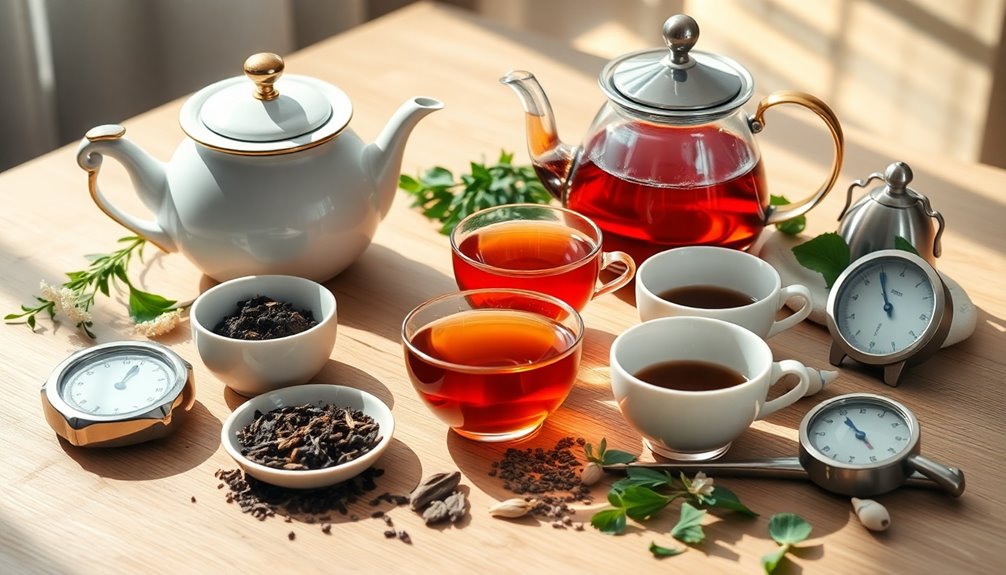
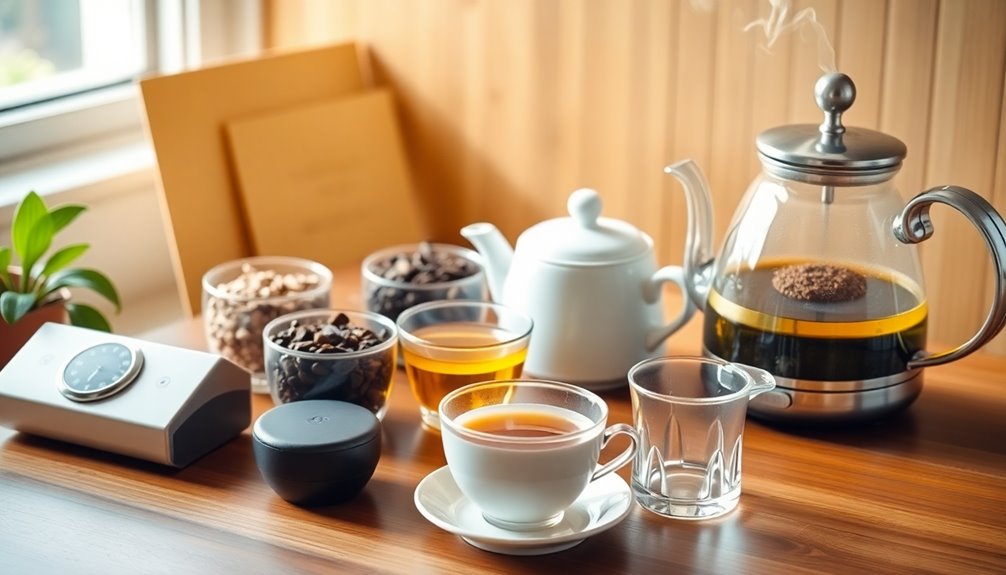
Tea brewing has a rich history that spans thousands of years, reflecting both cultural traditions and technological innovations. Throughout history, different societies have developed unique methods to prepare and enjoy tea, often influenced by local customs and available tools. One of the most significant cultural rituals is the tea ceremony, which emphasizes mindfulness, aesthetics, and harmony. In places like Japan and China, the tea ceremony isn’t just about drinking tea; it’s a spiritual practice that involves precise steps, elegant utensils, and an appreciation for the moment. These traditional ceremonies have persisted for centuries, shaping how people view tea as more than just a beverage but as an art form. As you explore the evolution of tea brewing, you’ll notice how these rituals contrast with modern brewing techniques that prioritize convenience and speed. Today, many people skip formal ceremonies in favor of quick brewing methods, yet the influence of these ancient practices remains evident in modern tea culture. For example, the advent of tea infusers, electric kettles, and tea bags has simplified the process, allowing you to enjoy a cup of tea with minimal effort. Despite these technological advances, some enthusiasts still value the precision and ceremony of traditional brewing, often recreating the tea ceremony experience at home or in specialty cafes. Modern brewing techniques have also incorporated scientific insights, like controlling water temperature and steeping times to optimize flavor extraction. This shift toward precision reflects our desire for consistency and quality in every cup. Additionally, the importance of Cultural Intelligence in understanding these diverse traditions highlights how adapting and respecting local customs enhances the appreciation of tea’s cultural significance. This emphasizes our need to recognize and learn from different cultural practices when exploring global tea traditions. While the tea ceremony emphasizes ritual and mindfulness, modern brewing often emphasizes efficiency and personalization. You might use a French press, a pour-over, or even a smartphone app to get the perfect brew tailored to your taste. Yet, whether you prefer the meditative pace of a traditional ceremony or the quick convenience of modern tools, both approaches share a common goal: to extract the best flavors from your tea leaves. Over time, the evolution of tea brewing demonstrates how cultural traditions adapt to technological changes, blending ancient wisdom with modern innovation. You’re part of this ongoing journey, whether you’re practicing a formal tea ceremony or simply brewing a quick cup before heading out. Both methods honor the deep history of tea while embracing the innovations that make tea accessible and enjoyable today. In this way, the story of tea brewing continues to evolve, connecting centuries of tradition with the present-day pursuit of flavor, relaxation, and cultural appreciation.
Frequently Asked Questions
How Did Tea Leaves Originally Reach Different Parts of the World?
You can imagine that tea leaves originally reached different parts of the world through ancient trade routes like the Silk Road and maritime routes. Traders carried tea, along with other goods, fostering cultural exchanges along the way. These routes allowed tea to spread from China to Central Asia, the Middle East, and eventually Europe, making it a globally cherished beverage today. Your love for tea connects to these centuries-old journeys of discovery.
What Are the Health Benefits Linked to Traditional Tea Brewing Methods?
Imagine the gentle steam rising from a freshly brewed herbal infusion, releasing antioxidants that boost your health. Traditional tea brewing methods help you maximize these benefits, supporting your immune system and reducing stress. As the warm liquid touches your lips, it delivers not only soothing comfort but also essential antioxidants, promoting overall well-being. Embrace these time-honored techniques to enjoy nature’s healing power in every calming sip.
Which Cultures Have Unique Tea Brewing Rituals Not Widely Known?
You might be surprised to learn that cultures like Japan, Morocco, and Tibet have unique tea brewing rituals that aren’t widely known. In Japan, ancient rituals emphasize precision and mindfulness during tea preparation, reflecting cultural symbolism of harmony. Moroccan tea ceremonies involve pouring multiple infusions, symbolizing hospitality. Tibetan tea rituals incorporate salt and butter, representing resilience and cultural identity. These traditions showcase deep-rooted cultural symbolism and timeless ancient rituals that enrich the tea experience.
How Have Modern Gadgets Influenced Traditional Tea Brewing Practices?
Modern gadgets have transformed traditional tea brewing by introducing automated brewing and precise temperature control. You can now enjoy perfectly brewed tea with just the push of a button, ensuring ideal steeping times and water temperatures. These innovations make it easier for you to replicate professional techniques at home, reducing guesswork and enhancing flavor, while still honoring the ritual of tea preparation.
Are There Specific Brewing Techniques for Different Types of Tea Leaves?
Oh, absolutely, because all tea leaves are the same, right? Wrong. You should tailor your tea leaf preparation and brewing temperature to each variety. Green teas love lower temps, around 160-180°F, to avoid bitterness. Black teas thrive at higher temps, near boiling. Oolong and white teas need a delicate touch. Mastering these nuances guarantees your tea tastes as divine as it deserves—no one-size-fits-all here!
Conclusion
As you’ve seen, tea brewing has traveled a winding road, like a river carving its path through time. From ancient leaves to modern gadgets, each step reflects your ongoing journey to perfect that perfect cup. Embrace the evolution, and remember, every brew is a new chapter in this timeless story. So, keep experimenting and savoring the flow—because in tea, as in life, it’s the process that makes it truly special.