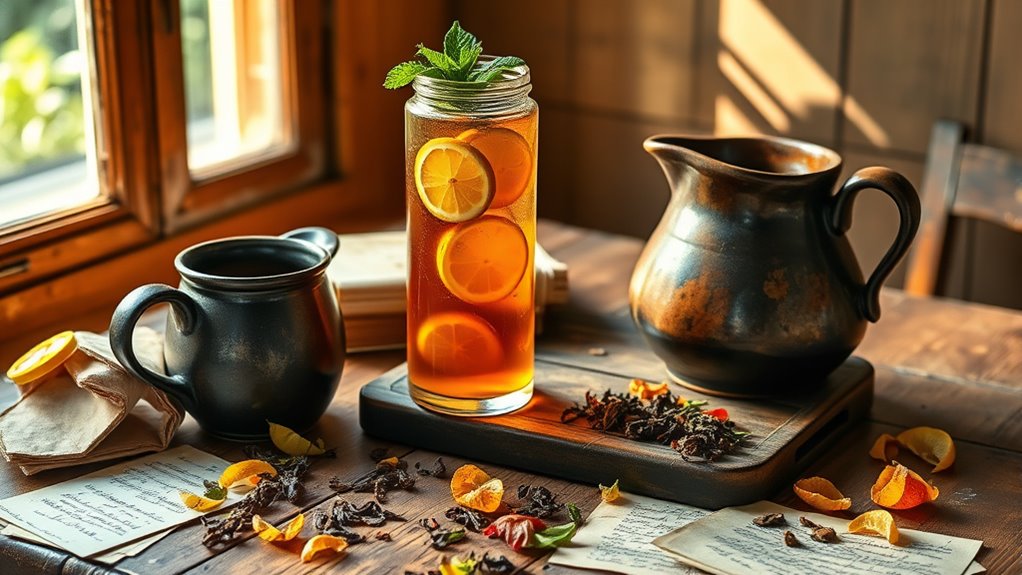
Iced tea started in early 19th-century America as hot tea cooled over ice to beat the summer heat, then evolved into a popular social beverage with regional variations like sweet Southern tea. Over time, vendors experimented with flavors, adding sweeteners, citrus, and herbs. Today, it reflects a rich history of innovation, cultural influences, and health trends. If you explore further, you’ll discover how this invigorating drink continues to adapt and inspire new flavors worldwide.
Key Takeaways
- Iced tea originated in early 19th-century America as hot tea chilled to cool in summer.
- It evolved from simple cooling methods to pre-brewed and bottled varieties with added flavors.
- Regional influences, like Southern sweet tea, shaped variations with sugar and lemon.
- Modern recipes incorporate herbs, natural sweeteners, and superfoods to promote health trends.
- Iced tea has become a global cultural icon, symbolizing innovation, diversity, and beverage versatility.

Iced tea has become an invigorating staple worldwide, but its origins date back to the early 19th century when Americans first began chilling hot brewed tea to beat the summer heat. As you explore the history of iced tea, you’ll notice how it reflects a broader tea culture that values refreshment, socialization, and innovation. Initially, iced tea was simply hot tea poured over ice, a practical solution for staying cool without losing the comforting flavors of traditional tea. However, as demand grew, beverage innovation took center stage, leading to a variety of recipes and preparation methods that would shape its evolution.
In the late 19th and early 20th centuries, iced tea gained popularity across the United States, especially during the hot summer months. Vendors began experimenting with ways to serve it cold, and some even started selling pre-brewed bottles of iced tea, paving the way for modern bottled varieties we see today. During this period, the introduction of sweeteners and citrus added new layers of flavor, transforming iced tea from a simple cooling drink into a versatile beverage that could be customized to individual tastes. This experimentation reflects the creative spirit of beverage innovation, which continues to drive the evolution of iced tea recipes.
As tea culture expanded, so did the ways people enjoyed iced tea. It became more than just a cooling drink; it became a social beverage served at gatherings, picnics, and cafes. The rise of the Southern sweet tea in the United States exemplifies how regional preferences influenced iced tea recipes, with sugar and lemon becoming essential ingredients. Meanwhile, across the globe, different cultures added local ingredients—such as herbs, spices, and fruit—to craft unique variations, demonstrating how diverse tea culture influences the evolution of iced tea. The development of passive voice detection tools has further supported the refinement of beverage descriptions and recipes.
In recent decades, the focus has shifted toward health-conscious beverage innovation. You now see iced teas infused with herbs, natural sweeteners, and superfoods, aligning with modern trends towards wellness and sustainability. This ongoing evolution highlights how tea culture adapts to societal changes, making iced tea a continually revitalizing and innovative beverage. Whether served plain, sweetened, or infused with flavors, iced tea remains a testament to the enduring appeal of tea and the limitless possibilities for its creative expression. As you enjoy a glass today, remember that you’re part of a centuries-old tradition of innovation and cultural exchange that has transformed a simple cooling drink into a global phenomenon.
Frequently Asked Questions
What Are the Health Benefits of Iced Tea?
Drinking iced tea offers you several health benefits, including antioxidant properties that help fight free radicals and reduce inflammation. It also boosts hydration benefits, keeping you refreshed and supporting overall health. Plus, if you choose unsweetened options, you avoid excess sugar, making iced tea a healthy beverage choice. So, next time you enjoy a cold drink, remember it can be good for your body while keeping you cool.
How Do Regional Preferences Influence Iced Tea Recipes?
Regional preferences shape your iced tea recipes by incorporating local flavors and cultural influences. For example, in the South, you might add sweeteners and lemon to create a invigorating, sweet tea, while in Asia, you could include jasmine or green tea for a more delicate taste. These regional flavors reflect local traditions, ingredients, and tastes, making your iced tea unique and culturally rich depending on where you are.
What Are the Most Popular Modern Iced Tea Variations?
You’ll love exploring popular modern iced tea variations like fruit infusions and herbal blends. These creative twists add vibrant flavors and health benefits, making them favorites for many. You might enjoy a revitalizing peach-mint or a calming chamomile-lavender tea. By experimenting with different fruit infusions and herbal blends, you can customize your iced tea to suit your taste and stay cool all year round.
How Has Tea Cultivation Impacted Global Iced Tea Trends?
Tea cultivation has substantially influenced global iced tea trends by expanding tea farming and opening new markets worldwide. You see, as tea farming grew in regions like Asia, Africa, and South America, it boosted the availability of diverse tea leaves, inspiring innovative iced tea recipes. This global market expansion encourages local producers to experiment with flavors, leading to the vibrant, modern iced tea varieties you enjoy today.
What Are Sustainable Practices in Iced Tea Production?
You can embrace sustainable practices in iced tea production by choosing brands that prioritize organic farming, which reduces chemical use and supports soil health. Additionally, look for companies that implement water conservation strategies during cultivation and processing. By supporting these efforts, you help promote environmentally friendly practices, ensuring tea production remains sustainable. Your choices can make a difference in reducing environmental impact and encouraging responsible farming within the iced tea industry.
Conclusion
As you explore the history of iced tea, you’ll see how its recipes have evolved like a river carving new paths through the landscape. From simple sweetened brews to sophisticated infusions, each variation reflects changing tastes and cultural influences. Embracing this journey, you gain a deeper appreciation for how a humble beverage can be as dynamic and layered as a fine piece of art, continuously invigorating itself with every new twist and turn.