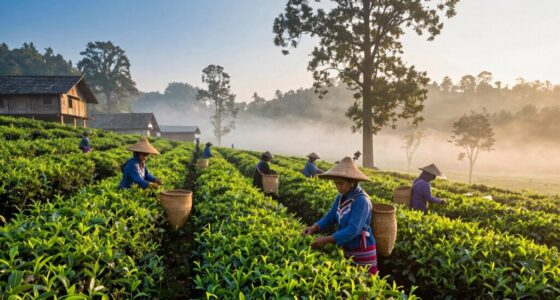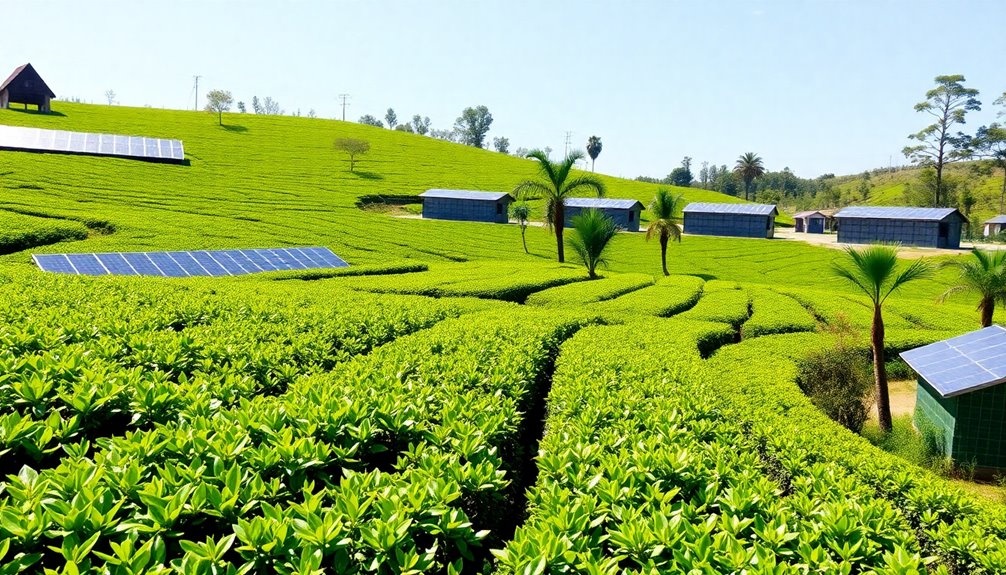
The future of sustainable and ethical tea sourcing looks promising as technologies like blockchain increase transparency and traceability. Consumer demand for responsibly produced tea pushes brands to improve standards and adopt eco-friendly practices. Certification efforts are becoming more accessible, supporting small farmers and promoting fair wages. As industry awareness grows, ethical practices will become the norm, creating a more equitable supply chain. Keep exploring how these changes can positively impact your tea choices and the environment.

Get coffee and tea gear delivered free with Prime
- Fast, free delivery on millions of items
- Prime Video, Amazon Music and more included
- Member-only deals all year
Key Takeaways
- Digital tracking and blockchain will enhance transparency and traceability in tea supply chains.
- Growing consumer demand will drive brands to adopt more rigorous ethical and sustainable sourcing practices.
- Certification standards are expected to evolve, becoming stricter and more comprehensive over time.
- Increased industry collaboration and technological advancements will improve access for smallholder farmers.
- Ethical and sustainable tea sourcing will become the industry norm, positively impacting communities and the environment.

Sustainable and ethical tea sourcing is essential for ensuring that your favorite beverage benefits both the environment and the communities that produce it. When you choose teas that are Fair Trade certified, you support farmers who receive fair wages and work under better conditions. Fair Trade standards guarantee that growers aren’t exploited, helping to uplift entire communities by promoting social equity and economic stability. This certification also encourages environmentally responsible farming practices, which reduce the use of harmful chemicals and promote biodiversity. By prioritizing Fair Trade teas, you contribute to a system that values people and the planet equally, creating a more equitable supply chain.
Choosing Fair Trade tea supports farmers, promotes fair conditions, and protects the environment for a more equitable supply chain.
Organic certification plays a crucial role in shaping the future of sustainable tea. When tea is organically certified, it means that it’s grown without synthetic pesticides, fertilizers, or genetically modified organisms. This not only benefits the environment by preserving soil health and preventing water contamination but also ensures that the tea you drink is free from harmful chemicals. As consumers become more conscious of health and environmental impacts, the demand for organic teas continues to rise. This shift drives more farmers to adopt organic practices, leading to more sustainable and resilient agricultural systems. Organic certification also often involves stricter standards for fair labor practices, further reinforcing ethical sourcing.
Looking ahead, the future of sustainable and ethical tea sourcing appears promising but requires ongoing commitment from producers, consumers, and policymakers. Increased transparency and traceability are likely to become standard, allowing you to verify that the teas you purchase meet rigorous ethical and environmental standards. Innovations in certification processes, such as digital tracking and blockchain technology, will make it easier for consumers to make informed choices. Additionally, consumer demand for ethically sourced teas will push more brands to adopt fair trade and organic practices, encouraging a broader shift toward sustainability in the industry.
However, challenges remain. Smallholder farmers often face barriers to obtaining certifications due to costs or lack of access to training and resources. To address this, industry stakeholders and non-profit organizations are working to make certifications more accessible and affordable. Education campaigns will also play a vital role in raising awareness about the importance of sustainable sourcing. Moving forward, your choices as a consumer will be pivotal—supporting brands that prioritize Fair Trade and organic certification helps create a market where ethical and sustainable practices become the norm rather than the exception. This collective effort will shape a future where every sip of tea contributes positively to the environment and the people who cultivate it, especially as certification standards continue to evolve and improve.
Frequently Asked Questions
How Can Consumers Verify the Ethical Practices of Tea Brands?
You can verify the ethical practices of tea brands by looking for third-party certifications like Fair Trade or Rainforest Alliance, which guarantee sustainable and fair practices. Check for consumer transparency on their websites or product labels, where brands often share details about their sourcing and labor standards. Additionally, researching reviews and reports can give you a clearer picture, helping you make informed, ethical choices when selecting your tea.
What Are the Main Challenges in Implementing Sustainable Tea Farming?
Ironically, the biggest challenge in sustainable tea farming is doing the right thing—like securing organic certification and managing water wisely. You’d think these would be straightforward, but bureaucratic hoops and resource limitations often stand in the way. Balancing eco-friendly practices with economic viability proves tough, especially when farmers face pressure to meet demand. Yet, overcoming these hurdles is essential if you want your tea to be truly sustainable.
How Does Climate Change Impact Future Tea Sourcing Sustainability?
Climate change threatens future tea sourcing by disrupting growing conditions, making climate adaptation essential. You need to focus on building crop resilience through innovative farming practices, drought-resistant plants, and diversified crops. By adopting these strategies, you can help guarantee sustainable tea production despite unpredictable weather patterns. Staying proactive in climate adaptation efforts will protect both farmers’ livelihoods and the environment, securing the future of ethical and sustainable tea sourcing.
Are There Certifications That Guarantee Ethical Tea Production?
You can’t judge a book by its cover, so look for trusted certifications to guarantee ethical tea. Organic standards guarantee the tea’s grown without harmful chemicals, while Fair Trade certifications ensure fair wages and good working conditions for farmers. These seals show your commitment to ethical practices and sustainable sourcing. Always check for reputable labels—your purchase can make a real difference in supporting responsible tea production.
What Role Do Local Communities Play in Sustainable Tea Sourcing?
You play a crucial role in sustainable tea sourcing by supporting local communities, which fosters community empowerment and cultural preservation. When you choose ethically sourced tea, you help guarantee that farmers and workers benefit directly, maintaining their traditions and improving their livelihoods. Your conscious purchasing decisions encourage sustainable practices, protect local environments, and strengthen community bonds, making a positive impact on the entire supply chain while preserving the cultural heritage tied to tea production.
Conclusion
As you explore sustainable and ethical tea sourcing, remember that over 80% of tea farmers worldwide now participate in fair trade programs, ensuring better wages and working conditions. By supporting brands that prioritize these practices, you not only enjoy quality tea but also contribute to positive change. Your choices can help promote environmental stewardship and social justice in tea-producing communities, shaping a more sustainable future for everyone involved.
Halloween Picks
halloween
As an affiliate, we earn on qualifying purchases.