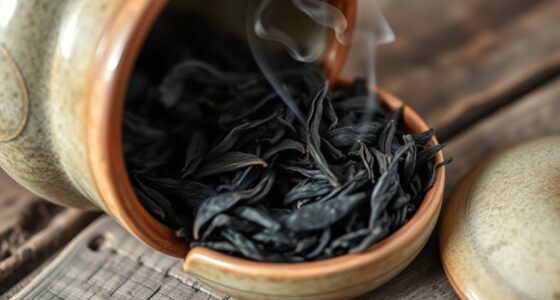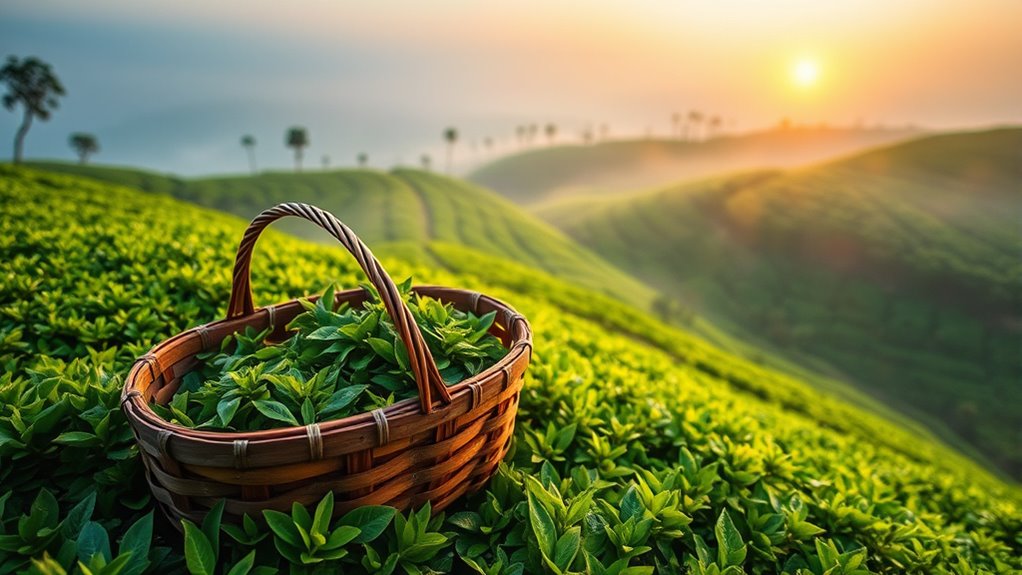

You’ll find famous places like China’s Yunnan and Sichuan provinces, where tea first originated, and the legendary mountain of Jingmai, known for ancient tea trees. Key figures include Emperor Shen Nong, believed to discover tea’s medicinal properties, and Zen monk Eisai, who brought tea to Japan. British traders, explorers, and plantation owners expanded tea’s reach globally. Stay curious—they’re just a few of the many remarkable stories behind tea’s fascinating history.
Key Takeaways
- Mount Wuyi in China is renowned for its ancient tea plantations and historical significance in tea cultivation.
- Emperor Shen Nong is legendary for discovering tea’s medicinal and mystical properties in Chinese mythology.
- Zen monk Eisai introduced tea to Japan from China, establishing its spiritual and cultural importance.
- The British East India Company played a crucial role in popularizing tea in Europe during the 17th and 18th centuries.
- Sri Lanka’s Nuwara Eliya region became famous for its tea plantations, contributing to global tea production.
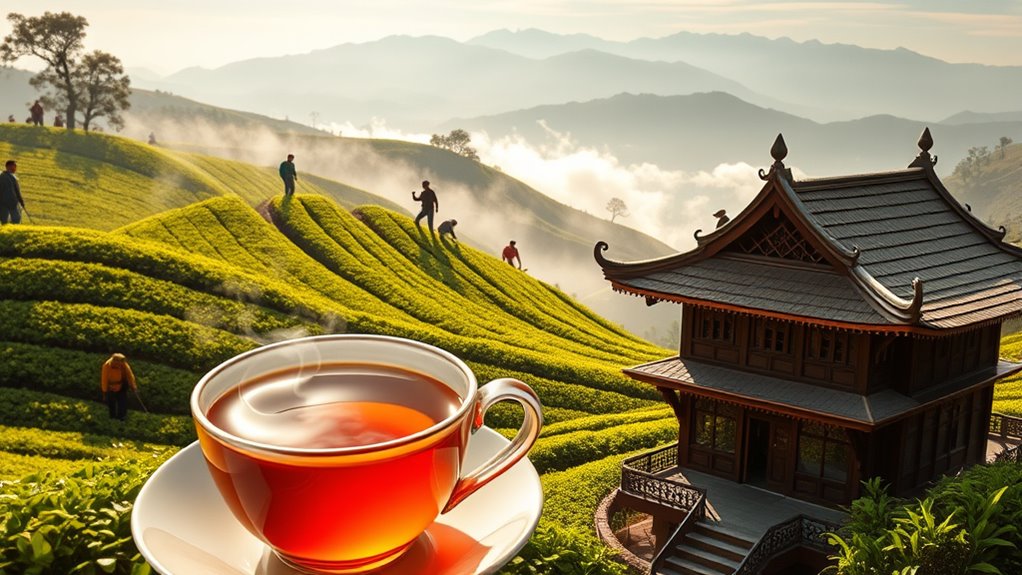
Tea’s rich history is intertwined with the places and people that helped shape its global popularity. You might be surprised to learn that the journey of tea begins in ancient landscapes where tea cultivation first took root, especially in China. The earliest records of tea cultivation trace back thousands of years, and many historical legends surround its origins. One famous legend tells of Emperor Shen Nong, who was said to have discovered tea accidentally when leaves from a wild tea tree fell into his boiling water. Whether true or not, this story has endured for centuries, symbolizing tea’s mystical beginnings. As you explore the history of tea, you’ll find that these legends aren’t just stories—they reflect the cultural importance of tea and its deep roots in Chinese civilization.
From China, tea traveled along trade routes, influencing distant lands and cultures. The Chinese were the first to develop sophisticated methods of tea cultivation, cultivating tea bushes and refining the art of processing leaves into the beverage we cherish today. The legendary figures involved in this process, such as various Chinese monks and scholars, are often credited with nurturing tea’s early popularity. As tea spread to neighboring countries like Japan, it gained new significance, becoming intertwined with spiritual practices like Zen Buddhism. Here, tea’s cultivation and preparation became an art form, emphasizing mindfulness and harmony.
In Japan, the story of tea took on a different dimension, but its origins still trace back to Chinese legends. The famous Zen monk Eisai is believed to have brought tea seeds from China, planting the seeds of a tradition that would flourish centuries later. You can trace the influence of these early pioneers in the refined tea ceremonies that became emblematic of Japanese culture. Meanwhile, in Europe, tea’s arrival was marked by trade and diplomacy, with British traders and explorers playing pivotal roles. Their encounters with tea cultivation in India and Sri Lanka helped establish vast plantations that continue to produce some of the world’s most popular teas today. Additionally, the development of tea plantation techniques in these regions contributed significantly to global tea production.
Throughout history, these legends and the efforts of early cultivators have cemented tea’s place as more than just a beverage; it’s a symbol of cultural exchange and human ingenuity. Whether it’s the mystical stories from China or the sophisticated traditions in Japan and Europe, the roots of tea are deeply embedded in the places where it was cultivated and the legends that surround its discovery. As you enjoy your cup of tea, remember that you’re part of a long, storied tradition that spans continents and centuries, shaped by legends, innovation, and the enduring appeal of this ancient drink.

Yunnan Golden Special – Black Loose Leaf Tea – Best Chinese Black Tea – Organically Grown – Perfect Morning Tea – 150g (5.3-ounce)
- Origin: Yunnan, China
- Type: Organic black tea
- Cultivation: High-altitude, cool climate
As an affiliate, we earn on qualifying purchases.
As an affiliate, we earn on qualifying purchases.
Frequently Asked Questions
Which Ancient Civilizations First Cultivated Tea?
You’ll find that ancient China first cultivated tea, laying the foundation for its rich tea cultivation history. Archaeological discoveries of ancient tea artifacts reveal that people there used tea as far back as 2737 BCE. As you explore the origins, you’ll see how early civilizations valued tea, shaping its cultural significance. This historic cultivation highlights how tea’s roots are deeply embedded in ancient Chinese society, influencing the global love for tea today.
How Did Tea Spread Globally During Historical Trade Routes?
During the tea trade, you see how it spread globally through trade routes like the Silk Road and maritime paths. Merchants carried tea, fueling cultural diffusion across Asia, the Middle East, and Europe. As demand grew, tea became a symbol of status and social ritual. This exchange helped connect diverse cultures, transforming tea from a local beverage into a worldwide phenomenon, shaping societies through trade and shared tradition.
Are There Any Famous Tea-Related Festivals Worldwide?
You’ll find many famous tea-related festivals worldwide celebrating tea art and etiquette, like Japan’s Chado tea ceremony festivals and China’s Tea Culture Festival. These events showcase intricate tea art and emphasize proper tea etiquette, offering you a chance to learn and experience authentic traditions. Participating in these festivals deepens your appreciation for tea’s cultural significance, making your tea journey more meaningful and enriching.
What Are the Traditional Ceremonies Associated With Tea?
You might find it fascinating that over 80% of tea-drinkers follow traditional ceremony rituals. In many cultures, tea ceremonies emphasize precise tea etiquette, showcasing respect and mindfulness. For example, in Japan, the tea ceremony involves specific steps to prepare and serve matcha, fostering harmony and tranquility. These ceremonies highlight the importance of ritual and tradition, turning simple tea-drinking into a meaningful, meditative experience.
How Has Tea Influenced Local Cultures and Customs?
You see how tea influences local cultures and customs by shaping tea and social rituals that define community life. Tea becomes a symbol of cultural identity, bringing people together during gatherings, ceremonies, and daily routines. It influences etiquette, hospitality, and even art forms, reflecting local values and traditions. Through these rituals, tea helps preserve cultural heritage and fosters a sense of belonging within communities.
Conclusion
As you explore the rich history of tea, you’ll find that China and India lead the way, producing over 70% of the world’s tea. Knowing these origins makes each sip more meaningful, connecting you to centuries of tradition. Whether visiting famous places like the Yellow Mountain or tasting tea inspired by legendary figures, you’ll appreciate its cultural significance. Next time you enjoy a cup, remember you’re part of a global story that spans thousands of years.