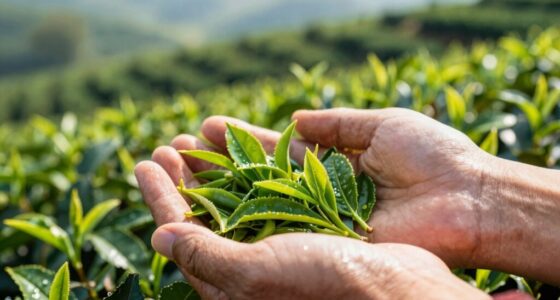
The current state of tea production and harvesting blends traditional techniques with modern innovations, focusing on sustainability, precise timing, and variety selection. Farmers use hand-picking for high-quality leaves, while larger plantations often utilize mechanical harvesters. Harvesting is carefully timed to guarantee peak flavor and flavor preservation, with seasonal adjustments. These practices help produce consistent, high-quality teas. If you want to explore how these methods impact the flavor and quality of your favorite teas, there’s more to discover.
Key Takeaways
- Modern tea production combines traditional harvesting methods with advanced technology for efficiency and quality control.
- Hand-harvesting remains prevalent for premium teas, ensuring selective plucking of top leaves and buds.
- Climate variations and environmental sustainability influence current harvesting schedules and regional production practices.
- Innovations in processing and rapid post-harvest handling help preserve tea freshness and flavor integrity.
- The global demand drives continuous improvements in plant selection, harvesting techniques, and sustainable agriculture practices.

Have you ever wondered how tea leaves go from the fields to your cup? It all begins with understanding the different tea plant varieties. There are several main types, each with unique flavors and growing requirements. For example, Camellia sinensis var. sinensis is commonly used for green and white teas, thriving in cooler climates and producing smaller leaves. On the other hand, Camellia sinensis var. assamica is known for its larger leaves and is often used for robust black teas, thriving in warmer, humid regions. Knowing the specific tea plant varieties helps farmers select the best plants for their climate and desired tea profiles, guaranteeing a high-quality product.
Once the plants are cultivated, harvesting techniques come into play. These methods are vital because they directly influence the flavor and quality of the final product. Typically, tea leaves are harvested by hand, especially for high-grade teas. Skilled pickers select only the top two leaves and a bud, which contain the most flavor and aroma. This precise plucking ensures that only the freshest, most tender leaves are used, leading to a superior tea. In some regions, mechanical harvesters are employed for larger plantations, but they usually gather a broader range of leaves, including some that are less desirable. This can affect the flavor profile and clarity of the tea.
Hand-harvesting ensures the freshest, most flavorful tea leaves for a superior cup.
Timing is also essential during harvesting. Pickers usually work during specific seasons when the leaves are at their peak maturity. The timing varies depending on the climate and tea variety but generally occurs in the early spring or late summer. The goal is to harvest when the leaves are young and tender, which results in a more delicate taste. The frequency of harvesting also matters; some teas are plucked multiple times a year, while others are only harvested once, depending on the region and variety. Additionally, implementing sustainable harvesting practices can help preserve the environment and ensure continuous high-quality yields.
After harvesting, the leaves are quickly processed to prevent oxidation, which can alter the flavor. The entire process from selecting the right tea plant varieties to applying precise harvesting techniques guarantees the quality and consistency of the tea you enjoy. These careful steps reflect a blend of tradition and modern innovation, all aimed at delivering the best possible cup. So, next time you sip your favorite tea, remember the intricate journey the leaves took—from carefully chosen plant varieties to expertly harvested leaves—before reaching your hands.

iTeaworld LongJing – Dragon Well Tea Green Tea, Chinese Loose Leaf Green Tea,Rich Bean Aroma,Pure Leaf Green Tea Unsweetened,Hot and Cold Brew- 1 Pack(3.5oz)
- Harvest Year: 2025 First Spring Harvest
- Freshness Sealed: Sealed for Flavor Preservation
- Versatile Use: Suitable for Hot or Cold Brew
As an affiliate, we earn on qualifying purchases.
As an affiliate, we earn on qualifying purchases.
Frequently Asked Questions
How Does Climate Change Affect Tea Crop Yields Globally?
Climate change reduces tea crop yields worldwide by causing unpredictable weather patterns and rising temperatures. You can adapt by implementing climate adaptation strategies that enhance crop resilience, such as selecting resilient tea varieties and adjusting harvesting times. These measures help mitigate adverse effects, allowing you to maintain productivity. Staying proactive in climate adaptation guarantees your tea crops can better withstand environmental stresses, securing your harvests against climate-related challenges.
What Innovative Methods Are Emerging for Sustainable Tea Harvesting?
Like explorers charting new waters, you harness innovation for sustainable tea harvesting. Mechanized plucking speeds up the process while reducing labor strain, like a gentle breeze guiding leaves. Drone monitoring acts as an eagle-eye, providing real-time insights into crop health and ripeness. These methods blend technology with tradition, ensuring you preserve the environment and boost yields, turning each harvest into a harmony of efficiency and sustainability.
Which Regions Are Currently Leading in Organic Tea Production?
You’ll find that India and Sri Lanka are leading in organic tea production, thanks to their focus on organic certification and sustainable farming practices. These regions prioritize eco-friendly methods, reducing chemical use and conserving biodiversity. By choosing teas from these areas, you support sustainable agriculture and receive high-quality, organic products. Their commitment to eco-conscious farming guarantees you enjoy tea that’s not only delicious but also environmentally responsible.
How Do Pests and Diseases Impact Tea Quality and Quantity?
Coincidentally, pests and diseases directly threaten your tea quality and quantity. When pests invade, they damage leaves, reducing harvests and lowering tea quality. Diseases like leaf rust or blight can spread rapidly, disrupting your pest management and disease control efforts. This results in decreased yields and compromised flavor profiles. Effective pest management and disease control are essential to maintain consistent production, ensuring you get high-quality tea without sacrificing quantity.
What Are the Future Trends in Tea Plant Breeding and Genetics?
You’ll see future tea plant breeding focus on genetic modification and hybridization techniques to improve yield, disease resistance, and climate adaptability. These methods allow you to develop resilient tea varieties faster and more precisely. By combining desirable traits, you can enhance flavor profiles and sustainability. Embracing these innovations helps you meet growing demand while minimizing environmental impact, ensuring a more robust and sustainable tea industry for the future.
Conclusion
You now see how tea production and harvesting are essential to keeping this ancient beverage alive. With skilled hands and careful timing, you’re helping to sustain a process as intricate as a finely woven tapestry. Every leaf plucked and processed is like a tiny miracle, shaping your daily cup of tea. So next time you sip, remember you’re part of a global effort as grand as a mountain range—truly breathtaking in its complexity and beauty.